
Blood glycome possibly predicts lifespan

What if a routine blood test could reveal the long-term risk of death, not by measuring cholesterol or glucose, but by identifying sugars attached to blood proteins? In a recent study published in Molecular & Cellular Proteomics, Iago Carballo of the University of Santiago de Compostela and an international team showed that total serum N-glycome can predict mortality in a general adult population, independent of traditional risk factors.
The researchers analyzed blood samples from 1,516 randomly selected adult participants enrolled in the A-Estrada Glycation and Inflammation Study, or AEGIS, cohort in Spain and followed participants for a median of 7.5 years to record mortality. The team analyzed the total serum N-glycome, which represents all glycans attached to serum proteins, by grouping glycans with similar structures and chemical properties into quantifiable glycome peaks or GPs. They found that individuals with higher levels of GP16 and lower levels of GP22 were significantly more likely to die during the follow-up period.
GP associations remained robust after accounting for age, sex and established clinical risk factors. Distinct glycan patterns were also linked to cancer-related and cardiovascular mortality, suggesting that serum protein glycosylation reflects underlying biological processes related to these conditions. The findings highlight serum N-glycan profiles as a promising complement to existing risk prediction tools for identifying individuals at elevated risk earlier in life.
Enjoy reading ASBMB Today?
Become a member to receive the print edition four times a year and the digital edition monthly.
Learn moreGet the latest from ASBMB Today
Enter your email address, and we’ll send you a weekly email with recent articles, interviews and more.
Latest in Science
Science highlights or most popular articles
Building a better model for drug delivery across the blood–brain barrier
Industry and academic scientists collaborated to develop a rat with humanized iron-transport receptors, enabling research into iron homeostasis and drugs that cross the brain’s barrier.
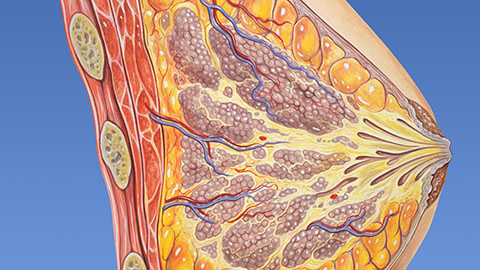
Fat synthesis enzyme crucial for milk fat and newborn growth
Researchers found that a deficiency of the fatty acid synthesis enzyme stearoyl-CoA desaturase-1 reduced mammary gland function during lactation and caused low birth weight in newborns that were fed milk from enzyme-deficient glands.

Flipping lipids and slime molds
A dull first job nearly pushed JBC associate editor Todd Graham out of science. Then a slime mold project changed his path. Now, he studies membrane biology and reflects on discovery, persistence and mentoring through uncertainty.
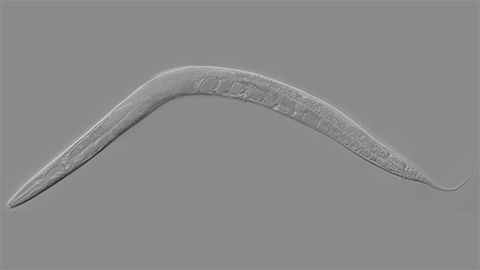
How smelling death alters worm behavior
Researchers have found that the roundworm C. elegans can smell death, and it changes how the worms behave, reproduce and age.
A chance encounter with the lab
Payton Stevens never planned to become a pancreatic cancer researcher. A temporary job set him on a path from rural Kentucky to leading research on Wnt signaling and metastasis, where he now pairs discovery with mentorship and science advocacy.
Light-activated small molecule could transform eye infection treatment
Contact lenses raise the risk of infectious keratitis, a leading cause of blindness worldwide. A biotech company is commercializing a light-activated therapy using a ROS-generating molecule to rapidly kill microbes in the cornea to preserve vision.