
Building a better model for drug delivery across the blood–brain barrier
Getting drugs into the brain is notoriously difficult. The blood–brain barrier is extremely selective, blocking most large therapeutics from entering the brain.
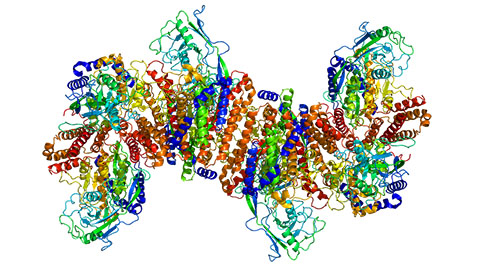
As a workaround, researchers have tried to exploit a protein called transferrin receptor 1, or TfR1. TfR1 is abundant on brain blood vessels and shuttles iron into the brain through transcytosis, picking up molecules on the blood side and releasing them on the brain side.
Yet, the development of therapeutics targeting the brain has been hampered by the lack of suitable animal models They are engineered to bind only human TfR1, making them incompatible with conventional preclinical models such as mice and rats.
Researchers at Rutgers University have developed a potential solution: rats engineered to express human TfR1. Their work, recently published in the Journal of Biological Chemistry, offers a model for testing TfR1-targeting therapeutics that cross the blood–brain barrier and for studying iron homeostasis.
Luciano D’Adamio, a professor of pharmacology, physiology and neuroscience at Rutgers University and founder of biotech company NanoNewron, is the senior author on the paper. The goal of D’Adamio’s research and NanoNewron is to develop better treatments for neurodegenerative diseases by helping better deliver them across the blood-brain barrier.
D’Adamio said he was motivated to create a humanized rat after his teams at Rutgers and NanoNewron developed a drug delivery system, NewroBus, to deliver therapeutics into the brain.
“(Since NewroBus) doesn't bind nonhuman transferrin receptors,” D’Adamio said. “In order to test the function of this molecule we made, we were almost obliged to make an animal model with humanized TfR1.”
The team used CRISPR–Cas9 to replace the rat transferrin receptor gene with the human version. They replaced the rat gene encoding transferrin, the receptor’s iron-binding partner, with the human version.
The team assessed rats homozygous for human TfR1 or heterozygous with one human and one rat allele for viability, iron distribution and overall health. Homozygous rats showed disrupted iron distribution and red blood cell production. This was not rescued by introducing human transferrin, which D’Adamio said was unexpected. Based on these results, the team focused on heterozygous animals.
“We found that with one human allele and one rat allele, the function we are looking for — transport across the brain — is maintained and the animal has no signs of iron deficiency,” D’Adamio said.
The result was a rat with humanized TfR1 expressed and regulated in a physiological manner. D’Adamio and his team then tested whether the model could support studies of brain-targeting therapeutics.
The team fused the NewroBus shuttle to a therapeutic nanobody and administered it to humanized TfR1 rats. The rats showed robust, dose-dependent brain uptake via TfR1-mediated transcytosis, whereas nonhumanized mice showed little uptake.
Quantitative analyses linked brain delivery directly to TfR1 binding and showed that nanobody cargo remained structurally and functionally intact after crossing the blood–brain barrier. The results suggest transport depended on TfR1 engagement rather than nonspecific uptake.
D’Adamio said his team will use the model to test NewroBus-linked biologics and drugs for efficient blood–brain barrier crossing. He expects the model to be useful for both therapeutic development and basic disease research.
D’Adamio said the model will be useful for researchers studying the basic biology of iron homeostasis. But beyond that, the model will also allow researchers looking to leverage iron transporters to facilitate better therapeutics that cross the blood–brain barrier — thus, opening new avenues to explore for treatments for neurological disorders.
Enjoy reading ASBMB Today?
Become a member to receive the print edition four times a year and the digital edition monthly.
Learn moreGet the latest from ASBMB Today
Enter your email address, and we’ll send you a weekly email with recent articles, interviews and more.
Latest in Science
Science highlights or most popular articles
Fat synthesis enzyme crucial for milk fat and newborn growth
Researchers found that a deficiency of the fatty acid synthesis enzyme stearoyl-CoA desaturase-1 reduced mammary gland function during lactation and caused low birth weight in newborns that were fed milk from enzyme-deficient glands.
Flipping lipids and slime molds
A dull first job nearly pushed JBC associate editor Todd Graham out of science. Then a slime mold project changed his path. Now, he studies membrane biology and reflects on discovery, persistence and mentoring through uncertainty.
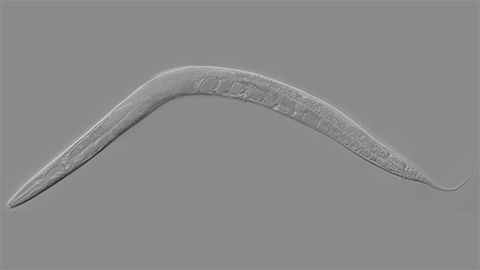
How smelling death alters worm behavior
Researchers have found that the roundworm C. elegans can smell death, and it changes how the worms behave, reproduce and age.
A chance encounter with the lab
Payton Stevens never planned to become a pancreatic cancer researcher. A temporary job set him on a path from rural Kentucky to leading research on Wnt signaling and metastasis, where he now pairs discovery with mentorship and science advocacy.
Light-activated small molecule could transform eye infection treatment
Contact lenses raise the risk of infectious keratitis, a leading cause of blindness worldwide. A biotech company is commercializing a light-activated therapy using a ROS-generating molecule to rapidly kill microbes in the cornea to preserve vision.
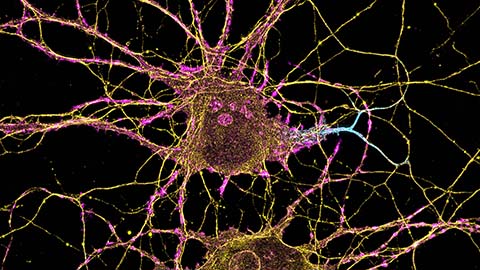
The molecular orchestra of memory
Calcium, calmodulin and calcium/calmodulin-dependent kinase II form a molecular axis that turns fleeting neural activity into lasting memories. New research shows how memories are stabilized, and possibly even protected or repaired.