
Flipping lipids and slime molds
Todd Graham once called his first science job “the most boring thing I’d ever done.” A second job studying protein trafficking in slime mold changed everything.
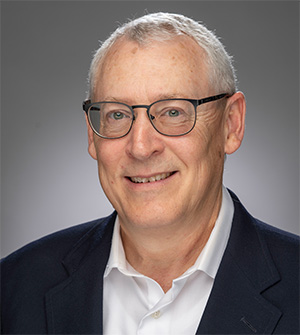
Today, his lab is still studying protein trafficking.
Graham is a professor of biological sciences at Vanderbilt University and an associate editor for the Journal of Biological Chemistry. Graham recently discussed his work on phospholipid flippases and his career with ASBMB Today.
This interview has been edited for clarity, length and style.
How did you become interested in science?
Graham: It was a convoluted road, as it is for many people. That was especially true for me. When I was an undergraduate chemistry student at Maryville College, a small liberal arts school in St. Louis, I worked part-time for the FDA as a chemist, and I hated it. I thought it was the most boring thing I’d ever done, and I started to think chemistry might not be the right career for me. But my college counselor was good friends with Arnold “Arnie” Kaplan, who at the time had a research lab at St. Louis University Medical School. She helped me get a part-time research job with Arnie, and I loved it.
I loved the work so much that when Arnie asked, “Hey, do you want to go to graduate school?” I said, “That sounds like a great thing to do.” I interviewed at a few places, ended up at St. Louis University and did my graduate work with Arnie.
Tell me about your undergraduate experience.
Graham: Arnie is known for co-discovering the mannose-6-phosphate, or M6P, recognition sites that help sort lysosomal enzymes to lysosomes. At the time, Arnie and others found that slime mold lysosomal enzymes have these recognition sites, so they began looking for the corresponding receptors. They thought slime mold would be a good system to study protein trafficking and lysosomal enzyme sorting. Interestingly, we found no evidence of an M6P receptor in this organism. We saw that lysosomal enzymes in slime mold could bind human M6P receptors, but there was nothing comparable in slime mold itself. So, the question was: How did these enzymes get sorted in the slime mold? And do they use M6P as a posttranslational modification? I took on these questions for my Ph.D. work.
Tell me about your Ph.D. work.
Graham: Under the co-mentorship of Arnie Kaplan and Peter Zassenhaus, another faculty member, I cloned a gene that encodes a lysosomal enzyme in slime mold. I focused on one enzyme called beta-N-acetylhexosaminidase A. I purified the enzyme, prepared an antibody that targets it, and used the antibody to clone the gene from a cDNA expression library I constructed. In the 1980s, molecular cloning and DNA sequencing weren’t a routine approach by any means, and this project provided excellent training in molecular biology. I wanted to understand how this protein was sorted, but we never got that far.
How did your graduate project translate to your current work?
Graham: After my Ph.D., I transitioned from using slime mold to budding yeast as a model system. I did my postdoctoral fellowship with Scott Emr, who worked at the California Institute of Technology at the time. The Emr Lab was doing exactly what I wanted to do in slime mold, except they were doing it faster and better with budding yeast. I was jealous of the approaches they were taking, and you know what they say, “If you can’t beat them, join them.” So, I wrote to Scott and asked if I could join his lab as a postdoc. That’s how I started working in the budding yeast system, and that has been fantastic.
Today, my lab studies protein and lipid trafficking using budding yeast, mammalian cells and mice. During my postdoctoral work, I made some discoveries related to the localization of proteins to the Golgi apparatus, and I started my lab to continue studying this. Then, we started developing genetic screens to identify trafficking proteins that are involved in budding vesicles from the Golgi complex. This led to the discovery of the type IV P-type adenosine triphosphatases, also known as P4-ATPases or phospholipid flippases, which my lab has largely focused on since. These enzymes play a really important role in protein trafficking and membrane biogenesis.
Tell me more about the P4-ATPases.
Graham: P4-ATPases establish asymmetry in cell membranes, and this feature is conserved in most eukaryotes. We think that membrane asymmetry evolved so our cells can present a relatively inert surface to the extracellular world. A lot of microorganisms secrete compounds that target exposed phospholipids on the cell membrane, so presenting a relatively unreactive surface can help cells survive.
Cells keep phosphatidylserine in the inner leaflet, but when they are dying, they will “scramble” plasma membrane lipids, exposing phosphatidylserine to the outside world so our immune cells, such as the macrophages, can recognize and clear these dying cells. In both yeast and humans, the flippases we study keep that phosphatidylserine in the inner leaflet of the plasma membrane in living cells. When we introduced mutations that inactivate the enzyme’s flippase activity, phosphatidylserine became exposed to the outer leaflet of the membrane of healthy, living cells.
It is now widely accepted that P4-ATPases can catalyze lipid transport, but this was quite controversial when we first started working on P4-ATPases. To show this, we purified the enzymes, reconstituted them within liposomes and introduced artificial substrates that have fluorescent tags on the fatty acyl chain. This allowed us to essentially build liposomes with fluorescent lipids on their inner leaflet. When we add ATP to the samples, we can show that fluorescent lipids can be transported across the membrane in a flippase-dependent manner.
How do you like being an associate editor at JBC?
Graham: One of the things I’ve enjoyed most about being an associate editor at JBC is the opportunity to see the breadth of work being done by our colleagues. It’s a privilege to have a role in facilitating the publication process and advancing science, especially in our fields of interest. When I was a graduate student, I published one of my first papers in JBC. I strongly believe that the scientific society journals play a critical role in communicating our science. When I was first asked, I was a little nervous about accepting the position because I don’t have a tremendous amount of time on my hands. Fortunately, in the few months that I’ve held this position, I’ve been able to manage the workload just fine.
How has your mentorship style evolved throughout the years?
Graham: I don’t think it has changed tremendously, although I like to think that my mentorship skills have grown and that I’ve become wiser over the years. I’ve always had a good relationship with my students, and I’m still in touch with a lot of the students who have come through my lab. I’d like to point out that in the past decade or so, there has been a much greater emphasis on mentorship training, and I think that’s wonderful. I’ve really enjoyed sitting in various mentorship training workshops and hearing colleagues discuss their different approaches to mentorship and how they help students navigate their way through their graduate studies. I’ve also served on many Ph.D. committees, probably for about 170 students in the past 34 years — and this experience has helped me mentor my own students.
What do you enjoy doing outside of the lab?
Graham: I like sports. Basketball used to be my big outlet outside the lab, but I had to give that up about 20 years ago, when I started collecting more injuries than points on the court. I still like to watch the Vanderbilt teams, including basketball, football and, more recently, volleyball. My wife and I enjoy hiking and kayaking — there are many beautiful trails and rivers here in the Middle Tennessee area. When our kids were young, we often went camping, but I’m too old to sleep on the ground now, so we’ve had to give that up. Maybe we’ll take camping up again when our grandkids are a little older.
Do you have any advice for young scientists facing uncertain times in science?
Graham: There are fewer opportunities to enter science now, with many graduate programs reducing admissions because of funding uncertainty. Hopefully, we will get back to where things are more stable and predictable. It’s very difficult to plan for the future right now, but I remain hopeful. The best advice I can give is to stay the course in these challenging times. Politics change, and when one looks at the history of funding through the National Institutes of Health, there are times of boom and bust — it tends to cycle up and down. So, if you can, weather the low points of scientific funding and support from the government. Usually, things improve on the other side.
Enjoy reading ASBMB Today?
Become a member to receive the print edition four times a year and the digital edition monthly.
Learn moreGet the latest from ASBMB Today
Enter your email address, and we’ll send you a weekly email with recent articles, interviews and more.
Latest in People
People highlights or most popular articles
Kimble honored for lifetime achievement in genetics
She received the 2026 Thomas Hunt Morgan Medal and will be honored with a dedicated online profile and seminar.
Janetka named distinguished professor
Washington University awarded him the inaugural Carl Frieden Distinguished Professorship.
ASBMB members receive ASPET awards
The American Society for Pharmacology and Experimental Therapeutics awards Simone Brixius–Anderko, Paul Insel, Sudarshan Rajagopal, Emily Scott, Alan Smrcka and Jürgen Wess for their excellent research and mentoring work in pharmacology.
Kozul honored by Washington University
She received the 2025 Elliot L. Elson Education and Training Award.
de la Fuente honored for AI research
The award will support the development of an AI system called ApexMol, a 3D structure–informed, agentic large language model designed to create new biomolecules.
In memoriam: Peter Roepstorff
He was a leading researcher in biological mass spectrometry, mapped protein function in living organisms and was an ASBMB member for 19 years.