
Kimble honored for lifetime achievement in genetics

The Genetics Society of America has named Judith Kimble the recipient of the 2026 Thomas Hunt Morgan Medal, which recognizes lifetime contributions to genetics. The medal is named for Thomas Hunt Morgan, an American geneticist and developmental biologist who received the 1933 Nobel Prize in Physiology or Medicine for discoveries establishing the role of chromosomes in heredity. The GSA will honor the 2026 award recipients with dedicated blog profiles and virtual seminars.
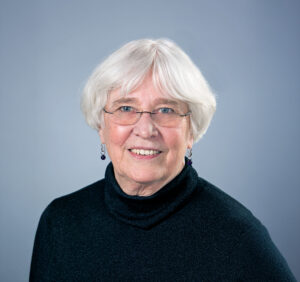
Kimble is an investigator emeritus at the Howard Hughes Medical Institute and professor emeritus of biochemistry at the University of Wisconsin–Madison. Her research uses the genetic power and cellular simplicity of Caenorhabditis elegans to study animal development, focusing on how germ cells self-renew and generate sperm or oocytes. Her lab’s work with C. elegans has advanced the understanding of how germline stem cells are maintained, including how signals from the surrounding cellular environment determine whether cells self-renew or differentiate. She established her lab based on her observation that a single C. elegans cell, the distal tip cell, controls germline stem cells during larval development and adulthood. Her work has expanded on this finding, showing that the distal tip cell uses Notch signaling to promote stem cell self-renewal and to trigger an RNA regulatory network that balances stem cell self-renewal and differentiation, a key question in development, disease, aging and cancer.
Kimble has been elected to the National Academy of Sciences, the American Academy of Arts and Sciences and the American Philosophical Society, and she is a fellow of the American Association for the Advancement of Science. She has served as president of the GSA and the Society for Developmental Biology. Kimble has held leadership roles on national science committees, including the President’s Committee on the National Medal of Science. In 2024, she was awarded the Wiley Prize in Biomedical Sciences.
Enjoy reading ASBMB Today?
Become a member to receive the print edition four times a year and the digital edition monthly.
Learn moreGet the latest from ASBMB Today
Enter your email address, and we’ll send you a weekly email with recent articles, interviews and more.
Latest in People
People highlights or most popular articles
Janetka named distinguished professor
Washington University awarded him the inaugural Carl Frieden Distinguished Professorship.
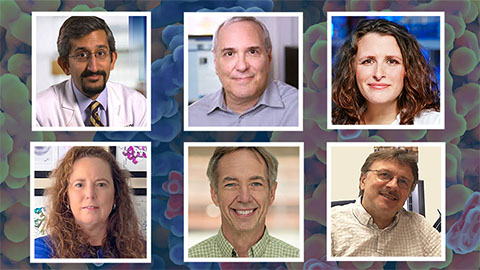
ASBMB members receive ASPET awards
The American Society for Pharmacology and Experimental Therapeutics awards Simone Brixius–Anderko, Paul Insel, Sudarshan Rajagopal, Emily Scott, Alan Smrcka and Jürgen Wess for their excellent research and mentoring work in pharmacology.
Kozul honored by Washington University
She received the 2025 Elliot L. Elson Education and Training Award.
de la Fuente honored for AI research
The award will support the development of an AI system called ApexMol, a 3D structure–informed, agentic large language model designed to create new biomolecules.
In memoriam: Peter Roepstorff
He was a leading researcher in biological mass spectrometry, mapped protein function in living organisms and was an ASBMB member for 19 years.
Flipping lipids and slime molds
A dull first job nearly pushed JBC associate editor Todd Graham out of science. Then a slime mold project changed his path. Now, he studies membrane biology and reflects on discovery, persistence and mentoring through uncertainty.