
ASBMB members receive ASM awards

The American Society for Microbiology has announced the recipients of its 2026 awards, including American Society for Biochemistry and Molecular Biology members Jennifer Doudna, Michael Ibba and Kim Orth.
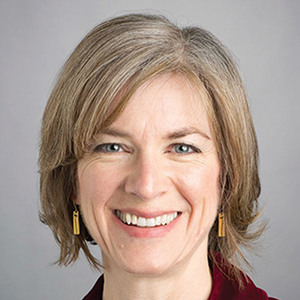
Jennifer Doudna, professor of biochemistry, biophysics and structural biology at the University of California, Berkeley, received the ASM Lifetime Achievement Award, which recognizes sustained contributions to the microbial sciences. She received the 2020 Nobel Prize in Chemistry with Emmanuelle Charpentier, a professor of the science of pathogens at the Max Planck Institute, for her work on CRISPR/Cas9 genome editing. Her lab and the Innovative Genomics Institute, which she founded, investigate the CRISPR bacterial adaptive immune system, ways to engineer novel CRISPR/Cas systems and how to apply CRISPR systems in microbiomes. Doudna is a member of the National Academy of Sciences, the American Academy of Arts and Sciences, the National Academy of Medicine, the National Academy of Inventors, the American Academy of Microbiology, the Royal Society and the Pontifical Academy of Sciences. She received the first American Society for Biochemistry and Molecular Biology Mildred Cohn Award in 2013.
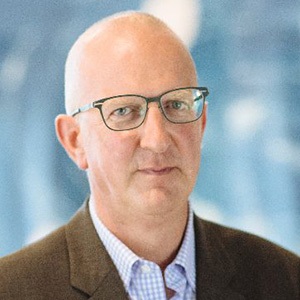
Michael Ibba, executive vice president, provost, chief academic officer and professor at Chapman University, received the ASM Award for Graduate Education, which recognizes a scientist for outstanding achievements in graduate-level education. His lab investigates how cells ensure accurate translation of the genetic code and how changes in translational control contribute to microbial pathogenesis and disease. Before moving to Chapman in 2020, he taught at Ohio State University for 19 years. He held several leadership roles there, including chair of the microbiology department and co-director of the graduate training program.
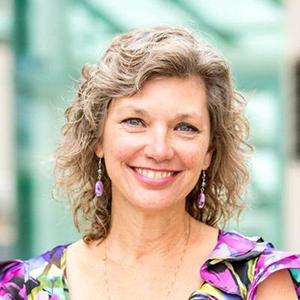
Kim Orth, an endowed chair and scholar in biomedical research at the University of Texas Southwestern Medical Center, received the ASM Award for Basic Research, which recognizes a scientist whose discoveries have been fundamental to advancing our understanding of the microbial world. Her lab investigates the pathogenesis of Yersinia and Vibrio, which are linked to the bubonic plague and food poisoning, and her lab uncovered two novel posttranslational modifications: YopJ Ser/Thr acetylation and VopS AMPylation. She is a Howard Hughes Medical Institute investigator and a member of the National Academy of Sciences and the American Academy of Microbiology. She has received numerous awards for her work, including the 2018 ASBMB–Merck Award and the 2012 ASBMB Young Investigator Award.
Enjoy reading ASBMB Today?
Become a member to receive the print edition four times a year and the digital edition monthly.
Learn moreGet the latest from ASBMB Today
Enter your email address, and we’ll send you a weekly email with recent articles, interviews and more.
Latest in People
People highlights or most popular articles
de la Fuente honored for AI research
The award will support the development of an AI system called ApexMol, a 3D structure–informed, agentic large language model designed to create new biomolecules.
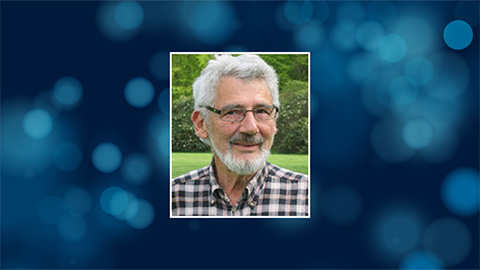
In memoriam: Peter Roepstorff
He was a leading researcher in biological mass spectrometry, mapped protein function in living organisms and was an ASBMB member for 19 years.
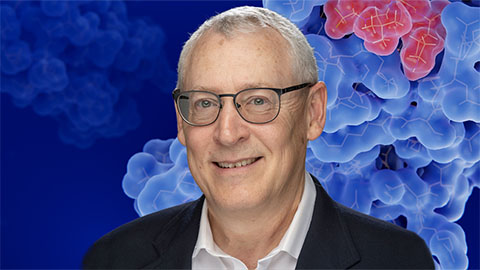
Flipping lipids and slime molds
A dull first job nearly pushed JBC associate editor Todd Graham out of science. Then a slime mold project changed his path. Now, he studies membrane biology and reflects on discovery, persistence and mentoring through uncertainty.
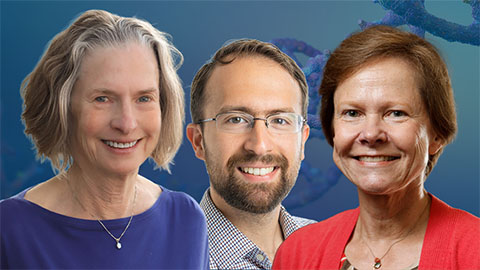
ASBMB members receive RNA Society awards
The RNA Society awards Brenda Bass, Can Cenik and Karin Musier–Forsyth for their achievements in RNA research and innovation. Winners will be recognized at the closing awards ceremony of the RNA 2026 annual meeting.
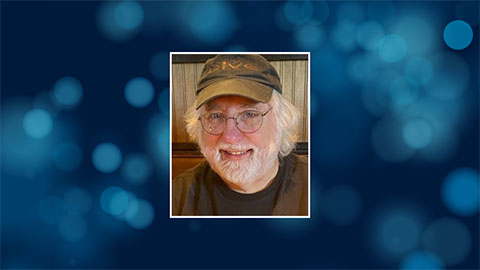
In memoriam: Richard L. Cross
He studied the enzymatic mechanisms of ATP synthase and served on the editorial board of the Journal of Biological Chemistry for 24 years.
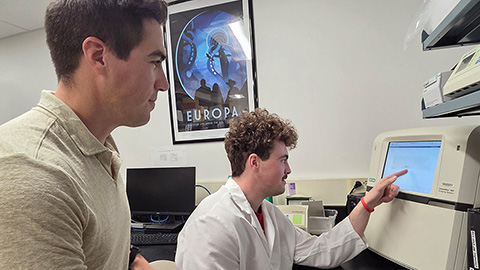
A chance encounter with the lab
Payton Stevens never planned to become a pancreatic cancer researcher. A temporary job set him on a path from rural Kentucky to leading research on Wnt signaling and metastasis, where he now pairs discovery with mentorship and science advocacy.