
Decoding how bacteria flip host’s molecular switches
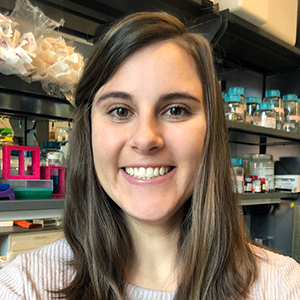
Kim Orth’s lab studies bacterial pathogens that act as “alien invaders,” taking over a host by flipping molecular switches.

“My job is to figure out what the switches are and how the bacteria flip them so that I can understand how the host system has been manipulated,” Orth said.
For her work, Orth has won the American Society for Biochemistry and Molecular Biology’s 2026 Earl and Thressa Stadtman Distinguished Scientist Award, which recognizes distinguished scientists who have made outstanding achievements in basic research.
Orth, a professor at the University of Texas Southwestern Medical Center and an investigator at the Howard Hughes Medical Institute, studies the molecular effect of bacterial virulence factors on host cells — revealing insights into pathogenesis and eukaryotic biology.
As a postdoc, Orth investigated signal transduction not in bacteria but in eukaryotic cells — until she hit a roadblock because existing technology couldn’t capture the detail she needed. She pivoted to studying Yersinia pseudotuberculosis, a relative of the plague-causing bacterium Y. pestis. When she discovered that the secreted protein YopJ modified host proteins to enhance bacterial survival, she was hooked.
“I saw this new world of how bacteria were impinging on the signal transduction I had been studying and thought it was really cool,” she said.
Orth has since shown how bacterial effectors manipulate eukaryotic proteins through posttranslational modifications. Her groundbreaking work on Vibrio parahaemolyticus, a bacterium that causes gastroenteritis, revealed that the protein VopS hijacks human cells by attaching the metabolite adenosine monophosphate, or AMP, to Rho guanosine triphosphatase proteins — a process her lab termed AMPylation. This disrupts binding of partner proteins that control cell shape and signaling, dampening the immune response. This work identified AMPylation as a posttranslational modification that bacterial effectors use to target eukaryotic proteins.
Orth then explored AMPylation in eukaryotes, showing in Drosophila that a Fic-domain enzyme homologous to VopS adds AMP to inactivate the ER chaperone protein BiP under normal conditions, and removes AMP during ER stress to boost protein folding. Extending this research to mice, her team found that loss of Fic, and thus proper AMPylation, heightened pancreatic stress responses. Recent findings linked Fic mutations to diseases including neonatal diabetes, and Orth’s Fic-mutant mouse mirrored aspects of this condition. Together, Orth’s work shows that AMPylation is a fundamental, conserved regulatory mechanism across evolution.
In her nomination letter, Margaret Phillips of the University of Texas Southwestern Medical Center wrote that Orth’s “pioneering biochemical research has reshaped our understanding of microbial pathogenesis and key aspects of eukaryotic cell biology.”
Orth said she was shocked and elated to receive this award, as her research builds on their 1960s discovery of proteins modified with AMP in E. coli.
“What my lab has studied for the past 15 years aligns with what (they) discovered,” she said. “It’s the most incredible honor to receive the Stadtman award.”
Orth will present her collective work on AMPylation at the 2026 ASBMB Annual Meeting.
Enjoy reading ASBMB Today?
Become a member to receive the print edition four times a year and the digital edition monthly.
Learn moreFeatured jobs
from the ASBMB career center
Get the latest from ASBMB Today
Enter your email address, and we’ll send you a weekly email with recent articles, interviews and more.
Latest in People
People highlights or most popular articles
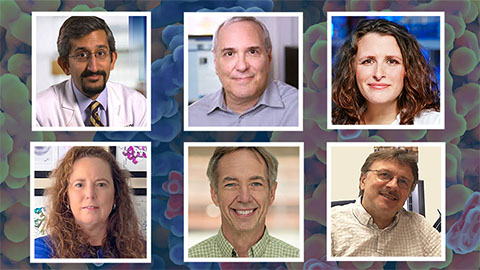
ASBMB members receive ASPET awards
The American Society for Pharmacology and Experimental Therapeutics awards Simone Brixius–Anderko, Paul Insel, Sudarshan Rajagopal, Emily Scott, Alan Smrcka and Jürgen Wess for their excellent research and mentoring work in pharmacology.
Kozul honored by Washington University
She received the 2025 Elliot L. Elson Education and Training Award.
de la Fuente honored for AI research
The award will support the development of an AI system called ApexMol, a 3D structure–informed, agentic large language model designed to create new biomolecules.
In memoriam: Peter Roepstorff
He was a leading researcher in biological mass spectrometry, mapped protein function in living organisms and was an ASBMB member for 19 years.
Flipping lipids and slime molds
A dull first job nearly pushed JBC associate editor Todd Graham out of science. Then a slime mold project changed his path. Now, he studies membrane biology and reflects on discovery, persistence and mentoring through uncertainty.
ASBMB members receive RNA Society awards
The RNA Society awards Brenda Bass, Can Cenik and Karin Musier–Forsyth for their achievements in RNA research and innovation. Winners will be recognized at the closing awards ceremony of the RNA 2026 annual meeting.