
The data that did not fit
Some of the most influential discoveries begin with data that refuse to behave.
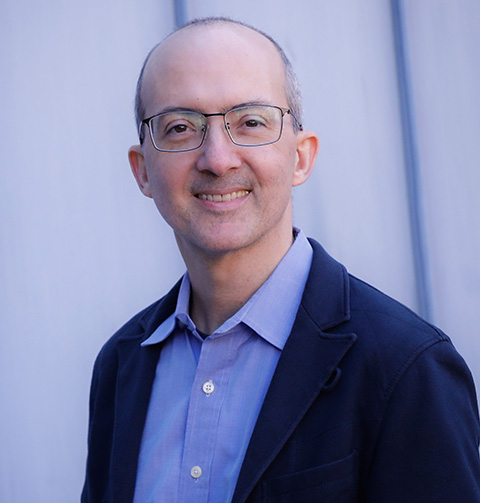
For Brent Stockwell, that kind of stubborn result led to the discovery of ferroptosis, a form of regulated cell death that has reshaped how scientists think about cancer, neurodegeneration and cellular metabolism.
In the early 2000s, the Columbia University professor observed that a new compound he discovered and named erastin triggered this previously unknown form of cell death. Understanding why, however, would take years. His decade-long quest to explain the observation began during his college years.
Tasked with identifying an unknown organic compound using spectral data in college, a skill not yet taught in his coursework, Stockwell spent hours poring over the data until he made sense of it.
“That moment was exciting,” he said. “I realized that chemistry and biology were puzzles you could actually solve.”
That realization stayed with him. Years later, it gave him the confidence to pursue erastin, a small molecule involved in iron metabolism, even as many colleagues advised him to abandon the idea.
At the time, however, biology was not his first passion. His earliest scientific interests were far from the life sciences. As a high school student fascinated by astrophysics and particle physics, he spent Saturday mornings in Columbia University’s Science Honors Program.
Those early experiences did not spare him from frustration once he entered research. As an undergraduate, he got his first real taste of how nonlinear science can be. He struggled with a project aimed at identifying a natural compound produced by bacterial fermentation. He said it was overambitious and one he simply was not prepared for.
Graduate school offered a stark contrast. Stockwell said it gave him near-total freedom. He learned how exciting it could be to follow his own ideas and curiosity independently. That contrast between too little guidance and too much freedom now shapes his mentoring style. Stockwell said a good project should match a researcher’s skill set while still yielding meaningful data.
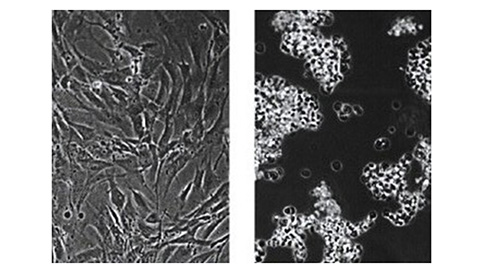
That philosophy soon met its defining challenge. While establishing his lab at the Whitehead Institute in 2000 and later at Columbia University in 2004, Stockwell discovered that erastin selectively targeted cells bearing mutations in rat sarcoma, or RAS, genes. The resulting cell death did not resemble apoptosis, the best-known form of programmed cell death at the time.
The response from the field was cautious. At first, his observation that erastin killed cancer cells through an unknown mechanism was largely dismissed. Stockwell said he received multiple grant rejections and negative feedback from an audience member while presenting at a conference in 2002.
Despite suggestions from peers to abandon the work, his team continued to follow the data for more than a decade.
Keeping the lab running required pragmatism. During that period, they sustained the lab by pursuing more straightforward projects that produced steady publications and funding.
“Sometimes the best observations come from data that don’t fit,” Stockwell said. “That’s when you become curious and can't ignore or discard it.”
That curiosity ultimately paid off with a 2012 publication in Cell. Stockwell said the publication marked an “exhilarating” turning point after years of critical response to the work.
Today, ferroptosis is a thriving field, with tens of thousands of publications and implications for cancer, neurodegeneration and infection. His initial observation about cell death has since led him to explore pairing drugs with custom-designed diets to make therapies more effective.
His interest in impact extends beyond the laboratory. To bring scientific research to a broader audience, Stockwell wrote “The Quest for the Cure,” a book that explores drug discovery and so-called undruggable targets.
He also believes storytelling shapes how scientists are trained. That same mindset has influenced his teaching. During the pandemic, as students struggled to stay engaged online, Stockwell reimagined his biochemistry course.
Using virtual reality headsets, students met in a virtual amphitheater and explored rotating 3D molecules. One student, who had long misunderstood a protein’s active site, suddenly saw it clearly in three dimensions and had a breakthrough. Stockwell considers hybrid teaching a powerful tool, especially when used consistently throughout a semester.
As for his legacy, “I would like to leave behind a body of knowledge that others can build on,” Stockwell said. “And I hope I have helped launch the careers of people who will go on to ask even better questions.”
Across ferroptosis, mentorship, virtual reality and science storytelling, Stockwell returns to the same advice he gives his students. In his view, the questions that matter most sharpen as scientists gain experience and better understand what is known and what remains unknown.
Enjoy reading ASBMB Today?
Become a member to receive the print edition four times a year and the digital edition monthly.
Learn moreGet the latest from ASBMB Today
Enter your email address, and we’ll send you a weekly email with recent articles, interviews and more.
Latest in People
People highlights or most popular articles
ASBMB members receive ASPET awards
The American Society for Pharmacology and Experimental Therapeutics awards Simone Brixius–Anderko, Paul Insel, Sudarshan Rajagopal, Emily Scott, Alan Smrcka and Jürgen Wess for their excellent research and mentoring work in pharmacology.
Kozul honored by Washington University
She received the 2025 Elliot L. Elson Education and Training Award.
de la Fuente honored for AI research
The award will support the development of an AI system called ApexMol, a 3D structure–informed, agentic large language model designed to create new biomolecules.
In memoriam: Peter Roepstorff
He was a leading researcher in biological mass spectrometry, mapped protein function in living organisms and was an ASBMB member for 19 years.
Flipping lipids and slime molds
A dull first job nearly pushed JBC associate editor Todd Graham out of science. Then a slime mold project changed his path. Now, he studies membrane biology and reflects on discovery, persistence and mentoring through uncertainty.
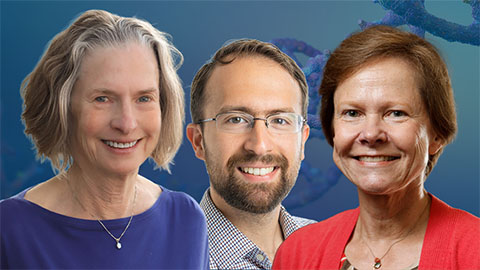
ASBMB members receive RNA Society awards
The RNA Society awards Brenda Bass, Can Cenik and Karin Musier–Forsyth for their achievements in RNA research and innovation. Winners will be recognized at the closing awards ceremony of the RNA 2026 annual meeting.