
Novel inhibitor targets RAS-driven cancers

Targeted cancer therapy is designed to attack cancer cells with precision. It is widely used to treat tumors such as colorectal, breast, pancreatic and ovarian cancers. One of the most common drivers of many human cancers is activation of the RAS oncoprotein, a protein encoded by cancer-causing genes known as oncogenes. Previous studies have shown that directly targeting RAS for cancer treatment has long been challenging because of limitations in the protein’s structure and function.
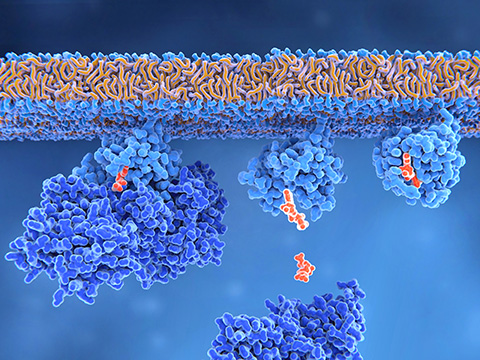
In a recent study published in the Journal of Biological Chemistry, scientists from the University of Louisville and the University of Cincinnati College of Medicine discovered a small-molecule inhibitor called C4-180 that targets a previously unexplored but critical cancer signaling route activated by RAS mutations.
The authors said the discovery could lead to therapies for a broad range of tumors.
The new molecule C4-180 directly targets cancer-activating regions of RALGEF, or Ral guanine nucleotide exchange factors, a signaling network downstream of RAS proteins. Computational studies showed that C4-180 fits into the RALGEF region and binds to it. This binding disrupts cancer signaling without interfering with other cellular processes. In laboratory studies, this molecule suppressed pancreatic tumor growth.
Another variant of the drug, called C4, reduced lung cancer metastasis without detectable toxic effects. Metastasis occurs when cancer from one region spreads to a secondary region within the human body.
Commercially available RAS inhibitors that target the first two pathways have limited effectiveness because patients often develop drug resistance. Moreover, combination treatments involving multiple drugs have caused toxicity in patients, an effect that was not observed with C4 variants.
“The low toxicity observed suggests that the agent is a good candidate for future combination therapy with a variety of standard-of-care approaches,” Geoffrey J. Clark, study corresponding author, said.
He added that, for the drug to reach clinical trials, it must first be optimized to ensure proper delivery to the target tissues and cells.
Overall, drug solubility and sex-based differences in tumor response were identified as key areas for future research.
C4-180 is the first small-molecule drug shown to bind directly to the RALGEF pathway and demonstrate antitumor activity in the body. The authors suggest combining C4-180 with other inhibitors to limit drug resistance and more fully suppress cancer-driving pathways.
The discovery, particularly when paired with other therapies, could significantly advance cancer research and treatment.
Enjoy reading ASBMB Today?
Become a member to receive the print edition four times a year and the digital edition monthly.
Learn moreGet the latest from ASBMB Today
Enter your email address, and we’ll send you a weekly email with recent articles, interviews and more.
Latest in Science
Science highlights or most popular articles
Glaucoma model links immune signaling to disease progression
Researchers at Duke University determine genetic variations that could increase the risk of developing glaucoma.
Uncovering the molecular roots of fatty liver disease
Physician–scientist Silvia Sookoian discusses her path from hepatitis C care to MASLD research, her use of multi-omics to study steatotic liver disease, and how lipid metabolism and genetics are reshaping understanding of MASH and liver health.
Mitochondria shape kidney cell function
Researchers at the University of Washington, Seattle present the first quantitative comparison of mitochondrial interactomes between two epithelial cell types in the kidney.
Long-chain polyunsaturated fatty acids linked to postoperative delirium risk
Researchers show that altered lipid metabolism may contribute to postoperative delirium, a condition linked to increased risk for long-term cognitive decline. The study explores potential disease mechanisms, which have yet to be understood.
Glycosylation patterns across antibody isotypes distinguish tuberculosis states
Researchers at Taipei Medical University present the first site-specific glycosylation analysis of immunoglobulins in elderly tuberculosis patients.
Blood glycome possibly predicts lifespan
Researchers at the University of Santiago de Compostela show that total serum N-glycome can predict mortality independent of traditional risk factors.