
Uncovering the molecular roots of fatty liver disease
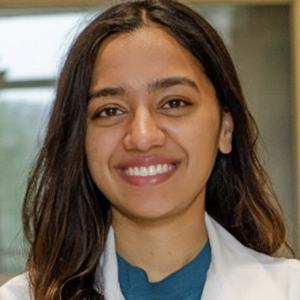
Physician–scientist Silvia Sookoian has spent decades decoding how genes, lipids, and the environment intersect in driving the progression of nonalcoholic fatty liver disease, now renamed MASLD, or Metabolic Dysfunction-Associated Steatotic Liver Disease. Her work also reveals how MASLD progresses to metabolic dysfunction-associated steatohepatitis, or MASH, leading to inflammation and tissue damage.
Based in Argentina, she leads research that integrates omics data with clinical insights to understand the disease’s complexity at the National Research Council, a federal agency similar to the National Institutes of Health. Now an associate editor at the Journal of Lipid Research, Sookoian balances translational science, editorial leadership and international collaboration.
Sookoian spoke with ASBMB Today about her research and her experience as a JLR associate editor.
This interview has been edited for length, clarity and style.
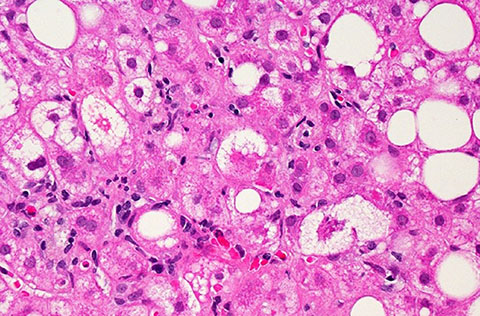
What sparked your interest in studying NAFLD and lipid metabolism?
Sookoian: It started almost by chance. After my residency, hepatitis C had just been discovered, and hospitals needed clinicians to care for those patients. I wanted to continue caring for patients while doing research, which sparked my interest in liver disease. Later, I joined a group studying the genetics of metabolic syndrome led by Carlos Pirola, which led me into MASLD and MASH.
What is your current research focus in MASLD?
Sookoian: Building on that transition into metabolic liver disease, my work now focuses on the molecular basis of MASLD and MASH.
Our group uses a wide range of omics approaches, including genomics, epigenomics, transcriptomics, metabolomics, proteomics and metagenomics. We perform liver biopsies and analyze them in depth.
We also use systems biology approaches to integrate data and better understand disease mechanisms. We go from patient samples to models, and back again.
How did you become involved with JLR?
Sookoian: It happened about two years ago at a liver meeting in Washington, D.C. I was already working on a review paper with Editor-in-Chief Nick Davidson, and we met in person to finalize it. During that meeting, Nick said he had a question for me. He invited me to serve as an associate editor, explaining that there was an open position and that I had been recommended.
I was surprised because my background is primarily clinical, while JLR publishes a large amount of basic science. But Nick believed I could bring value, particularly in translational and clinical research.
What has the editorial experience taught you about publishing?
Sookoian: I have been an associate editor for other journals, especially clinical journals, but my JLR role has been a unique challenge. It is an engaging experience, as you identify reviewers and manage the review process. One of the biggest difficulties today is finding reviewers as people are busy, traveling or declining invitations. This is challenging because we aim to provide authors with decisions within about three weeks. You must strike a balance between speed and rigor to find reviewers quickly, respond to authors and obtain thoughtful reviews. It is a very demanding job but, at the end of the day, it is rewarding.
Have there been any pivotal moments in your research journey?
Sookoian: When we began studying MASLD (NAFLD previously) around 2009, little was known about its genetic drivers. After the first genetics study was published, we quickly moved to genotype our own samples. Because that study did not include patients with liver biopsies, we had a key advantage.
We were one of the first groups to replicate a key genetic association with liver enzymes and MASLD using patient samples with liver biopsies. We initially submitted the work to a major journal but were unsuccessful. We initially submitted the work to a major journal but were unsuccessful. It was hard to publish at the time because our sample size was small and the finding was new, but eventually, we published it in JLR.
Another major finding was our work in epigenetics and the liver microbiome. We examined liver mitochondrial DNA methylation and performed metagenomic profiling within liver tissue, not stool. This was shocking. While the gut–liver connection is well known, detecting microbial DNA in the liver was unexpected.
What translational impact do you hope your research will have?
Sookoian: One target gene we’ve studied, HSD17B13, a lipid droplet-associated protein involved in chronic liver injury, is now being tested in early-stage clinical trials. We published an article in JLR in 2018 showing its liver-specific expression and localization.
We found that patients carrying a variant of the HSD17B13 gene show protection against severe liver damage due to decreased levels of the HSD17B13 protein. Now, gene-silencing approaches such as antisense oligonucleotides and RNA interference are being tested to reduce this protein in patients with MASH.
We are also working on large-scale data projects using UK Biobank resources to investigate the clinical and molecular heterogeneity in liver disease.
What do you see as the biggest challenge in lipid research over the next decade?
Sookoian: The biggest opportunity is integrating advanced technologies to understand disease biology better. Many scientists are using diverse approaches, but without continuing to adopt new technologies, it is difficult to move the field forward.
Many researchers rely on animal models in lipid research, but there is a fine line between experimental breakthroughs and what can be translated to humans. What we see in experimental systems is not always replicated in patients. This is a major challenge, especially because many studies still focus on one molecule, one pathway or one model system.
I don’t think this is the direction we should take in the near future. The future is integrative knowledge. You need to understand processes across cells and tissues. If you focus on only one component, it may take years for those findings to translate into meaningful advances. Science should move beyond single proteins or pathways and take a more holistic approach. To truly understand disease pathology, you need to connect all the pieces.
Enjoy reading ASBMB Today?
Become a member to receive the print edition four times a year and the digital edition monthly.
Learn moreGet the latest from ASBMB Today
Enter your email address, and we’ll send you a weekly email with recent articles, interviews and more.
Latest in People
People highlights or most popular articles
Kimble honored for lifetime achievement in genetics
She received the 2026 Thomas Hunt Morgan Medal and will be honored with a dedicated online profile and seminar.
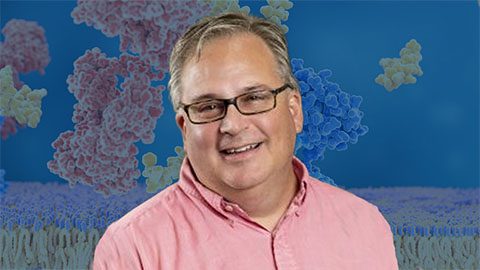
Janetka named distinguished professor
Washington University awarded him the inaugural Carl Frieden Distinguished Professorship.
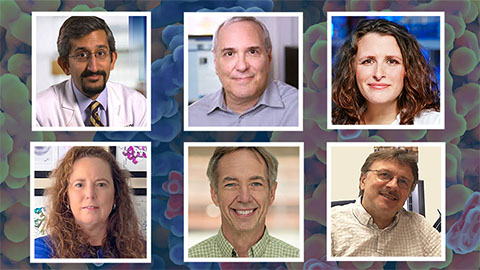
ASBMB members receive ASPET awards
The American Society for Pharmacology and Experimental Therapeutics awards Simone Brixius–Anderko, Paul Insel, Sudarshan Rajagopal, Emily Scott, Alan Smrcka and Jürgen Wess for their excellent research and mentoring work in pharmacology.
Kozul honored by Washington University
She received the 2025 Elliot L. Elson Education and Training Award.
de la Fuente honored for AI research
The award will support the development of an AI system called ApexMol, a 3D structure–informed, agentic large language model designed to create new biomolecules.
In memoriam: Peter Roepstorff
He was a leading researcher in biological mass spectrometry, mapped protein function in living organisms and was an ASBMB member for 19 years.