
Lipid-lowering therapies could help treat IBD

Inflammatory bowel disease, or IBD, which includes Crohn’s disease and ulcerative colitis, causes chronic gut inflammation and affects millions worldwide. While immune dysfunction and gut barrier defects are central to IBD, newer studies suggest lipid metabolism and the gut microbiome also play key roles. Dyslipidemia, abnormal levels of fats like cholesterol or triglycerides in the blood, has been linked to higher IBD risk. However, the effect of lipid-lowering drugs is less clear. A recent study in the Journal of Lipid Research by Xin Huang and colleagues at Shandong First Medical University explored how lipid-lowering drugs influence IBD through gut microbes and immune signaling.
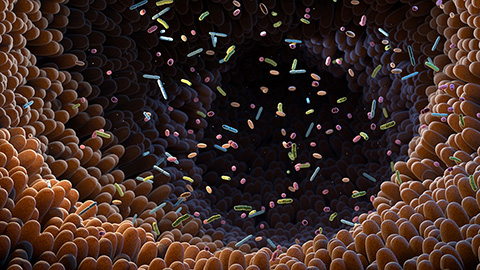
Using drug-targeted Mendelian randomization, a genetic approach that uses naturally occurring variants to mimic the effects of specific drugs, the authors identified nine drug targets, including statins, proprotein convertase subtilisin kexin type 9 or PCSK9 inhibitors, 3-hydroxy-3-methylglutaryl–coenzyme A reductase or HMGCR, and triglyceride-lowering therapies. Blocking the lipoprotein regulator angiopoietin-like 3, or ANGPTL3, or the triglyceride regulator apolipoprotein C-III or APOC3 in humans raised IBD risk, while greater activity of lipoprotein lipase or LPL and low-density lipoprotein receptor, or LDLR, lowered risk. These results suggest IBD outcomes depend on the lipid pathway targeted.
Microbiome data showed that PCSK9 and APOC3 inhibition reduced diversity and beneficial gut bacteria such as Bifidobacterium and Lactobacillus, while HMGCR inhibition increased diversity and short-chain fatty acid producers. These microbial changes matched cytokine shifts, with higher IL-6 and TNF-α in PCSK9 and APOC3 groups, and lower levels in statin users. Overall, the study showed that lipid-lowering drugs can affect IBD not only through lipid changes but also by shaping the microbiome and immune pathways. These findings suggest that lipid-lowering therapies can influence IBD progression by reshaping gut microbial communities and inflammatory signaling, not just circulating lipid levels. Future research could explore microbiota-based strategies to mitigate the proinflammatory effects of certain lipid-targeting drugs in IBD.
Enjoy reading ASBMB Today?
Become a member to receive the print edition four times a year and the digital edition monthly.
Learn moreGet the latest from ASBMB Today
Enter your email address, and we’ll send you a weekly email with recent articles, interviews and more.
Latest in Science
Science highlights or most popular articles
Glaucoma model links immune signaling to disease progression
Researchers at Duke University determine genetic variations that could increase the risk of developing glaucoma.
Uncovering the molecular roots of fatty liver disease
Physician–scientist Silvia Sookoian discusses her path from hepatitis C care to MASLD research, her use of multi-omics to study steatotic liver disease, and how lipid metabolism and genetics are reshaping understanding of MASH and liver health.
Mitochondria shape kidney cell function
Researchers at the University of Washington, Seattle present the first quantitative comparison of mitochondrial interactomes between two epithelial cell types in the kidney.
Long-chain polyunsaturated fatty acids linked to postoperative delirium risk
Researchers show that altered lipid metabolism may contribute to postoperative delirium, a condition linked to increased risk for long-term cognitive decline. The study explores potential disease mechanisms, which have yet to be understood.
Glycosylation patterns across antibody isotypes distinguish tuberculosis states
Researchers at Taipei Medical University present the first site-specific glycosylation analysis of immunoglobulins in elderly tuberculosis patients.
Blood glycome possibly predicts lifespan
Researchers at the University of Santiago de Compostela show that total serum N-glycome can predict mortality independent of traditional risk factors.