
Unsheathing the role of myelin lipids in Alzheimer’s disease

Alzheimer’s disease, or AD, is a devastating neurodegenerative disease that leads to irreversible cognitive decline in older adults. In the early 2000s, Xianlin Han and his colleagues found that patients with early AD had dramatically reduced levels of sulfatides, a class of lipids that forms myelin sheaths in the nervous system. Myelin sheaths insulate nerve fibers, like how rubber insulates electrical cables, and facilitate the quick and efficient signal transduction between nerve cells. Thus, disruption of myelin sheaths can significantly impair information travel along the nervous system. Han and colleagues’ findings highlighted the importance of lipids in AD and suggested a possible role for sulfatides in AD pathogenesis.

Han was this month’s speaker on ASBMB Breakthroughs, a webinar series highlighting research from ASBMB journals. He is the chaired professor of medicine at the Barshop Institute at the University of Texas Health San Antonio and an associate editor of the Journal of Lipid Research. During his talk, sponsored by JLR, Han shared his pioneering work in the field of lipidomics, specifically in the context of AD.
About two decades ago, scientists started to wonder if they could use mass spectrometry, or MS, analysis, to study complex lipid molecules.
“These questions of how lipids function, change and interact with each other, along with the advances in MS technology, led to the emergence of this new discipline called lipidomics,” Han said.
To cement the new field, Han and his colleague, Richard W. Gross, coined the term “lipidomics” in a 2003 paper in JLR. Lipidomics analyzes the structure and quantity of lipids in cells and tissues using MS analysis. It is a subdiscipline of metabolomics, the study of metabolic pathways and their components. Han explained that the unique physical, chemical and biological properties of lipids warranted the establishment of this new field. For example, unlike other metabolites, lipids form aggregates in solutions, so researchers need specific techniques to analyze cellular lipids.
“Lipids are very important, but also very complicated,” Han said.
Han’s team developed multidimensional MS-based shotgun lipidomics, or MDMS–SL, a platform comprised of multiple steps, such as a multiplexed sample preparation, that optimize a sample for accurate identification of and distinction between lipid classes. Using MDMS–SL, Han and others can analyze over 95% of the lipid content in samples, and screen thousands of lipid molecular species with a minimal amount of starting material with over 90% precision. Prior to this technique, the field considered 60% precision acceptable.
Han’s group has applied these techniques to study how lipids change in the context of diseases, such as AD, with the goal of uncovering new drug targets. Since establishing the link between sulfatide loss and AD in the early 2000s, Han and his colleagues have continued to investigate the biological consequences of lipid loss.
“This dramatic loss of sulfatide really stood out to us, so we were very interested in learning whether it’s truly connected to the onset of AD,” Han said.
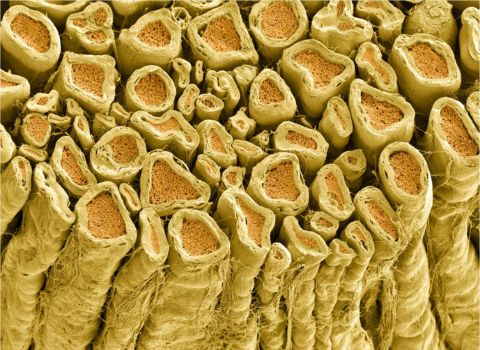
“A surprising finding was that mice (without) CST had enlarged bladders,” Han said, “which we thought could explain the loss of bladder control in AD patients.”
Scientists know that sulfatide levels increase with age early in life, reach a plateau around middle age and then start to decline around the age of 65, the age at which individuals typically start to show signs of AD. However, Han and his colleagues found that known AD risk factors, such as the APOE4 gene and Type 2 diabetes, promote an even more dramatic loss of sulfatide.
“We believe that this additional loss of sulfatide ultimately causes AD,” Han said. “And we think that the replenishment of sulfatide can be a viable approach for treating AD.”

Up next
Evolution of metallo-β-lactamases: A journey from the test tube to the bacterial periplasm
March 19, 2025 12:15–1 p.m. Eastern
Alejandro Vila of the University of Rosario will present his research on the evolutionary traits of clinical MBL variants under conditions that mimic their natural bacterial environment.
Register for the whole ASBMB Breakthroughs webinar seriesEnjoy reading ASBMB Today?
Become a member to receive the print edition four times a year and the digital edition monthly.
Learn moreGet the latest from ASBMB Today
Enter your email address, and we’ll send you a weekly email with recent articles, interviews and more.
Latest in Science
Science highlights or most popular articles
Mitochondria shape kidney cell function
Researchers at the University of Washington, Seattle present the first quantitative comparison of mitochondrial interactomes between two epithelial cell types in the kidney.
Long-chain polyunsaturated fatty acids linked to postoperative delirium risk
Researchers show that altered lipid metabolism may contribute to postoperative delirium, a condition linked to increased risk for long-term cognitive decline. The study explores potential disease mechanisms, which have yet to be understood.
Glycosylation patterns across antibody isotypes distinguish tuberculosis states
Researchers at Taipei Medical University present the first site-specific glycosylation analysis of immunoglobulins in elderly tuberculosis patients.
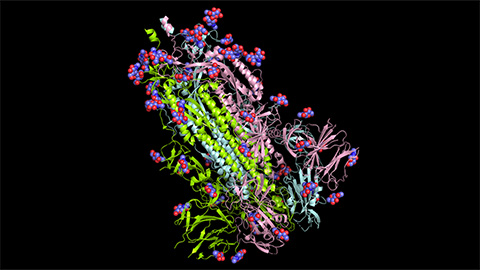
Blood glycome possibly predicts lifespan
Researchers at the University of Santiago de Compostela show that total serum N-glycome can predict mortality independent of traditional risk factors.
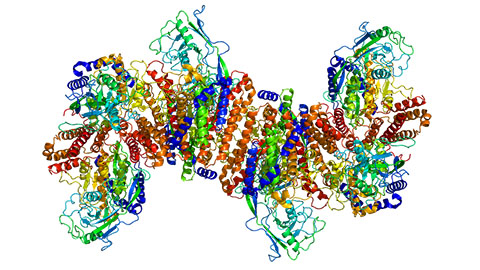
Building a better model for drug delivery across the blood–brain barrier
Industry and academic scientists collaborated to develop a rat with humanized iron-transport receptors, enabling research into iron homeostasis and drugs that cross the brain’s barrier.
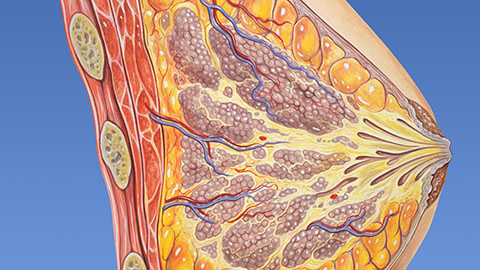
Fat synthesis enzyme crucial for milk fat and newborn growth
Researchers found that a deficiency of the fatty acid synthesis enzyme stearoyl-CoA desaturase-1 reduced mammary gland function during lactation and caused low birth weight in newborns that were fed milk from enzyme-deficient glands.