
Ragweed compound thwarts aggressive bladder and breast cancers

For centuries, nature has provided the foundation for medicine, and modern science continues to uncover its potential. Plants have contributed to treatments for many diseases, including cancer. Their chemical diversity has yielded several widely used chemotherapy drugs, including paclitaxel, vincristine and camptothecin.
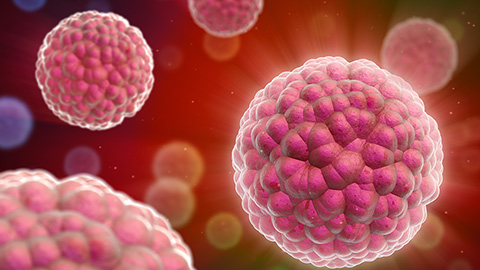
Today, researchers are combining traditional knowledge with laboratory research to discover new plant-based cancer therapies. One example is ambrosin, a natural compound from the Ambrosia plant, commonly known as ragweed. Ambrosin has shown promising anticancer activity against advanced bladder and breast cancers, but its molecular targets and mechanisms in human cancer cells have remained unclear.
A new study, led by Layla El–Sawy, Kathleen C. Day and Mark L. Day at the University of Michigan, and published in the Journal of Biological Chemistry, begins to fill that gap, identifying several pathways through which ambrosin acts. These findings may inform strategies to enhance existing treatments, overcome resistance and expand therapeutic options for patients with advanced disease.
The team isolated ambrosin from two Ambrosia species: Ambrosia maritima, or sea ragweed, native to North Africa, and Ambrosia hispida, or coastal ragweed, found in the Caribbean. Ambrosin belongs to the sesquiterpene lactone, or STL, class. These lipophilic secondary metabolites are produced primarily for plant defense and are especially common in the Asteraceae family, which includes daisies.
The researchers used a cell viability assay to show that ambrosin selectively targets bladder and breast cancer cell lines at micromolar concentrations. They found that ambrosin suppresses the sphere-forming efficiency of cancer cells, a test that measures the self-renewal ability of cells responsible for tumor growth, metastasis and therapy resistance. In addition, the team found that ambrosin stops cancer cells from growing into tumor spheroids, a 3D culture system that enables assessment of tumor growth, organization and treatment response.
To understand how ambrosin works, the authors performed RNA sequencing to study the changes in gene expression after treatment. They found that ambrosin activates antitumor genes and triggers mitochondrial apoptosis, a process that leads to programmed cell death. Ambrosin also disrupts cancer cell signaling by targeting epidermal growth factor receptor, or EGFR, and RhoC guanosine triphosphatase, proteins involved in cell growth, migration and metastasis. By interfering with these pathways, ambrosin limits tumor growth and spread.
Overall, the study demonstrates that ambrosin selectively targets bladder and breast cancer cells in cell-based models while engaging multiple pathways involved in tumor growth and survival. Future studies will focus on ambrosin’s metabolism and pharmacokinetics to better assess its therapeutic potential, particularly for advanced or treatment-resistant cancers.
Enjoy reading ASBMB Today?
Become a member to receive the print edition four times a year and the digital edition monthly.
Learn moreGet the latest from ASBMB Today
Enter your email address, and we’ll send you a weekly email with recent articles, interviews and more.
Latest in Science
Science highlights or most popular articles
Glaucoma model links immune signaling to disease progression
Researchers at Duke University determine genetic variations that could increase the risk of developing glaucoma.
Uncovering the molecular roots of fatty liver disease
Physician–scientist Silvia Sookoian discusses her path from hepatitis C care to MASLD research, her use of multi-omics to study steatotic liver disease, and how lipid metabolism and genetics are reshaping understanding of MASH and liver health.
Mitochondria shape kidney cell function
Researchers at the University of Washington, Seattle present the first quantitative comparison of mitochondrial interactomes between two epithelial cell types in the kidney.
Long-chain polyunsaturated fatty acids linked to postoperative delirium risk
Researchers show that altered lipid metabolism may contribute to postoperative delirium, a condition linked to increased risk for long-term cognitive decline. The study explores potential disease mechanisms, which have yet to be understood.
Glycosylation patterns across antibody isotypes distinguish tuberculosis states
Researchers at Taipei Medical University present the first site-specific glycosylation analysis of immunoglobulins in elderly tuberculosis patients.
Blood glycome possibly predicts lifespan
Researchers at the University of Santiago de Compostela show that total serum N-glycome can predict mortality independent of traditional risk factors.