
Light-activated small molecule could transform eye infection treatment

Many contact lens users occasionally fall asleep with their lenses in. However, this can cause dry and irritated eyes and blurry vision, which may be a sign of a serious infection.
Contact lenses are a form of vision correction used by about 45 million Americans as an alternative to glasses. Because they sit directly on the cornea, they can trap debris and microbes against the eye, increasing the risk of damage.
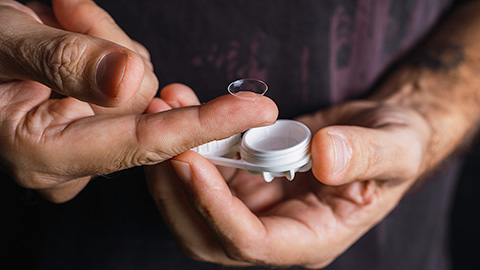
Contact lens wearers have up to 10 times the risk of developing infectious keratitis compared with non–lens wearers. Infectious keratitis is a corneal infection caused by bacteria or fungi and is the fifth leading cause of blindness worldwide.
Infectious keratitis causes symptoms including itching or pain in and around the eyes, and vision changes such as increased light sensitivity and haziness. Keratitis can also cause discharge, causing stickiness and discomfort.
VisiRose, an ophthalmic biotechnology company, aims to treat acute infectious keratitis using a bioactive synthetic small molecule called Rose Bengal, or RB, activated by light therapy.
“Normally, the intact corneal epithelium, antimicrobial components of the tear film and constant blinking prevent microbial entry,” Ed Pershing, chairman of the board of directors and chief executive officer at VisiRose, said.
When the cornea is scratched due to dry eye, injury or contact lens–related trauma, pathogens can enter the tissue. The resulting inflammatory response is rapid and can worsen damage and lead to permanent vision loss.
Bacterial keratitis, the most common form of keratitis, is often caused by Streptococcus bacteria that have significant resistance to broad-spectrum antibiotics like fluoroquinolones. Topical corticosteroid therapy to suppress inflammation can cause the infection to worsen.
Severe eye injury and infection can require surgical treatment. VisiRose’s treatment, RB Photodynamic Antimicrobial Therapy, or RB-PDAT, is a non-invasive broad-spectrum intervention aimed at successfully treating infectious keratitis and improving visual outcomes in patients with severe infectious keratitis. RB-PDAT has inhibited growth of Fusarium fungus, Pseudomonas bacteria and Acanthamoeba, a rare and hard-to-treat cause of infectious keratitis.
RB was originally created as a textile dye that later was used in eye drops to identify damaged corneal or conjunctival cells and to diagnose liver function when administered intravenously. When activated by green light between 500 and 550 nanometers, RB generates reactive oxygen species, or ROS, from ambient oxygen.
ROS directly damages DNA in bacteria, parasites and fungi, destroying them and preventing further growth within the eye. Experimental studies show that ROS exert antimicrobial effects without sustained harm to surrounding healthy eye tissue.
“RB-PDAT can generate antimicrobial effects within one or two treatment sessions,” Pershing said. “As a result, the therapy is designed for rapid, localized action.”
While RB-PDAT offers a promising new approach for treating infectious keratitis, contact lens hygiene remains the first line of defense. Proper cleaning, timely replacement and avoiding overnight wear continue to be essential. Combined with innovations like RB-PDAT, these steps can help protect vision and reduce the risk of serious eye infections.
Enjoy reading ASBMB Today?
Become a member to receive the print edition four times a year and the digital edition monthly.
Learn moreGet the latest from ASBMB Today
Enter your email address, and we’ll send you a weekly email with recent articles, interviews and more.
Latest in Science
Science highlights or most popular articles

Uncovering the molecular roots of fatty liver disease
Physician–scientist Silvia Sookoian discusses her path from hepatitis C care to MASLD research, her use of multi-omics to study steatotic liver disease, and how lipid metabolism and genetics are reshaping understanding of MASH and liver health.
Mitochondria shape kidney cell function
Researchers at the University of Washington, Seattle present the first quantitative comparison of mitochondrial interactomes between two epithelial cell types in the kidney.
Long-chain polyunsaturated fatty acids linked to postoperative delirium risk
Researchers show that altered lipid metabolism may contribute to postoperative delirium, a condition linked to increased risk for long-term cognitive decline. The study explores potential disease mechanisms, which have yet to be understood.
Glycosylation patterns across antibody isotypes distinguish tuberculosis states
Researchers at Taipei Medical University present the first site-specific glycosylation analysis of immunoglobulins in elderly tuberculosis patients.
Blood glycome possibly predicts lifespan
Researchers at the University of Santiago de Compostela show that total serum N-glycome can predict mortality independent of traditional risk factors.
Building a better model for drug delivery across the blood–brain barrier
Industry and academic scientists collaborated to develop a rat with humanized iron-transport receptors, enabling research into iron homeostasis and drugs that cross the brain’s barrier.