
Training AI to uncover novel antimicrobials
Antibiotic-resistant infections kill more than a million people each year, and the United Nations predicts that number could rise to 10 million annually by 2050. To address this crisis, scientists are racing to discover antibiotics that work in new ways.
“Traditionally you go around nature and try to purify compounds” César de la Fuente, an associate professor at the University of Pennsylvania, said, describing how many antibiotics have been discovered. “It’s a very physical process, you have to go on expeditions in nature, and you don’t know what you’ll find. It’s like looking for a needle in a haystack.”
If researchers could systematically scan vast numbers of proteins to find antimicrobial candidates, they would unlock a treasure trove of potential antibiotics. But manually, such a task would take decades.
“We decided to think of biology as an information source,” de la Fuente said. Instead of explorers wandering the woods, custom-built artificial intelligence, or AI, models can mine the data.
Therefore, de la Fuente’s lab began building AI models to comb proteomic data and identify antimicrobial compounds.
Antimicrobials across the tree of life
The lab first searched the human proteome. It may seem like an odd place to look, but all organisms need defenses against infection. Beyond the traditional immune system, organisms use other defenses — including “encrypted peptides,” which de la Fuente’s group identified and characterized.
These peptides are fragments of normal proteins that, once cleaved, act as antimicrobials and arise from a wide range of proteins, not just immune-related ones.
“Surely this is not the only place we can find these peptides,” de la Fuente thought after searching the human proteome. He was right. His team has now searched across the tree of life — eukaryotes, prokaryotes, archaea and even extinct animals such as the woolly mammoth.
Every proteome they’ve searched contained antimicrobials, offering a wealth of molecules with potential to save lives where current drugs fail.
When AI meets the bench
The models rank thousands of potential antimicrobial peptides, but human expertise is needed to choose which to test.
“We have a human–machine meeting,” de la Fuente said. Half the lab builds and runs AI models, the other half tests candidates at the bench.
The team focusing on the model meets with the biochemists to decide which candidates to test. For example, a scientist might note that a promising compound is too hydrophobic and likely to aggregate, making it unsuitable.
Each half relies on the other: without AI, discovery would take years; without wet-lab testing, no one would know if candidates actually work.
Once hits are selected, the team synthesizes them, gives them names (such as “mammuthusin” from mammoths), and tests them biochemically and in mouse models.
Anna Crysler, a Ph.D. student, has been characterizing an antimicrobial peptide from an ancient zebra, mutating residues to see how structure affects function.
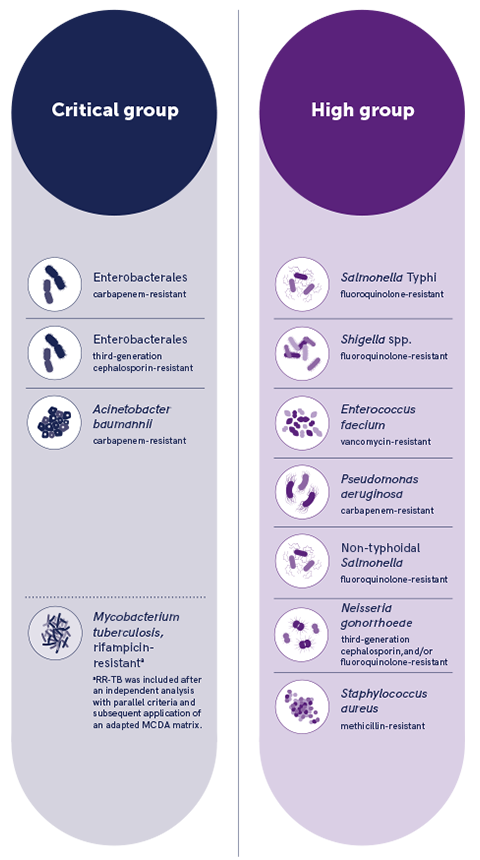
The team tests the candidates against the World Health Organization’s 11 high-priority bacterial strains, known as ESKAPEE, which includes Staphylococcus aureus, Klebsiella pneumoniae, Acinetobacter baumannii, Pseudomonas aeruginosa and more.
It takes more than a combination of expertise to get good results though. “César is a natural leader” Crysler said. “He does a great job promoting collaboration between the two halves of the lab.”
Crysler described lab meetings where all members are encouraged to ask questions and understand what each other is working on. “I couldn’t imagine a different environment to do this type of work,” Crysler said.
The collaborative method works. In a recent study of archaea proteomes, the model ranked more than 12,000 peptides. After human prioritization, the lab synthesized 80 — and 93% showed activity against ESKAPEE pathogens.
Long road to rapid prediction
Sorting through vast proteomic data might seem magical, but de la Fuente’s AI models are built on hard work and massive datasets. The lab merged its own antimicrobial peptide data with large public repositories, then spent years refining the system.
It takes years for models to accumulate enough data to work well. And the only real way to tell if they are working, is to painstakingly test what they predict and be ready for negative data.
“Negative outcomes are valuable because they go back into the model and refine the next predictions,” Marcello Der Torossian Torres, a research associate in the lab explained. “Synthesizing peptides and testing them across different conditions simply takes time, but that data is exactly what makes the models stronger in the end.”
Even so, it can be challenging in the moment. After finding one model was not working well after 2.5 years of training, “I thought it was possible I was off by an order of magnitude,” de la Fuente said. Maybe instead of a few years it would take a decade, he wondered. However, the team carried on and in just an additional 1 year, for 3.5 years total, the model began to work and predict new active compounds from proteomic data.
Designing their own deep-learning model lets the team focus on specific needs, avoiding compounds that mimic existing antibiotics, for example, or seeking antimicrobials that target only one strain, preserving the microbiome and reducing side effects.
Speed is another advantage: the models can analyze astronomical amounts of data.
“We’ve saved many years of human research time by doing this,” de la Fuente said. “Probably thousands of Ph.D. students working for six years each.” That makes the 3.5-year development seem short by comparison.
For Crysler, Torres and others in the lab, the payoff is clear: the models are not just predicting antimicrobials, they’re delivering molecules that work where existing drugs fail.
With a high success rate against WHO’s deadliest pathogens, their work offers real hope against the antibiotic resistance crisis that already claims millions of lives each year and threatens to claim millions more.
Enjoy reading ASBMB Today?
Become a member to receive the print edition four times a year and the digital edition monthly.
Learn moreGet the latest from ASBMB Today
Enter your email address, and we’ll send you a weekly email with recent articles, interviews and more.
Latest in Science
Science highlights or most popular articles
Blood glycome possibly predicts lifespan
Researchers at the University of Santiago de Compostela show that total serum N-glycome can predict mortality independent of traditional risk factors.
Building a better model for drug delivery across the blood–brain barrier
Industry and academic scientists collaborated to develop a rat with humanized iron-transport receptors, enabling research into iron homeostasis and drugs that cross the brain’s barrier.
Fat synthesis enzyme crucial for milk fat and newborn growth
Researchers found that a deficiency of the fatty acid synthesis enzyme stearoyl-CoA desaturase-1 reduced mammary gland function during lactation and caused low birth weight in newborns that were fed milk from enzyme-deficient glands.
Flipping lipids and slime molds
A dull first job nearly pushed JBC associate editor Todd Graham out of science. Then a slime mold project changed his path. Now, he studies membrane biology and reflects on discovery, persistence and mentoring through uncertainty.
How smelling death alters worm behavior
Researchers have found that the roundworm C. elegans can smell death, and it changes how the worms behave, reproduce and age.
A chance encounter with the lab
Payton Stevens never planned to become a pancreatic cancer researcher. A temporary job set him on a path from rural Kentucky to leading research on Wnt signaling and metastasis, where he now pairs discovery with mentorship and science advocacy.