
Fat synthesis enzyme crucial for milk fat and newborn growth

Imagine a newborn mouse failing to gain weight, despite nursing constantly. The culprit? A missing enzyme in its mother’s milk that shapes the very fats essential for survival.
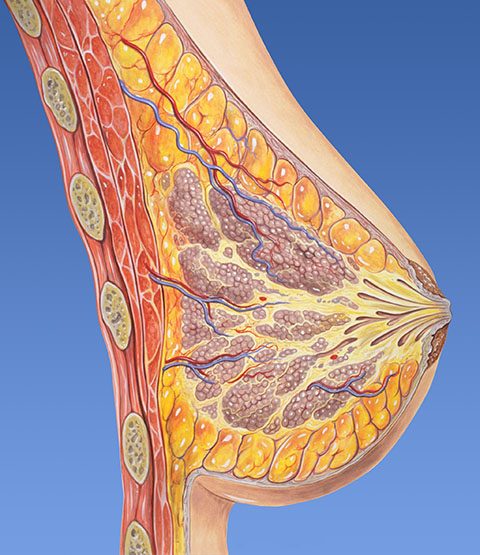
Lipogenic gene expression in the mammary gland rises dramatically around birth, enabling the biosynthesis of these essential lipids. One of these genes encodes the enzyme stearoyl-CoA desaturase-1, or SCD1. SCD1 plays a critical role in fatty acid synthesis by converting saturated fatty acids into monounsaturated fatty acids, or MUFAs. However, its role in milk lipid synthesis is not fully understood.
In a recent study published in the Journal of Lipid Research, Mugagga Kalyesubula, now a physiology postdoctoral fellow at the Johns Hopkins University School of Medicine, James Ntambi, professor of biochemistry at the University of Wisconsin–Madison, and their team found that SCD1 is essential for milk lipid synthesis. Deleting SCD1 impairs mammary gland function and newborn development.
Previously, Ntambi’s team discovered that SCD1 deficiency protects mice against obesity, fatty liver disease and hypertension. They had focused on liver and adipose tissue but had not yet examined other fat-metabolizing tissues.
After an inspiring talk by a colleague, co-corresponding author, and professor of animal sciences at Purdue University, Theresa Casey, on how milk lipids change in different metabolic contexts, Kalyesubula suggested studying SCD1 in the mammary gland, which essentially becomes a lipid-producing factory during lactation.
“We found that while blocking SCD1 might help with obesity and fatty liver, blocking it is really catastrophic for the newborn,” Kalyesubula said.
In the study, the team explored mammary gland function and milk fat composition in lactating mice lacking SCD1. SCD1 deficiency reduced mammary gland weight and the size of the acini — the structures that produce milk — during lactation. In addition, milk produced by these mice lacked important MUFAs and contained lower amounts of diglycerides and triglycerides. Further analysis showed that SCD1 deficiency reduced glycerolipids, including phosphatidylcholine, in the mammary gland.
The team then investigated the health of pups fed milk from SCD1-deficient mothers. They found that these pups exhibited lower body weights after 10 days of lactation.
“We show that without these specific monounsaturated fatty acids, such as oleic acid, the neonates don't thrive, which has huge implications for how we think about maternal nutrition and infant formula,” Kalyesubula said. “It suggests that the balance of lipids and the fat quality should be right for proper growth and development.”
He explained that their work highlights the need for doctors to evaluate milk lipid profiles in mothers facing breastfeeding challenges, rather than milk volume alone, and validates the push for infant formula designs to closely match the complex lipid profiles of human milk.
Ntambi further emphasized the importance of lipid quality and elaborated that MUFAs must be correctly incorporated into the various lipid species to provide the right lipid composition.
Future studies will include collaborating with clinicians to analyze milk lipid samples from mothers struggling with lactation and investigating how lipid composition and metabolic balance affect disease prevention and management.
Enjoy reading ASBMB Today?
Become a member to receive the print edition four times a year and the digital edition monthly.
Learn moreGet the latest from ASBMB Today
Enter your email address, and we’ll send you a weekly email with recent articles, interviews and more.
Latest in Science
Science highlights or most popular articles
Uncovering the molecular roots of fatty liver disease
Physician–scientist Silvia Sookoian discusses her path from hepatitis C care to MASLD research, her use of multi-omics to study steatotic liver disease, and how lipid metabolism and genetics are reshaping understanding of MASH and liver health.
Mitochondria shape kidney cell function
Researchers at the University of Washington, Seattle present the first quantitative comparison of mitochondrial interactomes between two epithelial cell types in the kidney.
Long-chain polyunsaturated fatty acids linked to postoperative delirium risk
Researchers show that altered lipid metabolism may contribute to postoperative delirium, a condition linked to increased risk for long-term cognitive decline. The study explores potential disease mechanisms, which have yet to be understood.
Glycosylation patterns across antibody isotypes distinguish tuberculosis states
Researchers at Taipei Medical University present the first site-specific glycosylation analysis of immunoglobulins in elderly tuberculosis patients.
Blood glycome possibly predicts lifespan
Researchers at the University of Santiago de Compostela show that total serum N-glycome can predict mortality independent of traditional risk factors.
Building a better model for drug delivery across the blood–brain barrier
Industry and academic scientists collaborated to develop a rat with humanized iron-transport receptors, enabling research into iron homeostasis and drugs that cross the brain’s barrier.