
Fasting, fat and the molecular switches that keep us alive

As a teenager in the Netherlands, Sander Kersten became fascinated by what happens in the body during exercise. Influenced by the rise of fitness culture, he wanted to understand how food and activity shape health.

“I was a nerd — I’m still a nerd,” he said. “I remember finding this article in a popular science magazine about the Nobel Prize awarded to (Michael) Brown and (Joseph) Goldstein for discovering how cells take up cholesterol. The idea that nutrients act at the molecular level was fascinating to me.”
That early spark set Kersten on a lifelong path to study the molecular regulation of metabolism. After earning a master’s degree in human nutrition from Wageningen University in 1993, he pursued a Ph.D. in nutritional biochemistry at Cornell University, where he studied how vitamin A regulates gene expression through nuclear receptors. A postdoctoral fellowship deepened his focus on lipid metabolism and gene regulation. In 2000, Kersten returned to Wageningen University. He became an associate professor in 2006 and a full professor in 2011, eventually chairing both the Nutrition, Metabolism and Genomics Group and the Division of Human Nutrition and Health.
In January 2024, Kersten returned to Cornell as a professor and director of the Division of Nutritional Sciences. Today, he continues to explore how nutrients act as signals that shape metabolism — a question that first captured his imagination as a teenager.
By uncovering how nutrients and fatty acids act as molecular signals that regulate gene expression, Kersten helped define fasting as a powerful physiological state that reprograms metabolism at the transcriptional level. His work on the nuclear receptor PPAR-alpha showed that fasting triggers a complex genetic response — insights that continue to inform drug discovery for metabolic diseases.
Kersten recently discussed his research and work as a Journal of Lipid Research associate editor with ASBMB Today. This interview has been edited for clarity, length and style.
What drew you to study the regulation of lipid metabolism?
Kersten: For my Ph.D., I worked on vitamin A, a lipid-soluble vitamin that acts similarly to fatty acids. At the time, it was becoming clear that vitamin A, vitamin D, and fatty acids regulate genes through nuclear receptors. That discovery shaped my career, realizing that the fats you eat directly influence which genes are turned on or off.
I wanted to connect these molecular findings to whole-body metabolism, to understand why fatty acids act through receptors and what processes they activate under different conditions.
During my postdoc, I studied PPARs, the fatty acid receptors that mediate these effects. Because the liver encounters many fatty acids during fasting, it became my model system. It’s during fasting, when fatty acid levels rise, that the body’s metabolic switches are most active.
If you had to choose one key discovery you’ve made, which one would it be?
Kersten: During my postdoc, I studied PPAR-alpha knockout mice. Initially, they looked normal — healthy and fertile with minor metabolic defects. But I hypothesized their importance would emerge during fasting, when the liver experiences a flood of fatty acids.
When I fasted the knockout mice overnight, the difference was striking. Normal mice tolerated fasting well, but the knockouts became cold and lethargic. They couldn’t activate ketogenesis, had low blood sugar, and accumulated fat in their livers. Their metabolism was disrupted. This experiment revealed the critical role of PPAR-alpha in fasting and became my most cited paper, published in 1999.
Building on that, I used fasting to identify new PPAR-alpha–regulated genes. Using subtractive hybridization, I discovered a previously unknown gene, which I named fasting-induced adipose factor. It encoded a secreted protein, suggesting a hormone-like role.
The fasting phenotype was so clear that it didn’t require technical tricks — the challenge was intellectual. Over the next 25 years, my group and others found that this gene, now known as angiopoietin-like 4, or ANGPTL4, regulates lipid uptake in fat tissue and is now a drug target in phase 2B trials.
How do fasting-induced changes in lipid metabolism inform our understanding of metabolic disorders?
Kersten: Throughout evolution, food scarcity was common, and our bodies are wired to handle it. Fasting helps us model those ancient adaptive responses. By studying fasting, we can uncover the body’s built-in mechanisms for maintaining balance — and identify therapeutic targets to activate or suppress.
Many drugs for obesity, diabetes and cardiovascular disease act on pathways originally designed for fasting. ANGPTL4 is one such example.
What fasting-related questions are you exploring next?
Kersten: I’m fascinated by how the body adapts to repeated fasting. Just as exercise leads to training adaptations, I wonder whether metabolism can also “train” through intermittent fasting. Does fasting repeatedly make the body more efficient? That’s the next frontier.
How might your findings inform nutritional strategies or therapeutics?
Kersten: The goal is to identify genes that could become viable drug targets or inform dietary interventions for metabolic diseases such as fatty liver disease, coronary artery disease, obesity or diabetes. We’re especially interested in pathways that could be activated or suppressed to restore metabolic balance.
Enjoy reading ASBMB Today?
Become a member to receive the print edition four times a year and the digital edition monthly.
Learn moreGet the latest from ASBMB Today
Enter your email address, and we’ll send you a weekly email with recent articles, interviews and more.
Latest in People
People highlights or most popular articles
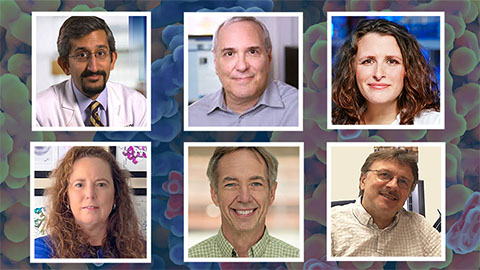
ASBMB members receive ASPET awards
The American Society for Pharmacology and Experimental Therapeutics awards Simone Brixius–Anderko, Paul Insel, Sudarshan Rajagopal, Emily Scott, Alan Smrcka and Jürgen Wess for their excellent research and mentoring work in pharmacology.
Kozul honored by Washington University
She received the 2025 Elliot L. Elson Education and Training Award.
de la Fuente honored for AI research
The award will support the development of an AI system called ApexMol, a 3D structure–informed, agentic large language model designed to create new biomolecules.
In memoriam: Peter Roepstorff
He was a leading researcher in biological mass spectrometry, mapped protein function in living organisms and was an ASBMB member for 19 years.
Flipping lipids and slime molds
A dull first job nearly pushed JBC associate editor Todd Graham out of science. Then a slime mold project changed his path. Now, he studies membrane biology and reflects on discovery, persistence and mentoring through uncertainty.
ASBMB members receive RNA Society awards
The RNA Society awards Brenda Bass, Can Cenik and Karin Musier–Forsyth for their achievements in RNA research and innovation. Winners will be recognized at the closing awards ceremony of the RNA 2026 annual meeting.