
From humble beginnings to unlocking lysosomal secrets
As a high school senior preparing for the Tawjihi, a high-stakes exam that would shape his college prospects, Monther Abu–Remaileh faced a major problem: his school was rarely open.
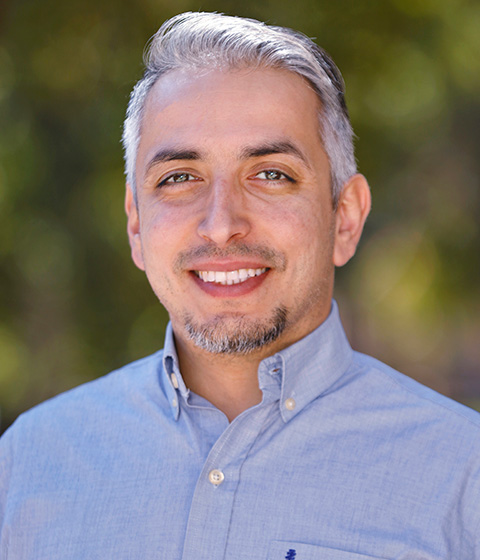
Born and raised in East Jerusalem, Abu–Remaileh’s final year of high school coincided with the second Palestinian uprising. Teachers were delayed for hours at military checkpoints and classes were frequently canceled, he recalled.
The dedication of a few mentors kept his academic passion alive, especially one physics teacher, Yousef Alhroush. During that senior year, Alhroush would walk through mountainous regions from southern Palestine to East Jerusalem to avoid the checkpoints, then sleep in his classroom all week to help his students prepare.
Now mentoring his own trainees, Abu–Remaileh said he feels indebted to his former teachers.
“Seeing all of that, even 25 years after, and probably 100 years after, it's stuck in my brain,” he said. “This is what they did for you; you need to help your students as well.”
Their support helped him earn a scholarship to the Jordan University of Science and Technology and two graduate degrees at the Hebrew University of Jerusalem. From there, he joined Massachusetts Institute of Technology’s Whitehead Institute as a postdoc and now leads a lab at Stanford University advancing the field of lysosomal lipid biochemistry.
For this work, he will receive the American Society for Biochemistry and Molecular Biology 2026 Walter A. Shaw Young Investigator Award in Lipid Research.
His lab focuses on how lysosomal dysfunction contributes to neurodegenerative disease. They began by studying conditions with known genetic causes but unclear biological mechanisms, systematically knocking out genes to see how they affected the lysosome. The team used mass spectrometry to measure changes in lipids, metabolites and proteins and found striking shifts in lysosomal lipids linking altered lipid metabolism to neurodegeneration.
One of the lab’s key discoveries centers on the ceroid-lipofuscinosis neuronal 5 gene, or CLN5. Loss of this gene causes a severe childhood neurodegenerative disorder, and variants in CLN5 also increase Alzheimer’s risk.
The lab found that CLN5 produces a phospholipid, bis(monoacylglycero)phosphate or BMP, which is essential for lysosome metabolism. This finding reframes the lysosome as not only a recycling center but also as a site of molecular creation.
The team went on to identify phospholipase A2 group XV, or PLA2G15, an enzyme that degrades BMP. Knocking it out increased BMP levels and rescued severe neurodegeneration in a mouse model. The work, recently published in Nature, positions PLA2G15 as a promising drug target for lysosome-related diseases.
Abu–Remaileh will present his work on how dysfunction in lysosomal lipid catabolism drives neurodegenerative diseases at the ASBMB 2026 Annual Meeting.
As a teenager, Abu–Remaileh lived through political upheaval and in an East Jerusalem refugee camp for several years. Now, he mentors students who don’t have all the privileges of their peers.
“It's important to diversify our faculty… because we have different perspectives,” he said. “We see different types of people, and that these people also have potential.”
Enjoy reading ASBMB Today?
Become a member to receive the print edition four times a year and the digital edition monthly.
Learn moreFeatured jobs
from the ASBMB career center
Get the latest from ASBMB Today
Enter your email address, and we’ll send you a weekly email with recent articles, interviews and more.
Latest in People
People highlights or most popular articles
Kimble honored for lifetime achievement in genetics
She received the 2026 Thomas Hunt Morgan Medal and will be honored with a dedicated online profile and seminar.
Janetka named distinguished professor
Washington University awarded him the inaugural Carl Frieden Distinguished Professorship.
ASBMB members receive ASPET awards
The American Society for Pharmacology and Experimental Therapeutics awards Simone Brixius–Anderko, Paul Insel, Sudarshan Rajagopal, Emily Scott, Alan Smrcka and Jürgen Wess for their excellent research and mentoring work in pharmacology.
Kozul honored by Washington University
She received the 2025 Elliot L. Elson Education and Training Award.
de la Fuente honored for AI research
The award will support the development of an AI system called ApexMol, a 3D structure–informed, agentic large language model designed to create new biomolecules.
In memoriam: Peter Roepstorff
He was a leading researcher in biological mass spectrometry, mapped protein function in living organisms and was an ASBMB member for 19 years.