
Building better tools to decipher the lipidome
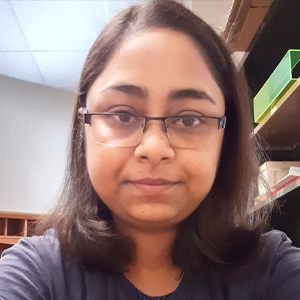
Matthew Mitsche, a junior associate editor of the Journal of Lipid Research, began his scientific journey in chemical engineering, where he built a strong foundation in logic, quantitative thinking and problem-solving. That training shaped how he approached questions, but his curiosity soon expanded beyond traditional engineering, drawing him toward the biological questions that underlie human health.

That drive led him to pursue a Ph.D. in biophysics and physiology, an interdisciplinary field that merged his love of precision with a fascination for living systems. At Boston University, he joined the lab of Donald Small, a pioneering figure in protein and lipid research, where he began studying how lipoproteins assemble, using apolipoprotein B as a model system.
In Small’s lab, Mitsche used a technique called drop tensiometry, which involves adding peptides to a solution and measuring how they alter the surface tension at a lipid–water interface. At the same time, the research landscape was shifting toward increasingly data-intensive approaches. Drawing on his chemical engineering background, Mitsche quickly resolved key technical challenges and streamlined data analysis. His coding skills reduced analysis from days to minutes, offering an early glimpse of the efficiency and creativity that would come to define his work.
As he neared the end of his graduate work, Mitsche decided that, to push his research questions further, he needed to learn mass spectrometry–based lipidomics. This rapidly growing field, which combines analytical chemistry with mass spectrometry, is becoming essential for answering complex questions about lipid metabolism in cells.
To address this gap, Mitsche joined Helen Hobbs and Jonathan Cohen at the University of Texas Southwestern Medical Center as a postdoctoral fellow. While working on a cholesterol transporter, he learned mass spectrometry, or MS, with Jeff McDonald, as well as stable isotope labeling, or SIL, a technique used to track metabolite biosynthesis. Mitsche said the team had been struggling for nearly a decade to uncover the function of an enzyme called patatin-like phospholipase domain-containing protein 3, or PNPLA3, which is the strongest known genetic risk factor for nonalcoholic fatty liver disease, or NAFLD.
“It’s frustrating,” Mitsche said. “But, that’s the way it goes.”
Motivated to better understand the molecular drivers of metabolic disease, Mitsche launched his own lab as an assistant professor in the Center for Human Nutrition, UT Southwestern Medical Center.
Mitsche said that one of his major goals was developing technology that improves the signal-to-noise ratio, or S/N, of SIL on fatty acids. More broadly, he aimed to build tools that could efficiently analyze lipid metabolism across all major lipid classes.
During a three-week on-site visit with Thermo Scientific engineers, he implemented short SIL labeling periods with deuterated water to improve S/N performance on an ultrahigh-resolution mass spectrometer. Without the robotic arm needed for direct infusion, he manually injected thousands of samples and adjusted the instrument parameters until the shorter labeling period produced a stronger signal. When he returned with the data, he showed his department chair that the instrument performed as expected and justified the investment.
“It was nice, fun but intimidating, as (I was) the first one to use a new instrument,” Mitsche said.
That mix of challenge and discovery reflects how he approaches science more broadly.
“I am ultimately an engineer,” Mitsche said. “Almost everything I have done has been focused on developing and applying new technologies to problems and new ways to approach problems. Working with doctors, as most of my mentors (have), grounded me to solve real-world medical problems.”
Enjoy reading ASBMB Today?
Become a member to receive the print edition four times a year and the digital edition monthly.
Learn moreGet the latest from ASBMB Today
Enter your email address, and we’ll send you a weekly email with recent articles, interviews and more.
Latest in People
People highlights or most popular articles
de la Fuente honored for AI research
The award will support the development of an AI system called ApexMol, a 3D structure–informed, agentic large language model designed to create new biomolecules.
In memoriam: Peter Roepstorff
He was a leading researcher in biological mass spectrometry, mapped protein function in living organisms and was an ASBMB member for 19 years.
Flipping lipids and slime molds
A dull first job nearly pushed JBC associate editor Todd Graham out of science. Then a slime mold project changed his path. Now, he studies membrane biology and reflects on discovery, persistence and mentoring through uncertainty.
ASBMB members receive RNA Society awards
The RNA Society awards Brenda Bass, Can Cenik and Karin Musier–Forsyth for their achievements in RNA research and innovation. Winners will be recognized at the closing awards ceremony of the RNA 2026 annual meeting.
In memoriam: Richard L. Cross
He studied the enzymatic mechanisms of ATP synthase and served on the editorial board of the Journal of Biological Chemistry for 24 years.
A chance encounter with the lab
Payton Stevens never planned to become a pancreatic cancer researcher. A temporary job set him on a path from rural Kentucky to leading research on Wnt signaling and metastasis, where he now pairs discovery with mentorship and science advocacy.