
Chemistry meets biology to thwart parasites
Growing up, Margaret (Meg) Phillips was inspired by her father, a radiation oncologist and academic physician whose passion for research sparked her own curiosity about science.
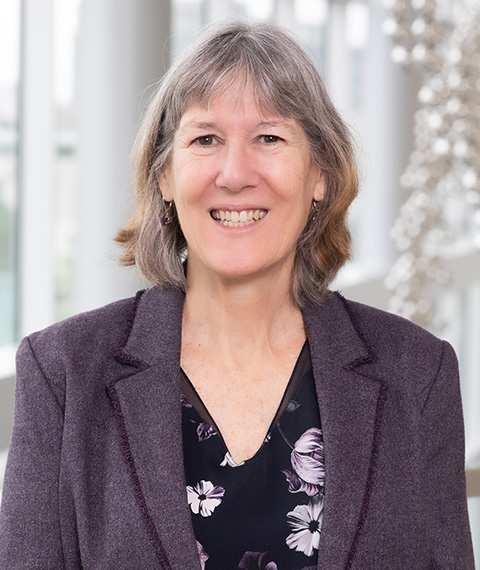
“He was an academic … interested in research, so growing up that was something that inspired me (toward) science and research,” Phillips said.
Today, Phillips is a professor of biochemistry at the University of Texas Southwestern Medical Center, where she focuses her research on the biochemistry and drug discovery aspect of parasitic protozoa. For her work, she will receive the Alice and C. C. Wang Award in Molecular Parasitology.
As an undergraduate at the University of California, Davis, Phillips discovered her fascination with the chemistry–biology interface.
“When I was in school it was only the beginning of the molecular biology revolution, but I really liked enzymology,” Phillips said. “I liked to understand how an enzyme catalyzed a reaction, so that was partly the chemist in me.”
After earning her bachelor’s degree in biochemistry, she worked for a small diagnostic company developing kits to measure drug levels in patients. That experience strengthened her interest in how biochemical processes could be targeted for therapeutic benefit. She then pursued a Ph.D. at the University of California, San Francisco, joining C. C. Wang’s lab.
“At the time many biochemistry departments were very molecular biology focused,” Phillips said. “But I really wanted to study proteins so, that’s what drove me to pharmaceutical chemistry because it was more mechanistic, more chemistry.”
Wang’s mentorship left a lasting impact on Phillips. “He was a really great scientist and an outstanding mentor,” she said. That influence came full circle when Phillips received the 2024 American Society for Biochemistry and Molecular Biology Herbert Tabor Research Award, which honors her dedication to research and mentorship.
“I cannot think of a more deserving candidate than Meg Phillips for this award,” Vernon Carruthers wrote in Phillips’ nomination letter. “C. C. Wang had an enormous impact on Meg, not only when she was a Ph.D. student in his lab, but also throughout her career as a caring mentor and supporter.”
Phillips’ lab focuses on understanding the metabolism of parasites such as Trypanosoma brucei, which causes African sleeping sickness, and Plasmodium falciparum, which causes malaria. Her work on malaria has focused on DHODH, a key enzyme in pyrimidine synthesis, where she has exploited DHODH in a target-based drug discovery approach to identify and optimize molecules that inhibit this enzyme for the treatment of malaria.
At the 2026 ASBMB Annual Meeting, Phillips will present her group’s latest findings on inhibitors of dihydroorotate dehydrogenase, or DHODH.
Her group’s structure-based design has improved compound potency from the micromolar to subnanomolar range, a crucial step toward clinical development. One early success was DSM265, a promising DHODH inhibitor for malaria that advanced to clinical trials. Although testing was later halted due to toxicity, the experience paved the way for ongoing work in her lab.
“Science is a very important path to take,” Phillips said. “It has the potential to contribute so much to society and make a better world for everybody.”
Enjoy reading ASBMB Today?
Become a member to receive the print edition four times a year and the digital edition monthly.
Learn moreFeatured jobs
from the ASBMB career center
Get the latest from ASBMB Today
Enter your email address, and we’ll send you a weekly email with recent articles, interviews and more.
Latest in People
People highlights or most popular articles
Uncovering the molecular roots of fatty liver disease
Physician–scientist Silvia Sookoian discusses her path from hepatitis C care to MASLD research, her use of multi-omics to study steatotic liver disease, and how lipid metabolism and genetics are reshaping understanding of MASH and liver health.
Kimble honored for lifetime achievement in genetics
She received the 2026 Thomas Hunt Morgan Medal and will be honored with a dedicated online profile and seminar.
Janetka named distinguished professor
Washington University awarded him the inaugural Carl Frieden Distinguished Professorship.
ASBMB members receive ASPET awards
The American Society for Pharmacology and Experimental Therapeutics awards Simone Brixius–Anderko, Paul Insel, Sudarshan Rajagopal, Emily Scott, Alan Smrcka and Jürgen Wess for their excellent research and mentoring work in pharmacology.
Kozul honored by Washington University
She received the 2025 Elliot L. Elson Education and Training Award.
de la Fuente honored for AI research
The award will support the development of an AI system called ApexMol, a 3D structure–informed, agentic large language model designed to create new biomolecules.