
Building the blueprint to block HIV

Every year, more than one million people contract HIV. Preventive drugs known as preexposure prophylaxis, or PrEP, can block infection, but only when taken daily. That is unrealistic in many parts of the world where access to pills is unreliable and where stigma adds another barrier. Scientists have sought a simpler, longer-lasting option.

At the University of Utah, Wesley Sundquist’s three decades of work deciphering the structure and function of the HIV capsid helped make that goal a reality. His discoveries laid the groundwork for Lenacapavir, a new injectable PrEP that can protect against infection for six months at a time.
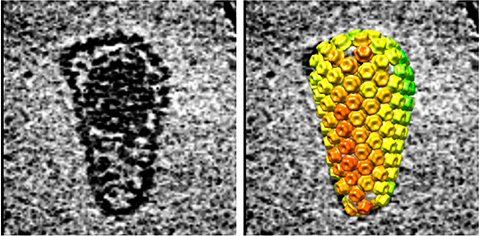
Sundquist showed that the capsid was critical to HIV infection. It protects the viral genome, facilitates reverse transcription and helps the virus enter the nucleus. His work also revealed that the capsid is cone shaped and built from hexamers and pentamers, with regions that are particularly sensitive to disruption. These two findings, that the capsid is both essential and vulnerable, make it a promising drug target.
“Even small changes like drug binding would be detrimental to the virus,” Sundquist said. “We (originally) thought of the capsid as being more solid and a less important object than it's turned out to be.”
When Gilead’s Tomas Cihlar saw Sundquist’s work, he reached out with a question that would change HIV prevention: Could this shell be a key to preventing infection? Sundquist immediately said yes and set a collaboration in motion.
They were correct. Gilead went on to develop Lenacapavir, based on the capsid biology provided by Sundquist and colleagues. The drug deforms the capsid and makes it fragile. A fragile capsid cannot perform its functions, so the virus cannot infect new cells.
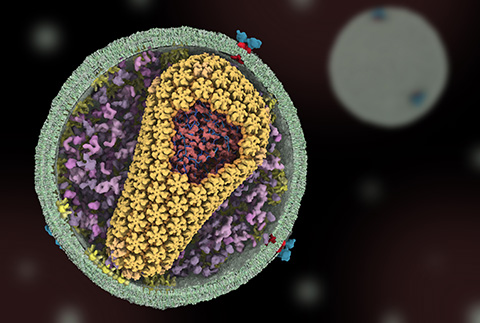
Trials of Lenacapavir were first carried out in high-risk regions of South Africa in cisgender women. No one received a placebo. Instead, the comparison was between different forms of PrEP: daily pills or Lenacapavir injections. The women receiving Lenacapavir had no new infections during the study, while those taking the pills had infection rates similar to the current rates in the area, largely because many did not take the pills regularly.
“That amounted to 100 percent efficacy,” Linda-Gail Bekker, director of the Desmond Tutu HIV Centre at the University of Cape Town, said in an interview with Science. “And I have never seen a result like that.”
The trial was repeated in men and a gender diverse population with similarly strong results.
For the first time, researchers saw what true prevention could look like: protection that required almost no effort from the user and approached the level a fully effective vaccine might provide.
Sundquist and Cihlar were named to Time’s list of 100 most influential people of 2025, and Lenacapavir was named American Association for the Advancement of Science’s Breakthrough of the Year Award in 2025.
Sundquist will speak about the HIV capsid and its role in Lenacapavir during his keynote address at the American Society for Biochemistry and Molecular Biology’s 2026 annual meeting.
Enjoy reading ASBMB Today?
Become a member to receive the print edition four times a year and the digital edition monthly.
Learn moreFeatured jobs
from the ASBMB career center
Get the latest from ASBMB Today
Enter your email address, and we’ll send you a weekly email with recent articles, interviews and more.
Latest in People
People highlights or most popular articles
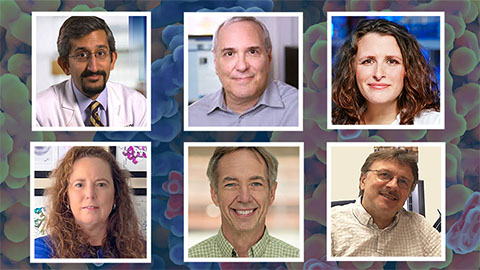
ASBMB members receive ASPET awards
The American Society for Pharmacology and Experimental Therapeutics awards Simone Brixius–Anderko, Paul Insel, Sudarshan Rajagopal, Emily Scott, Alan Smrcka and Jürgen Wess for their excellent research and mentoring work in pharmacology.
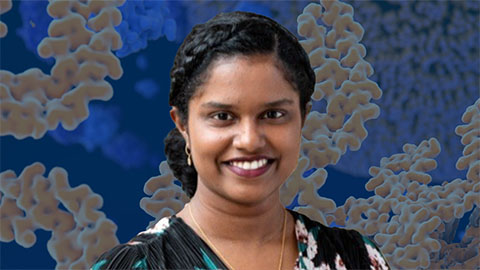
Kozul honored by Washington University
She received the 2025 Elliot L. Elson Education and Training Award.
de la Fuente honored for AI research
The award will support the development of an AI system called ApexMol, a 3D structure–informed, agentic large language model designed to create new biomolecules.
In memoriam: Peter Roepstorff
He was a leading researcher in biological mass spectrometry, mapped protein function in living organisms and was an ASBMB member for 19 years.
Flipping lipids and slime molds
A dull first job nearly pushed JBC associate editor Todd Graham out of science. Then a slime mold project changed his path. Now, he studies membrane biology and reflects on discovery, persistence and mentoring through uncertainty.
ASBMB members receive RNA Society awards
The RNA Society awards Brenda Bass, Can Cenik and Karin Musier–Forsyth for their achievements in RNA research and innovation. Winners will be recognized at the closing awards ceremony of the RNA 2026 annual meeting.