
Trainee mentorship as immortality
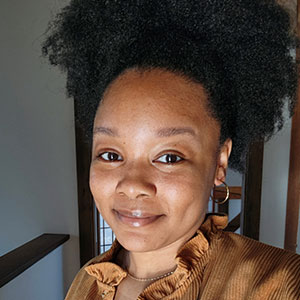
Suzanne Barbour found her first science mentor in her grandfather, a lab technician. As a child, she stood beside him in his chemistry lab and watched him work, increasing her desire to become a scientist like him.
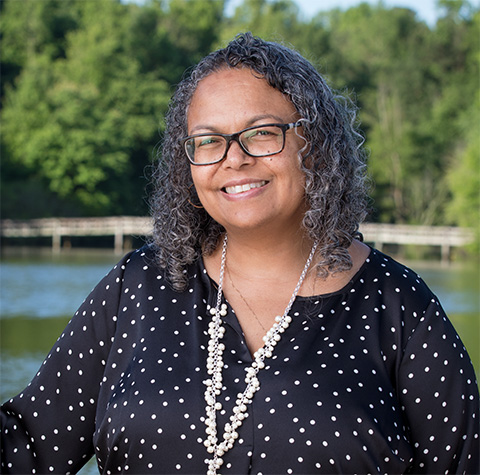
“If I hadn’t had my grandfather, I wouldn’t be talking to you today,” Barbour said.
As an undergraduate at Rutgers University, Barbour said she often felt like “a number more than a name.” Yet, a few professors stood out, providing mentorship and shaping her education in a way that made a difference.
“I want to make sure that there are people to support the next generation,” Barbour said. “The right thing to do was to go into academia. And I never looked back.”
Today, Barbour is a professor of cell biology, dean of the Graduate School and vice provost for graduate education at Duke University. She was also recently elected the American Society for Biochemistry and Molecular Biology secretary.
For her record of leadership and mentoring in academia, government and society, she will receive the 2026 ASBMB Sustained Leadership Award.
Barbour also served as a mentor for the National Institutes of Health Maximizing Opportunities for Scientific and Academic Independent Careers, or MOSAIC, program, launched in 2019 to support early-career scientists from underrepresented backgrounds. She helped participants navigate the realities of running a lab, including managing personnel and resolving conflicts.
Although the MOSAIC program ended in 2025, Barbour remains positive about its impact.
“It did what it was supposed to do,” she said. “The folks who came through our (iteration) of MOSAIC, they know each other, they're networked together, they'll be colleagues and peers for life. And nobody can take that away from them.”
Having served in many ASBMB leadership roles, Barbour said deeper involvement in the society gives members the opportunity to help people, advance science and sustain the organization.
“When we train our students and postdocs, it’s a kind of immortality,” Barbour said. “It’s a legacy. And ASBMB gives you the opportunity to expand that legacy.”
Takita Felder Sumter and Joseph Provost wrote in support of her nomination that Barbour has “a sustained record of not only mentoring women and students of color, but (also) providing a visible and motivating presence as an impressive female scientist.”
At the 2026 ASBMB Annual Meeting, Barbour will speak about the second half of her career after closing her laboratory in 2013. Instead of mentoring a small group of students, she wanted to extend her leadership to graduate cohorts and early-career investigators.
After closing her lab, Barbour was program director in the division of molecular and cellular biosciences at the National Science Foundation, where she guided applicants through creating successful grant proposals.
“Despite the fact that I’m not at the bench anymore, I think I have even more influence on developing people’s careers now,” Barbour said.
Enjoy reading ASBMB Today?
Become a member to receive the print edition four times a year and the digital edition monthly.
Learn moreFeatured jobs
from the ASBMB career center
Get the latest from ASBMB Today
Enter your email address, and we’ll send you a weekly email with recent articles, interviews and more.
Latest in People
People highlights or most popular articles
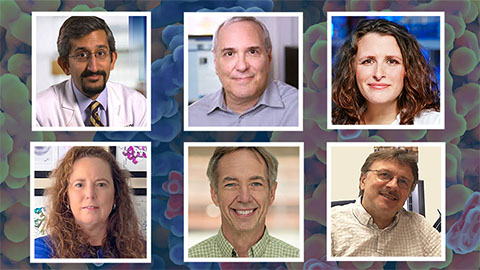
ASBMB members receive ASPET awards
The American Society for Pharmacology and Experimental Therapeutics awards Simone Brixius–Anderko, Paul Insel, Sudarshan Rajagopal, Emily Scott, Alan Smrcka and Jürgen Wess for their excellent research and mentoring work in pharmacology.
Kozul honored by Washington University
She received the 2025 Elliot L. Elson Education and Training Award.
de la Fuente honored for AI research
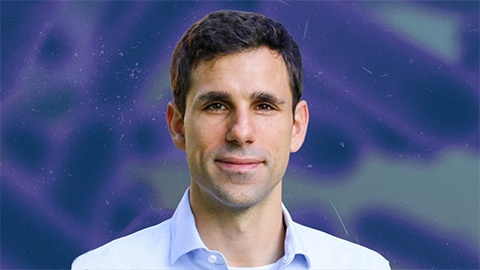
The award will support the development of an AI system called ApexMol, a 3D structure–informed, agentic large language model designed to create new biomolecules.
In memoriam: Peter Roepstorff
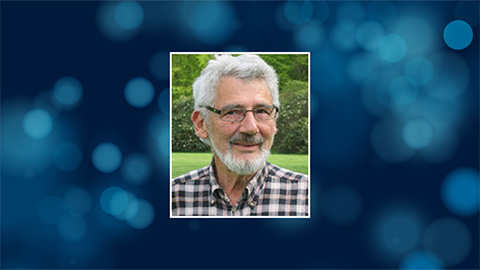
He was a leading researcher in biological mass spectrometry, mapped protein function in living organisms and was an ASBMB member for 19 years.
Flipping lipids and slime molds
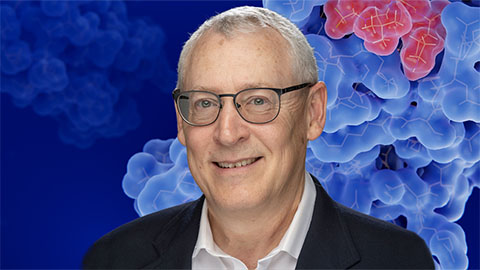
A dull first job nearly pushed JBC associate editor Todd Graham out of science. Then a slime mold project changed his path. Now, he studies membrane biology and reflects on discovery, persistence and mentoring through uncertainty.
ASBMB members receive RNA Society awards
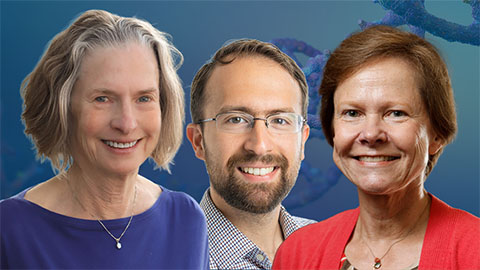
The RNA Society awards Brenda Bass, Can Cenik and Karin Musier–Forsyth for their achievements in RNA research and innovation. Winners will be recognized at the closing awards ceremony of the RNA 2026 annual meeting.