
Creating change in biochemistry education
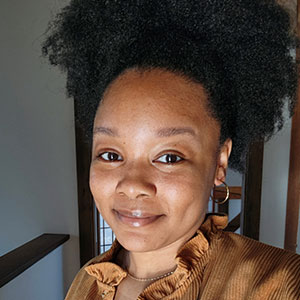
When Pamela Mertz walks into any room — her classroom at St. Mary’s College of Maryland or an American Society for Biochemistry and Molecular Biology meeting focused on education — she carries her enthusiasm for science with her. Mertz traces that passion back to her 11th-grade chemistry teacher, Mr. Nolt, who inspired her to become a first-generation college student — and the only scientist in her family.
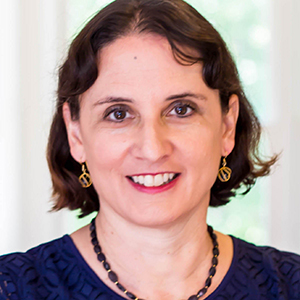
The American Society for Biochemistry and Molecular Biology has named Mertz the 2026 ASBMB William C. Rose Award for Exemplary Contributions to Education recipient, recognizing her dedication to teaching biochemistry and molecular biology.
A longtime mentor to undergraduate scientists, Mertz has served 12 years on the ASBMB Student Chapters Committee, including the past five as chair.
Mertz contributed to several National Science Foundation education-focused programs, including service as an associate director for BioMolViz, culminating in an open educational resource on teaching biomolecular visualization.
“I always liked school; I always liked learning. I appreciated all the amazing teachers I had, and teaching was something I was drawn to,” Mertz said.
Early in her faculty career, Mertz developed an interest in pedagogy. At the 2011 ASBMB Transforming Undergraduate Education in Molecular Life Sciences, or TUEMLS, meeting, she said she “found her people.”
TUEMLS is a biennial meeting dedicated to improving how professors teach biochemistry and molecular biology. Mertz helped organize the 2023 TUEMLS meeting at Suffolk University and served as co-principal investigator on a National Science Foundation grant to expand access to the conference.
“The passion and connections with other (educators) helped me think about my teaching,” Mertz said.
For the past 25 years, Mertz has been a professor of chemistry and biochemistry at St. Mary’s College of Maryland, where she also chairs the health sciences advisory committee. She led the effort to earn ASBMB accreditation in 2016, ensuring her program met national standards for excellence in biochemistry and molecular biology education.
“It’s important for institutions like mine that are small and public,” Mertz said. “To be able to tell prospective students and their parents that you have this nationally recognized program, it’s not insignificant.”
To Mertz, teamwork is key in creating the best outcomes.
At the 2026 ASBMB Annual Meeting, Mertz will discuss how professional communities can drive transformation in science education and research.
“Pam is not simply a participant, but a leader who helps prepare assignments, facilitates workshops and develops laboratories,” John Tansey of Otterbein University wrote in her nomination letter. “I have found her to be a creative and committed leader in the biochemistry education community.”
Enjoy reading ASBMB Today?
Become a member to receive the print edition four times a year and the digital edition monthly.
Learn moreFeatured jobs
from the ASBMB career center
Get the latest from ASBMB Today
Enter your email address, and we’ll send you a weekly email with recent articles, interviews and more.
Latest in People
People highlights or most popular articles
Uncovering the molecular roots of fatty liver disease
Physician–scientist Silvia Sookoian discusses her path from hepatitis C care to MASLD research, her use of multi-omics to study steatotic liver disease, and how lipid metabolism and genetics are reshaping understanding of MASH and liver health.
Kimble honored for lifetime achievement in genetics
She received the 2026 Thomas Hunt Morgan Medal and will be honored with a dedicated online profile and seminar.
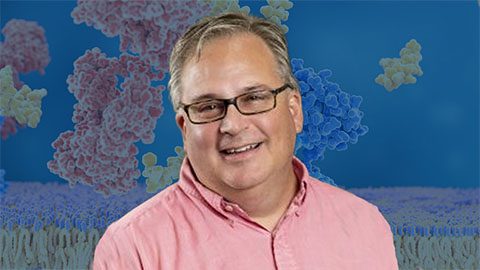
Janetka named distinguished professor
Washington University awarded him the inaugural Carl Frieden Distinguished Professorship.
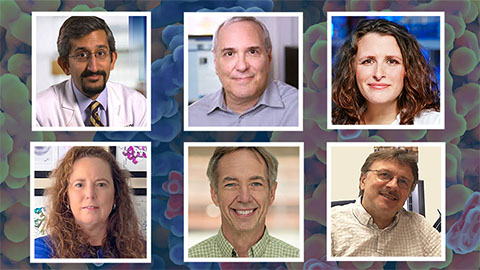
ASBMB members receive ASPET awards
The American Society for Pharmacology and Experimental Therapeutics awards Simone Brixius–Anderko, Paul Insel, Sudarshan Rajagopal, Emily Scott, Alan Smrcka and Jürgen Wess for their excellent research and mentoring work in pharmacology.
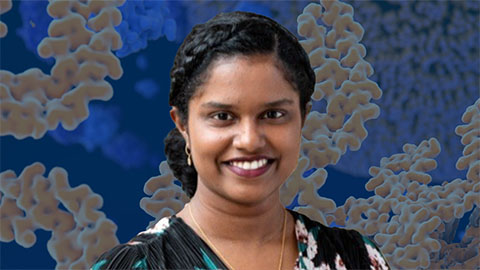
Kozul honored by Washington University
She received the 2025 Elliot L. Elson Education and Training Award.
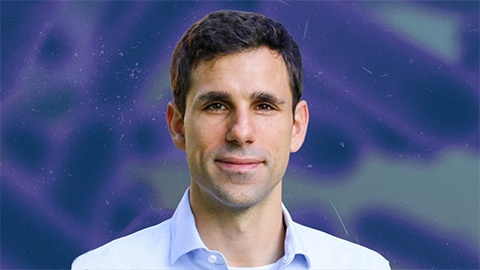
de la Fuente honored for AI research
The award will support the development of an AI system called ApexMol, a 3D structure–informed, agentic large language model designed to create new biomolecules.