
Glycosylation patterns across antibody isotypes distinguish tuberculosis states
Tuberculosis, or TB, is a lung infection caused by Mycobacterium tuberculosis and continues to pose a major global health threat, with an estimated 1.2 million deaths in 2024. TB can remain latent, or LTBI, or advance to active disease, or ATB. Although current diagnostic tests largely detect infection, they cannot efficiently define the disease state.
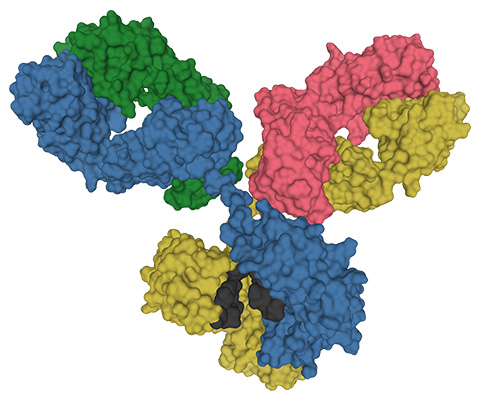
Glycosylation of the antibody fragment crystallizable, or Fc, region regulates immune responses during TB by modulating immunoglobulin, or Ig, structure and effector functions. Infection-associated glycan remodeling reflects a shift toward a proinflammatory state. While IgG Fc glycosylation in TB is well characterized and shows diagnostic potential for distinguishing disease states, glycosylation of other isotypes remains largely unexplored, limiting a full understanding of humoral immunity in TB.
In a new study published in Molecular & Cellular Proteomics, Yun-Jung Yang of Taipei Medical University and an international team provide the first site-specific glycoprofiling of IgA and IgM in older adults with TB. Using targeted liquid chromatography-tandem mass spectrometry, or LC-MS/MS, they quantified Fc glycosylation patterns across IgG, IgA and IgM from 58 adult participants at Taipei Municipal Wan Fang Hospital. The findings showed that, like IgG, IgA and IgM undergo glycan remodeling during infection without major changes in antibody abundance. In addition, integration of patterns across all three isotypes provided new insight into antibody diversification and immune modulation during infection.
ATB showed a consistent proinflammatory signature: IgG exhibited lower galactosylation and higher fucosylation compared with LTBI, in line with previous studies. Importantly, similar effects were observed in other antibody isotypes: IgA1/2 at N144/131 showed reduced galactosylation from digalactosylated forms, while IgM displayed decreased galactosylation at N171, N332 and N395, increased agalactosylation at N563 and higher fucosylation and sialylation at N71. Integrating glycosylation traits across all three isotypes improved the separation of ATB from LTBI, highlighting the potential of multi-isotype Fc glycosylation profiles to improve the distinction between TB disease states.
Enjoy reading ASBMB Today?
Become a member to receive the print edition four times a year and the digital edition monthly.
Learn moreGet the latest from ASBMB Today
Enter your email address, and we’ll send you a weekly email with recent articles, interviews and more.
Latest in Science
Science highlights or most popular articles
Blood glycome possibly predicts lifespan
Researchers at the University of Santiago de Compostela show that total serum N-glycome can predict mortality independent of traditional risk factors.
Building a better model for drug delivery across the blood–brain barrier
Industry and academic scientists collaborated to develop a rat with humanized iron-transport receptors, enabling research into iron homeostasis and drugs that cross the brain’s barrier.
Fat synthesis enzyme crucial for milk fat and newborn growth
Researchers found that a deficiency of the fatty acid synthesis enzyme stearoyl-CoA desaturase-1 reduced mammary gland function during lactation and caused low birth weight in newborns that were fed milk from enzyme-deficient glands.
Flipping lipids and slime molds
A dull first job nearly pushed JBC associate editor Todd Graham out of science. Then a slime mold project changed his path. Now, he studies membrane biology and reflects on discovery, persistence and mentoring through uncertainty.
How smelling death alters worm behavior
Researchers have found that the roundworm C. elegans can smell death, and it changes how the worms behave, reproduce and age.
A chance encounter with the lab
Payton Stevens never planned to become a pancreatic cancer researcher. A temporary job set him on a path from rural Kentucky to leading research on Wnt signaling and metastasis, where he now pairs discovery with mentorship and science advocacy.