
Novel way to uncover tumor microenvironment proteomics

Chemotherapy once indiscriminately targeted any rapidly dividing cell, but increasingly, treatments are being tailored to the unique protein environment of cancer cells. To develop these treatments, scientists need to accurately characterize the complex protein architecture of these malignancies using proteomics. Proteins offer unique advantages because they are the ultimate products of the genetic code, reflecting what occurs in the cell.
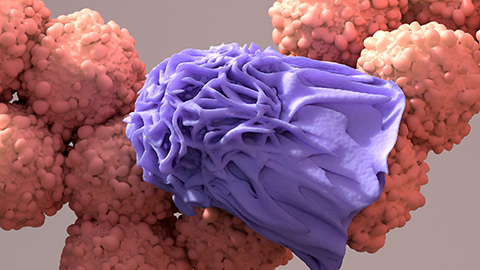
The biggest barrier to proteomics has historically been cost and time. High-throughput methods are required to make the technology feasible. To address this challenge, Shiri Karagach, Tamar Geiger and a team of researchers at the Weizmann Institute of Science developed a novel technique for characterizing the protein environment of cancer cells using a technique that allows for the higher throughput necessary to make the method more effective. They published these results in Molecular & Cellular Proteomics.
The team injected colorectal cancer cells into the tail veins of mice to induce metastasis to the lungs. To test the technique, researchers harvested the lungs, separated them into individual cells and ran them through their new single-cell proteomic analysis method. The main innovation involved 1,536 individual wells containing cells and semi-automated reagent transfer, improving both speed and reproducibility.
As a proof of concept, they isolated macrophages from the mice’s tumors using known protein markers. They found 575 significant differences in protein levels between tumor and control macrophages. For example, tumor macrophages upregulated major histocompatibility complex class I proteins and increased production of cytokines, both crucial in adaptive immunity.
This work demonstrates that the novel technique allows faster, more robust analysis of cancer proteomes, paving the way for broader applications in tumor biology.
Enjoy reading ASBMB Today?
Become a member to receive the print edition four times a year and the digital edition monthly.
Learn moreGet the latest from ASBMB Today
Enter your email address, and we’ll send you a weekly email with recent articles, interviews and more.
Latest in Science
Science highlights or most popular articles
Glaucoma model links immune signaling to disease progression
Researchers at Duke University determine genetic variations that could increase the risk of developing glaucoma.
Uncovering the molecular roots of fatty liver disease
Physician–scientist Silvia Sookoian discusses her path from hepatitis C care to MASLD research, her use of multi-omics to study steatotic liver disease, and how lipid metabolism and genetics are reshaping understanding of MASH and liver health.
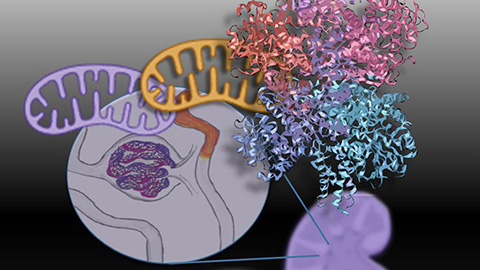
Mitochondria shape kidney cell function
Researchers at the University of Washington, Seattle present the first quantitative comparison of mitochondrial interactomes between two epithelial cell types in the kidney.
Long-chain polyunsaturated fatty acids linked to postoperative delirium risk
Researchers show that altered lipid metabolism may contribute to postoperative delirium, a condition linked to increased risk for long-term cognitive decline. The study explores potential disease mechanisms, which have yet to be understood.
Glycosylation patterns across antibody isotypes distinguish tuberculosis states
Researchers at Taipei Medical University present the first site-specific glycosylation analysis of immunoglobulins in elderly tuberculosis patients.
Blood glycome possibly predicts lifespan
Researchers at the University of Santiago de Compostela show that total serum N-glycome can predict mortality independent of traditional risk factors.