
A p-value for proteins

Scientists take the power of a p-value for granted. With a simple threshold, researchers can determine whether an observation is likely due to chance. By contrast, determining significance in proteomics has been more challenging. Searching for new proteins in the literature often produces false positives, and existing search engines cannot reliably filter results.
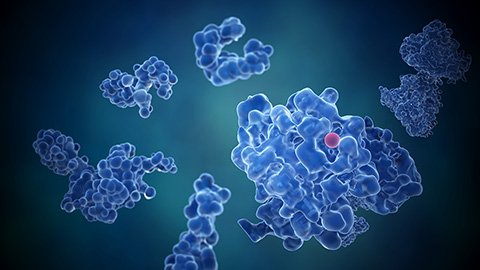
Tsuyoshi Tabata, Yasushi Ishihama and a team of researchers at Kyoto University created a new solution to searching through proteomic information: UniScore. They published these results in Molecular & Cellular Proteomics.
UniScore uses a target-decoy approach to filter false positives. It compares one dataset of real proteomic information with another created from shuffled protein results as a decoy. This allows researchers to compare matches to true versus fictitious data and calculate the false discovery rate.
Researchers can then set thresholds for acceptable false-positive rates, providing a clear benchmark for analyzing proteomic results. UniScore outperformed traditional search engines, demonstrating that it is a powerful tool for proteomic research moving forward.
Enjoy reading ASBMB Today?
Become a member to receive the print edition four times a year and the digital edition monthly.
Learn moreGet the latest from ASBMB Today
Enter your email address, and we’ll send you a weekly email with recent articles, interviews and more.
Latest in Science
Science highlights or most popular articles
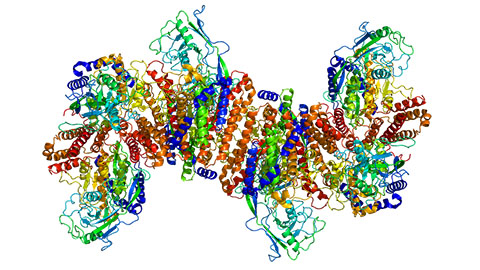
Building a better model for drug delivery across the blood–brain barrier
Industry and academic scientists collaborated to develop a rat with humanized iron-transport receptors, enabling research into iron homeostasis and drugs that cross the brain’s barrier.
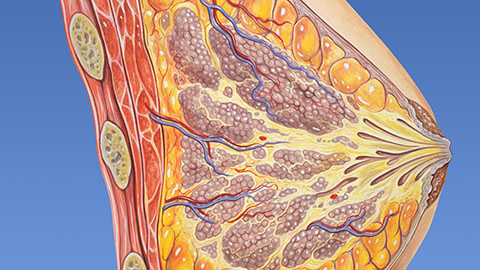
Fat synthesis enzyme crucial for milk fat and newborn growth
Researchers found that a deficiency of the fatty acid synthesis enzyme stearoyl-CoA desaturase-1 reduced mammary gland function during lactation and caused low birth weight in newborns that were fed milk from enzyme-deficient glands.

Flipping lipids and slime molds
A dull first job nearly pushed JBC associate editor Todd Graham out of science. Then a slime mold project changed his path. Now, he studies membrane biology and reflects on discovery, persistence and mentoring through uncertainty.
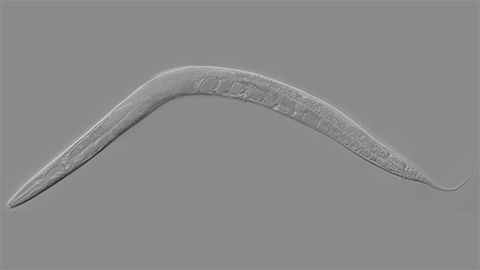
How smelling death alters worm behavior
Researchers have found that the roundworm C. elegans can smell death, and it changes how the worms behave, reproduce and age.
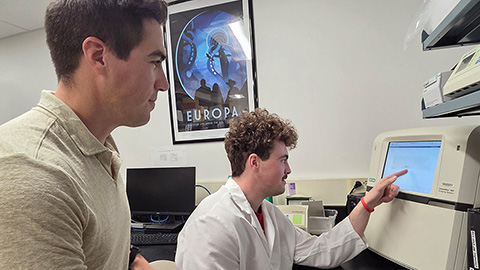
A chance encounter with the lab
Payton Stevens never planned to become a pancreatic cancer researcher. A temporary job set him on a path from rural Kentucky to leading research on Wnt signaling and metastasis, where he now pairs discovery with mentorship and science advocacy.
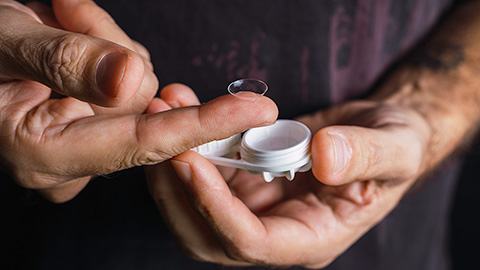
Light-activated small molecule could transform eye infection treatment
Contact lenses raise the risk of infectious keratitis, a leading cause of blindness worldwide. A biotech company is commercializing a light-activated therapy using a ROS-generating molecule to rapidly kill microbes in the cornea to preserve vision.