
ASBMB announces 2026 JBC/Tabor awardees

The American Society for Biochemistry and Molecular Biology has selected the 2026 winners of the Journal of Biological Chemistry/Herbert Tabor Early Career Investigator Awards. These awards honor Herbert Tabor’s significant contributions in science and service to JBC in multiple editorial roles, including his decade-long leadership as editor-in-chief of JBC.
Paul Shapiro, a professor of pharmaceutical sciences at the University of Maryland School of Pharmacy and JBC associate editor, leads the Early Career Reviewer Committee responsible for selecting the winners. The recipients are recognized for their outstanding contributions as first authors on exceptional JBC research papers published in the previous year. Together, these awards highlight the creativity, rigor and scientific impact of early career investigators whose work is advancing the frontiers of biochemistry and molecular biology.
“One of the many highlights of being on the JBC editorial board is the selection of the Early Career Investigator award winners. These outstanding young scientists were the first authors of high-quality, impactful research papers that represent the breadth of topics covered in JBC,” Shapiro said. “These early career scientists represent the next generation of researchers who will continue to make outstanding contributions to advance scientific knowledge in their respective fields.”
Read about the award winners and their research topics below.
Leanne Duke
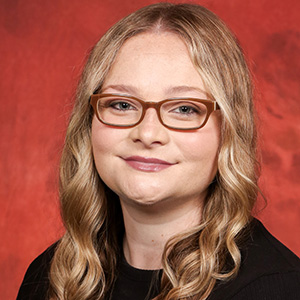
Leanne Duke is a research associate in the Viral Vector and Gene Editing Core Facility at the Florida Institute of Pediatric Rare Diseases. She received her Ph.D. in biomedical sciences from Florida State University’s College of Medicine in 2024, where she was supervised by Robert J. Tomko Jr. in the Department of Biomedical Sciences. During her Ph.D. she studied the cellular biology and therapeutic applications of small extracellular vesicles, or sEVs. She was recognized for the paper “Tetraspanin CD9 alters cellular trafficking and endocytosis of tetraspanin CD63, affecting CD63 packaging into small extracellular vesicles.”
Duke and her colleagues showed that the tetraspanin protein CD9 regulates the cellular trafficking and packaging of CD63, a protein commonly enriched in small extracellular vesicles that is pivotal for sEV cargo selection and can mediate sEV uptake and immune modulation by recipient cells. Using super-resolution microscopy, they revealed that CD9 determines which populations of sEVs carry CD63, providing further evidence that tetraspanins control the formation and cargo sorting of certain sEV populations. This work advances understanding of cellular communication by sEVs in health and disease and informs efforts to produce “designer” sEVs for therapeutic cargo delivery to cells.
Jaison D Sa
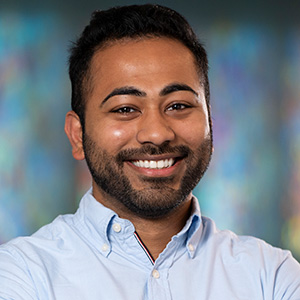
Jaison D Sa is a postdoctoral researcher who recently completed his Ph.D. in Wai-Hong Tham’s lab at the Walter and Eliza Hall Institute of Medical Research and the University of Melbourne in Australia. He was recognized for the paper, “Stabilized designs of the malaria adhesin protein PvRBP2b for use as a potential diagnostic for Plasmodium vivax,” published in JBC in 2025 and selected as an Editor’s Pick. In this study, D Sa and colleagues addressed a key barrier to malaria elimination by improving the stability and production of PvRBP2b, a leading serological biomarker of recent P. vivax infection. Using computational stability design and AI-based approaches, they engineered PvRBP2b variants with substantially increased yield and thermal stability while preserving recognition by naturally acquired human antibodies. Structural and biophysical analyses confirmed retention of immunologically relevant surfaces and validation using longitudinal cohort samples from malaria-endemic regions showed that the stabilized designs maintained the sensitivity and specificity required for serological detection of recent infection, supporting their use in malaria elimination programs.
Jennifer Heritz and Katherine Meluni
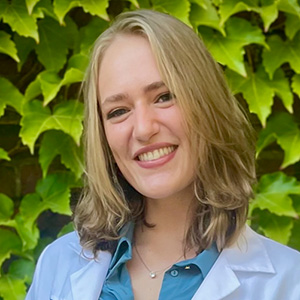
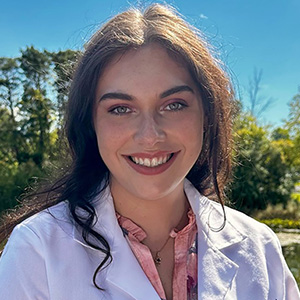
Jennifer Heritz is a Ph.D. candidate and Katherine Meluni is a Ph.D. student at SUNY Upstate Medical University under the mentorship of Mehdi Mollapour. They were recognized for the paper, “Integrating deep learning for posttranslational modifications crosstalk on Hsp90 and drug binding.” In this study, Heritz, Meluni and colleagues identified how coordinated posttranslational modifications, or PTMs, on the molecular chaperone Hsp90 regulate its drug interactions and functions, revealing a shared modification and signaling signature when HDAC3 or HDAC8 is deleted in human cells. By integrating mass spectrometry with a deep-learning prediction model, they demonstrate that artificial intelligence can rapidly and accurately decipher complex PTM crosstalk on proteins central to cancer-relevant proteostasis networks.
Huan Yang
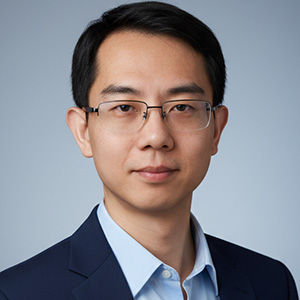
Huan Yang is the founder and CEO of Ruige, a Chinese biotech startup focused on gene therapy and targeted protein degradation. He was a research fellow in Stuart Orkin’s laboratory at the Dana-Farber Boston Children’s Hospital Cancer and Blood Disorders Center and Harvard Medical School. Inspired by his research experience there, he subsequently founded the company. Yang is recognized for the paper, “Redirecting E3 Ubiquitin Ligases for Targeted Protein Degradation with Heterologous Recognition Domains.” Yang and colleagues identified TRIM10 and TRIM58 as erythroid lineage-specific E3 ubiquitin ligases and achieved efficient degradation of BCL11A by replacing their PRY-SPRY domain with heterologous recognition domains, including coiled-coil peptides, nanobodies and the substrate recognition domain of cereblon. Their work establishes a broadly applicable strategy for evaluating the targeted protein degradation potential of E3 ubiquitin ligases and provides a strong rationale for discovering ligands for TRIM10 and TRIM58 to enable erythroid-selective depletion of proteins of interest.
Robert Cail and Faviolla Báez–Cruz
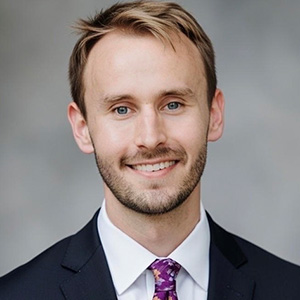
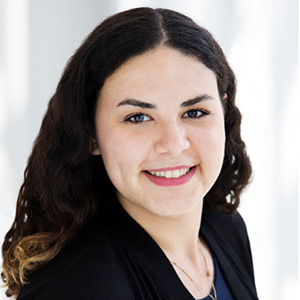
Robert Cail is a postdoctoral scholar at Johnson and Johnson Innovative Medicine, where he works in preclinical discovery for cell therapies. Faviolla Báez–Cruz is an associate scientist and medical writer at the National Comprehensive Cancer Network. She previously conducted research as a graduate student and postdoctoral researcher under the mentorship of E. Michael Ostap and studied the biochemical and biophysical properties of myosins. They are recognized for the article "Dynamics of β-cardiac myosin between the super-relaxed and disordered-relaxed states," co-supervised by Yale Goldman and Michael Ostap at the University of Pennsylvania. In this article, Cail and Báez–Cruz found that, contrary to previous models, purified β-cardiac myosin establishes a rapid equilibrium between open and closed conformations that depends on myosin's tail domain, and they developed a method to measure how disease-causing mutations and drug treatments alter this equilibrium. Disruptions to this equilibrium are thought to contribute to diseases such as hypertrophic cardiomyopathy.
Enjoy reading ASBMB Today?
Become a member to receive the print edition four times a year and the digital edition monthly.
Learn moreGet the latest from ASBMB Today
Enter your email address, and we’ll send you a weekly email with recent articles, interviews and more.
Latest in People
People highlights or most popular articles
ASBMB members receive ASPET awards
The American Society for Pharmacology and Experimental Therapeutics awards Simone Brixius–Anderko, Paul Insel, Sudarshan Rajagopal, Emily Scott, Alan Smrcka and Jürgen Wess for their excellent research and mentoring work in pharmacology.
Kozul honored by Washington University
She received the 2025 Elliot L. Elson Education and Training Award.
de la Fuente honored for AI research
The award will support the development of an AI system called ApexMol, a 3D structure–informed, agentic large language model designed to create new biomolecules.
In memoriam: Peter Roepstorff
He was a leading researcher in biological mass spectrometry, mapped protein function in living organisms and was an ASBMB member for 19 years.
Flipping lipids and slime molds
A dull first job nearly pushed JBC associate editor Todd Graham out of science. Then a slime mold project changed his path. Now, he studies membrane biology and reflects on discovery, persistence and mentoring through uncertainty.
ASBMB members receive RNA Society awards
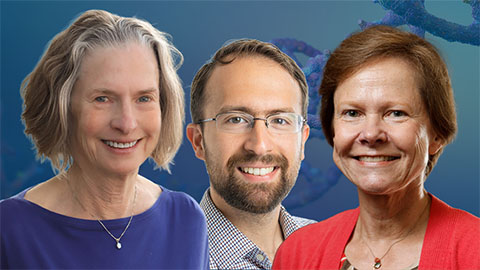
The RNA Society awards Brenda Bass, Can Cenik and Karin Musier–Forsyth for their achievements in RNA research and innovation. Winners will be recognized at the closing awards ceremony of the RNA 2026 annual meeting.