
Mining microbes for rare earth solutions
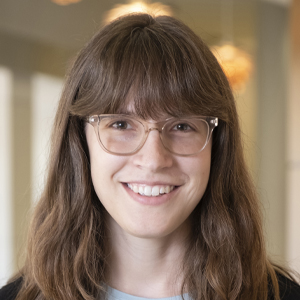
Joseph Cotruvo, Jr., is seeking to understand how cells handle metals. But along the way, he patented revolutionary techniques for purifying and detecting rare earth elements, even helping U.S. national security. The inventions stem from his discovery of lanmodulin, a protein that binds particular rare earth elements with remarkable specificity.

Rare earth elements are elements 21, 39, and the lanthanides, numbers 57–71, which have the same +3 charge and very similar sizes. The similarity makes isolation difficult, which in turn is a hurdle for society as specific rare earth elements are used in batteries, electric motors, magnets and other technology. The U.S. depends heavily on imports, so domestic purification could ease both economic and national security concerns.
Cotruvo “has made great strides toward implementing lanmodulin-based constructs for rare earth element extractions and separations, (and) as fluorescent sensors for rare earths,” wrote J. Martin Bollinger, a Penn State professor who nominated him. “The value of Cotruvo's work is profound.”
Cotruvo’s discoveries also hold promise for environmental cleanup. “The Mount Everest of lanthanide remediation is selectivity,” wrote Harvard University professor Daniel Nocera in his letter of support. Cotruvo’s work on lanmodulin’s selective binding may be solving this issue, too.
Cotruvo’s fascination with chemistry was inspired by his father, a chemist at the Environmental Protection Agency. As an undergraduate, Cotruvo became intrigued by bioinorganic chemistry — how metals interact with biological systems — and worked with Ed Stiefel, who studied using bioinorganic chemistry and bacteria to clean up oil spills.
“The combination of that work and seeing how my dad used chemistry at the EPA showed me that chemistry can be used to solve some really important problems,” Cotruvo said.
He went on to conduct graduate and postdoctoral research. “The unifying feature,” he said, “was selectivity of binding of metals to proteins, and the question of ‘how does an organism manage the metals?’”
When starting his own lab seeking to study this question, he was intrigued by Methylobacterium extorquens, a bacterium that uses specific lanthanides. “I didn’t know anything about lanthanides or the bacteria,” he said, but he could tell it was a rich biochemical problem. “There are 17 rare earths, but the organism could only use a subset. Why and how? What mechanisms exist to select between them?”
During his purification of a lanthanide-dependent enzyme, Cotruvo noticed another protein that came out along with it. It contained EF-hand motifs, structural features common in calcium-binding proteins like calmodulin. He found that this protein, which he named lanmodulin, bound specific lanthanides.
“No one had seen a protein so selective for lanthanides,” Cotruvo said. He showed that selectivity comes from disordered regions of the protein folding into more stable conformations when bound to the correct metal ion.
In her letter of support, Northwestern University professor Amy Rosenzweig wrote of Cotruvo, “His work epitomizes the combination of innovation, creativity and impact that should be recognized by the Mildred Cohn Young Investigator Award.”
Cotruvo will discuss his discovery of lanmodulin and its industrial applications at the 2026 ASBMB Annual Meeting.
Enjoy reading ASBMB Today?
Become a member to receive the print edition four times a year and the digital edition monthly.
Learn moreGet the latest from ASBMB Today
Enter your email address, and we’ll send you a weekly email with recent articles, interviews and more.
Latest in People
People highlights or most popular articles
Uncovering the molecular roots of fatty liver disease
Physician–scientist Silvia Sookoian discusses her path from hepatitis C care to MASLD research, her use of multi-omics to study steatotic liver disease, and how lipid metabolism and genetics are reshaping understanding of MASH and liver health.
Kimble honored for lifetime achievement in genetics
She received the 2026 Thomas Hunt Morgan Medal and will be honored with a dedicated online profile and seminar.
Janetka named distinguished professor
Washington University awarded him the inaugural Carl Frieden Distinguished Professorship.
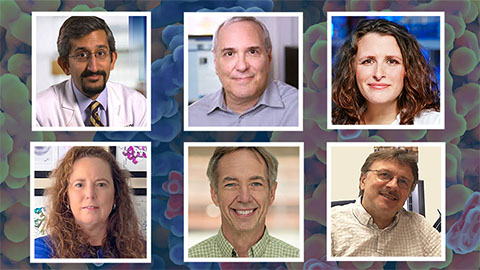
ASBMB members receive ASPET awards
The American Society for Pharmacology and Experimental Therapeutics awards Simone Brixius–Anderko, Paul Insel, Sudarshan Rajagopal, Emily Scott, Alan Smrcka and Jürgen Wess for their excellent research and mentoring work in pharmacology.
Kozul honored by Washington University
She received the 2025 Elliot L. Elson Education and Training Award.
de la Fuente honored for AI research
The award will support the development of an AI system called ApexMol, a 3D structure–informed, agentic large language model designed to create new biomolecules.