
In memoriam: Rodney E. Harrington

Rodney E. Harrington, a biochemistry professor and DNA researcher, died on July 18, 2025. He was 93. He had been a member of the American Society for Biochemistry and Molecular Biology for 43 years.
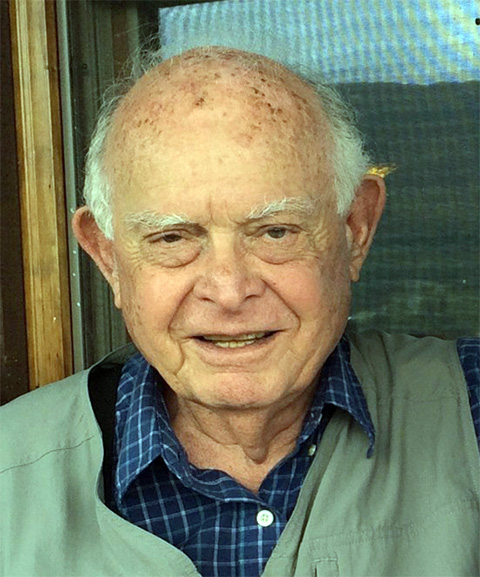
Born Jan. 9, 1932, in Mayville, N.D., Harrington earned a bachelor’s degree in chemistry from the University of South Dakota and a doctorate in physical chemistry and chemical physics from the University of Washington. After completing his doctorate, he conducted postdoctoral research at the University of California, San Diego.
Harrington’s academic career included appointments as an assistant professor of chemistry at the University of Arizona, a full professor at the University of California, Davis, and chair of chemistry at the University of Nevada, Reno. He later served as a professor in the Department of Biochemistry in the School of Medicine at UNR, and as a research professor of biochemistry, microbiology and molecular biology at Arizona State University.
In 1978, Harrington met his wife, Ilga Winicov, now a professor emeritus at ASU, in Sicily at a North Atlantic Treaty Organization scientific conference. She said they shared interests in science and travel for nearly 47 years.
Harrington contributed to understanding how chromatin’s physical properties and DNA structure change during interactions with proteins that regulate gene expression.
His research spanned polymers, fluid dynamics, DNA conformational transitions, polyelectrolyte theory and gas separation of atoms.
“He has been instrumental in uncovering sequence context of DNA conformation by bending and twisting, conformational transitions in nucleosomes (fundamental structural units of chromatin) and extensive work with p53 interactions with DNA and their conformational requirements,” Winicov said.
p53 is a tumor suppressor protein that helps regulate cell division. Mutations in the p53 gene are found in 50% of human cancers.
Harrington was elected a fellow of the American Association for the Advancement of Science and the American Physical Society.
While working as a supply person on a Liberty ship in the Pacific, Harrington witnessed the first successful test of the hydrogen bomb on Nov. 1, 1952, at Enewetak Atoll in the Marshall Islands.
Harrington is survived by his wife, two daughters, two stepsons and five grandchildren.
Enjoy reading ASBMB Today?
Become a member to receive the print edition four times a year and the digital edition monthly.
Learn moreGet the latest from ASBMB Today
Enter your email address, and we’ll send you a weekly email with recent articles, interviews and more.
Latest in People
People highlights or most popular articles
de la Fuente honored for AI research
The award will support the development of an AI system called ApexMol, a 3D structure–informed, agentic large language model designed to create new biomolecules.
In memoriam: Peter Roepstorff
He was a leading researcher in biological mass spectrometry, mapped protein function in living organisms and was an ASBMB member for 19 years.
Flipping lipids and slime molds
A dull first job nearly pushed JBC associate editor Todd Graham out of science. Then a slime mold project changed his path. Now, he studies membrane biology and reflects on discovery, persistence and mentoring through uncertainty.
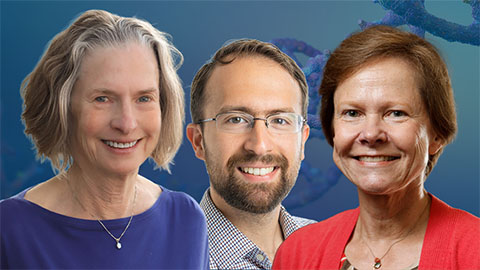
ASBMB members receive RNA Society awards
The RNA Society awards Brenda Bass, Can Cenik and Karin Musier–Forsyth for their achievements in RNA research and innovation. Winners will be recognized at the closing awards ceremony of the RNA 2026 annual meeting.
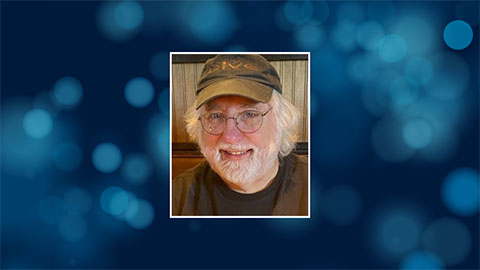
In memoriam: Richard L. Cross
He studied the enzymatic mechanisms of ATP synthase and served on the editorial board of the Journal of Biological Chemistry for 24 years.
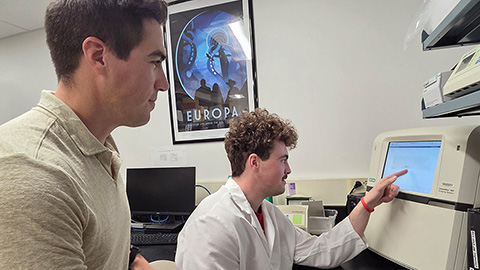
A chance encounter with the lab
Payton Stevens never planned to become a pancreatic cancer researcher. A temporary job set him on a path from rural Kentucky to leading research on Wnt signaling and metastasis, where he now pairs discovery with mentorship and science advocacy.