
Uncovering the mechanisms of a glycosylation disorder

Proteins can undergo several types of posttranslational modifications during or after their synthesis to become better suited to their roles. One of these modifications is O-GlcNAcylation, which involves the addition of a sugar called O-GlcNAc onto the amino acids serine and threonine.
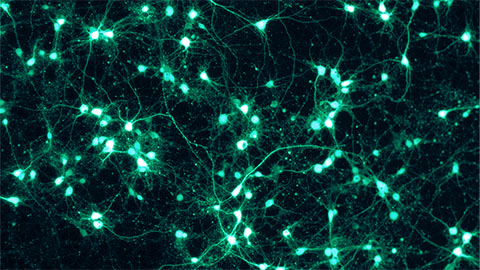
O-GlcNAcylation is driven by the enzyme O-GlcNAc transferase, or OGT. Mutations in OGT may give rise to a newly identified neurological disorder called OGT congenital disorder of glycosylation, or OGT–CDG. But, how disrupted O-GlcNAcylation gives rise to the intellectual disabilities and physical characteristics of the disorder remains poorly understood.
To investigate the effects of OGT mutations in early stages of development, Veronica M. Pravata, Daan M.F. van Aalten and a team of researchers at the University of Dundee and Aarhus University looked at two mouse embryonic stem cells, or mESCs, with different OGT mutations. They used quantitative proteomics, which involved the use of liquid chromatography-tandem mass spectrometry, to analyze protein and O-GlcNAcylation levels across cell proteomes. They published their findings in Molecular & Cellular Proteomics.
The team found that in the naïve pluripotent state, when stem cells can potentially develop into many cell types, the mutant mESCs had low overall levels of O-GlcNAcylation, but an increased abundance of OGT. They also found that in both mutant mESC lines, a protein called zinc finger and SCAN domain-containing protein 4, or ZSCAN4, was upregulated. As ZSCAN4 is important in pluripotency and chromatin restructuring, this finding could suggest epigenetic changes and altered gene expression in the early stages of OGT-CDG.
The authors then attempted to bridge the gap between disrupted O-GlcNAcylation and ZSCAN4 upregulation. They performed coimmunoprecipitation experiments to determine OGT binding partners and found that the enzyme interacts with a member of the Ten-11 translocation, or TET, family. This OGT–TET protein complex is involved in DNA methylation, activation of transcription and protein turnover.
These results support a pathway from increased OGT levels to higher levels of an OGT–TET protein complex, which may initiate epigenetic changes leading to increased ZSCAN4 expression. While there is still more to be understood about the effects of OGT mutations and other targets identified in this study, the study uncovers a potential key mechanism that may underlie the development of OGT-CDG. Further studies are needed to understand the role of the OGT–TET complex in different stages of neural development.
Enjoy reading ASBMB Today?
Become a member to receive the print edition four times a year and the digital edition monthly.
Learn moreGet the latest from ASBMB Today
Enter your email address, and we’ll send you a weekly email with recent articles, interviews and more.
Latest in Science
Science highlights or most popular articles
Long-chain polyunsaturated fatty acids linked to postoperative delirium risk
Researchers show that altered lipid metabolism may contribute to postoperative delirium, a condition linked to increased risk for long-term cognitive decline. The study explores potential disease mechanisms, which have yet to be understood.
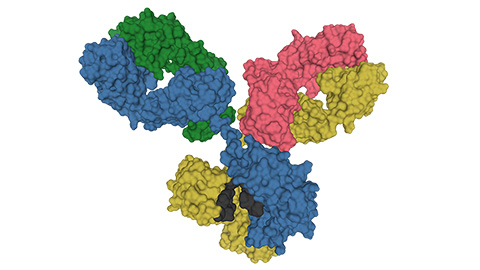
Glycosylation patterns across antibody isotypes distinguish tuberculosis states
Researchers at Taipei Medical University present the first site-specific glycosylation analysis of immunoglobulins in elderly tuberculosis patients.
Blood glycome possibly predicts lifespan
Researchers at the University of Santiago de Compostela show that total serum N-glycome can predict mortality independent of traditional risk factors.
Building a better model for drug delivery across the blood–brain barrier
Industry and academic scientists collaborated to develop a rat with humanized iron-transport receptors, enabling research into iron homeostasis and drugs that cross the brain’s barrier.
Fat synthesis enzyme crucial for milk fat and newborn growth
Researchers found that a deficiency of the fatty acid synthesis enzyme stearoyl-CoA desaturase-1 reduced mammary gland function during lactation and caused low birth weight in newborns that were fed milk from enzyme-deficient glands.

Flipping lipids and slime molds
A dull first job nearly pushed JBC associate editor Todd Graham out of science. Then a slime mold project changed his path. Now, he studies membrane biology and reflects on discovery, persistence and mentoring through uncertainty.