
Discoveries made possible by DNA
Nearly 70 years ago, James Watson and Francis Crick proposed the double-helix model of DNA, transforming how scientists understood heredity and launching the field of molecular biology. On November 6, Watson died in New York at age 97. Although a controversial figure, contributed to defining DNA structure and helped characterize the molecule that remains fundamental to understanding biology.
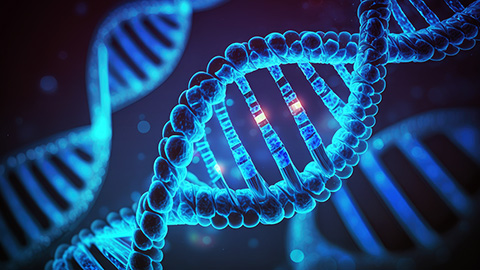
Now, genes and DNA are now closely linked in concept, but scientists in Watson and Crick’s era did not understand the chemical basis of inheritance. Watson and Crick suspected a molecule called DNA — which was first identified in the 1860s — could hold the answer. Earlier findings by Phoebus Levene and Erwin Chargaff revealed the basic chemical components of DNA and how they were arranged. Building on this work and drawing on crucial X-ray crystallography data from Maurice Wilkins and Rosalind Franklin some of which was shared without her consent, Watson and Crick built a physical model that revealed DNA’s double-helix structure. Although refinements have been made since their original published paper, the core model has endured. Watson, Crick and Wilkins were awarded the 1962 Nobel Prize in Physiology or Medicine for their work.
The discovery of the double helix answered key questions about how genetic information is encoded and faithfully copied. Its complementary strand structure explained how DNA can replicate with high fidelity, as each strand serves as a template for creating a new partner. The DNA sequence also hinted at how genes direct protein synthesis, although the full genetic code was not deciphered until more than a decade later. The breakthrough transformed the understanding of life at the molecular level and helped launch the field of molecular biology.
The double-helix model triggered a cascade of scientific breakthroughs, including the development of recombinant DNA technology. Advances in DNA sequencing have enabled scientists to map genes in detail, trace evolutionary relationships and uncover the molecular foundations of many diseases. These efforts culminated in the Human Genome Project, a landmark achievement that produced the first complete map of human genes.
DNA now sits at the center of modern science and medicine, powering technologies that allow more precise diagnostics and increasingly personalized medical care. New frontiers have emerged — gene editing is possible thanks to tools such as CRISPR–Cas9 and synthetic biology, which combines engineering and genetics, is being used to create new biological systems or redesign existing ones. Beyond healthcare, DNA-based tools support public-health surveillance, the development of more resilient crops and the monitoring of the genetic health of endangered species. These advances are built on the ability to read, interpret and rewrite DNA’s underlying code.
Although the double-helix model answered fundamental questions, many mysteries remain, from the roles of noncoding DNA to the complex layers of epigenetic modification and genome-wide regulatory networks. New tools and technology continue to expand what questions can be answered, ensuring that DNA research will fuel scientific innovation and inspire the next era of discovery.
Enjoy reading ASBMB Today?
Become a member to receive the print edition four times a year and the digital edition monthly.
Learn moreGet the latest from ASBMB Today
Enter your email address, and we’ll send you a weekly email with recent articles, interviews and more.
Latest in Science
Science highlights or most popular articles
Blood glycome possibly predicts lifespan
Researchers at the University of Santiago de Compostela show that total serum N-glycome can predict mortality independent of traditional risk factors.
Building a better model for drug delivery across the blood–brain barrier
Industry and academic scientists collaborated to develop a rat with humanized iron-transport receptors, enabling research into iron homeostasis and drugs that cross the brain’s barrier.
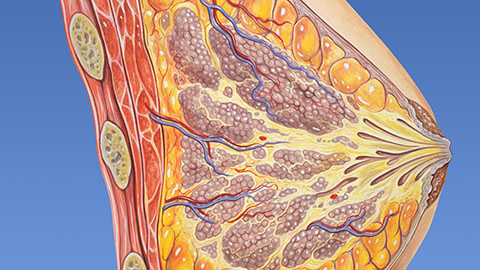
Fat synthesis enzyme crucial for milk fat and newborn growth
Researchers found that a deficiency of the fatty acid synthesis enzyme stearoyl-CoA desaturase-1 reduced mammary gland function during lactation and caused low birth weight in newborns that were fed milk from enzyme-deficient glands.
Flipping lipids and slime molds
A dull first job nearly pushed JBC associate editor Todd Graham out of science. Then a slime mold project changed his path. Now, he studies membrane biology and reflects on discovery, persistence and mentoring through uncertainty.
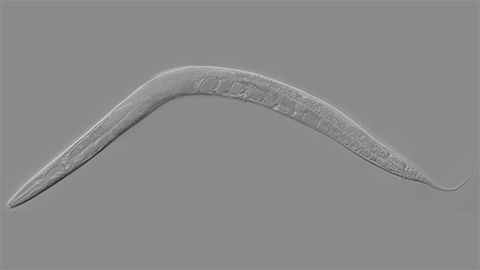
How smelling death alters worm behavior
Researchers have found that the roundworm C. elegans can smell death, and it changes how the worms behave, reproduce and age.
A chance encounter with the lab
Payton Stevens never planned to become a pancreatic cancer researcher. A temporary job set him on a path from rural Kentucky to leading research on Wnt signaling and metastasis, where he now pairs discovery with mentorship and science advocacy.