
Differences in pili structure modulate bacterial behavior

Type IV pili, or T4P, are hairlike protein appendages on the surface of bacteria that can retract to assist in movement and DNA uptake or resist retraction to promote adhesion and bacterial aggregation. Strains of Acinetobacter bacteria show differences in the balance of these T4P-dependent behaviors, but it is unclear why these differences occur.
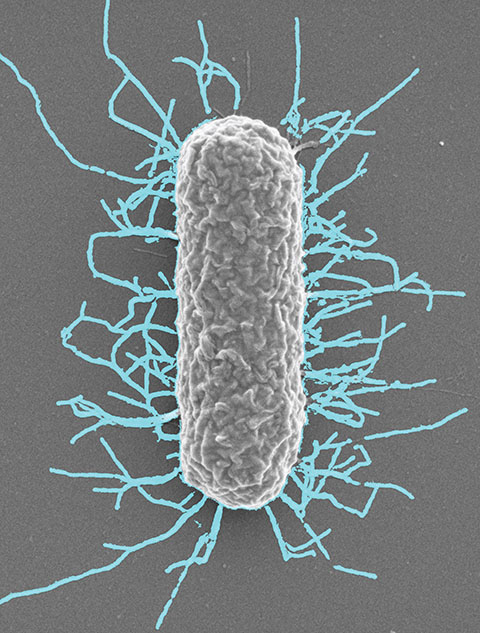
Yafan Yu and colleagues from the University of Georgia and the University of Nebraska–Lincoln published a study in the Journal of Biological Chemistry demonstrating how differences in pilus structure affect bacterial behavior. Researchers compared two Acinetobacter strains, International Clone I, or IC-I, and International Clone II, or IC-II, which differ in the sequence of PilA, the main subunit and building block of T4P. For direct comparison of pilus structure and function, they created genetically identical strains by replacing the native PilA gene with IC-I or IC-II variants. They found that IC-I PilA formed pili with efficient retraction behavior, promoting motility and DNA uptake. In contrast, the IC-II PilA produced pili that resisted retraction, leading to increased surface pili and biofilm formation.
These results illustrate that small changes in pilus structure can affect bacterial behavior, demonstrating how similar bacterial strains adapt to different environments. Future research can investigate how targeting the T4P structure to control pilus retraction and adhesion can open new avenues for complementary, targeted antibacterial therapeutics.
Enjoy reading ASBMB Today?
Become a member to receive the print edition four times a year and the digital edition monthly.
Learn moreGet the latest from ASBMB Today
Enter your email address, and we’ll send you a weekly email with recent articles, interviews and more.
Latest in Science
Science highlights or most popular articles
Uncovering the molecular roots of fatty liver disease
Physician–scientist Silvia Sookoian discusses her path from hepatitis C care to MASLD research, her use of multi-omics to study steatotic liver disease, and how lipid metabolism and genetics are reshaping understanding of MASH and liver health.
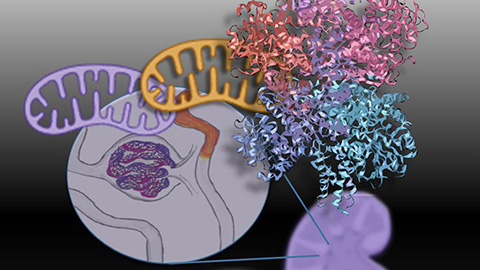
Mitochondria shape kidney cell function
Researchers at the University of Washington, Seattle present the first quantitative comparison of mitochondrial interactomes between two epithelial cell types in the kidney.
Long-chain polyunsaturated fatty acids linked to postoperative delirium risk
Researchers show that altered lipid metabolism may contribute to postoperative delirium, a condition linked to increased risk for long-term cognitive decline. The study explores potential disease mechanisms, which have yet to be understood.
Glycosylation patterns across antibody isotypes distinguish tuberculosis states
Researchers at Taipei Medical University present the first site-specific glycosylation analysis of immunoglobulins in elderly tuberculosis patients.
Blood glycome possibly predicts lifespan
Researchers at the University of Santiago de Compostela show that total serum N-glycome can predict mortality independent of traditional risk factors.
Building a better model for drug delivery across the blood–brain barrier
Industry and academic scientists collaborated to develop a rat with humanized iron-transport receptors, enabling research into iron homeostasis and drugs that cross the brain’s barrier.