

Promoting positive values in biochemistry classes

In my biochemistry classes at Universidad Mayor de San Simón, the curriculum focuses on core concepts in biomolecular metabolism. Alongside this content, I have introduced an extracurricular approach that emphasizes emotional awareness and the development of positive values to support student learning.
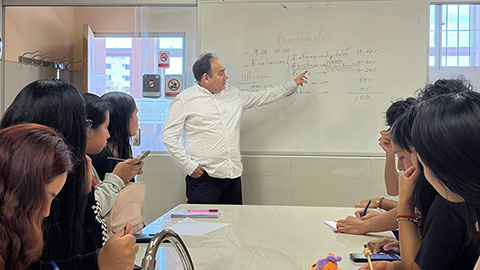
I began to see the impact of this approach through students like Pamela Bustamante. At the start of the course, she identified challenges with motivation, procrastination and discipline. Over time, by actively working on these areas, she improved her sense of responsibility and ability to manage her studies. She learned to organize her time more effectively and developed greater perseverance, recognizing that meaningful learning requires sustained effort.
In my regular classes, I cover topics such as the metabolism of carbohydrates, lipids, amino acids and nucleotides. At the start of the term, I also work with students who choose to attend lectures, since attendance is not mandatory in my country. Early in the course, I emphasize the importance of developing positive values alongside academic skills.
To support this, we begin with an individual diagnostic questionnaire that helps students identify personal challenges that may affect their learning. These may include lack of motivation, procrastination or difficulties with discipline. The results vary widely, reflecting each student’s unique background and circumstances. This process encourages self-reflection and gives students a starting point for personal growth.
As the course progresses, some students begin to adopt more effective study habits while also strengthening these positive values. This combination often leads to noticeable improvements in both confidence and academic performance. While these changes are not always easy to measure quantitatively, their impact is visible in how students engage with the material and approach their learning.
I believe this work plants important seeds. By encouraging students to reflect on their habits and develop perseverance, responsibility and self-awareness, I hope to support not only their academic success but also their personal growth. Over time, these changes may extend beyond the classroom, benefiting their communities and society.
Teaching biochemistry is not only about conveying scientific knowledge but also about helping students develop the mindset needed to apply that knowledge. By integrating positive values into my teaching, I aim to create a learning environment where students can grow both intellectually and personally.
Enjoy reading ASBMB Today?
Become a member to receive the print edition four times a year and the digital edition monthly.
Learn moreGet the latest from ASBMB Today
Enter your email address, and we’ll send you a weekly email with recent articles, interviews and more.
Latest in Opinions
Opinions highlights or most popular articles
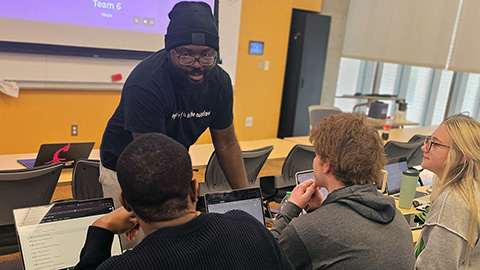
Learning can be fun: Gaming anatomy and physiology
Instructors explore how gamification and active learning transform student engagement and retention. They convey how emotion, interaction and design can make even rigorous subjects more effective and memorable.
Mentorship and uncertainty: Lessons from Telemachus
A biochemistry educator reflects on mentorship through the Greek story of Telemachus, showing how embracing uncertainty, failure and curiosity can transform teaching.
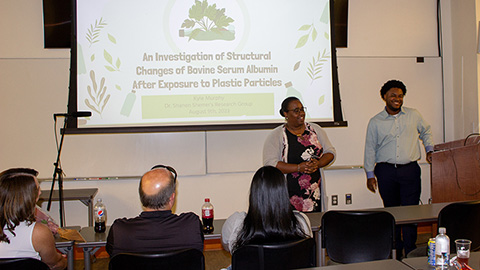
Embracing the twists and turns along the educator pathway
A biochemistry educator reflects on the challenges of early faculty life, describing how evidence-based teaching, cross-disciplinary collaboration and classroom challenges shaped her growth.
Redesigning with students in mind
Assistant professor reflects on how the shift to online teaching revealed gaps in points-based grading and led to a redesign centered on transparency and student growth.
Teaching beyond information transfer
Educator reflects on moving beyond lectures to create a biochemistry classroom centered on engagement, transparency and student ownership, showing how small shifts like “student hours” and active learning can transform understanding.
Mayday! Lessons from cellular dysfunction and group work dynamics
An upper-level biology course revealed that strong science doesn’t guarantee strong teamwork. One instructor shares how failed group dynamics reshaped their approach, leading to more structured, collaborative and effective student learning.