

Redesigning with students in mind

I thought my grading system measured learning. In the summer of 2020, I realized that it mostly measured compliance. Some students thrived; others gave up. The shift to online classes gave me new insight into my students’ lives and revealed how my grading system was preventing learning. I began to see my students’ different life situations more clearly. That realization changed everything and pushed me to look for alternatives.
That summer and academic year, I dove into Joe Feldman’s “Grading for Equity” and other books on alternative assessment and grading. I also joined the Biology Grading for Growth Community of Practice online. These readings and conversations gave me the courage and practical tools to begin redesigning my courses.
For educators considering a grading redesign, I recommend finding a group like this rather than going at it alone. That support, along with research on the disconnect between grades and learning, made it clear that change was necessary.
I began adapting my courses to standards-based grading, in which students are assessed on specific learning goals that clearly define expectations rather than on accumulating points. I also introduced short, scheduled one-on-one meetings with each student to discuss their progress. A typical meeting would involve students reflecting on their learning and an opportunity to demonstrate proficiency with a learning goal. This new approach involved many small shifts, from restructuring the grading system to making manual changes in the learning management system and increasing feedback and interaction with students.
Overall, these changes had a major impact. Students told me they appreciated the increased transparency about exams and grading. They also said the one-on-one meetings improved communication.
They felt seen and heard. They understood what success looked like.
My students saw that I cared about their learning and growth. It just took adjusting my approach to make that visible.
While grading practices vary across my courses, my focus on clarity remains constant. I continue to look for ways to improve my teaching. Redesigning my grading taught me that clarity and care matter more than points. I am still learning, but now my students and I grow together.
Enjoy reading ASBMB Today?
Become a member to receive the print edition four times a year and the digital edition monthly.
Learn moreGet the latest from ASBMB Today
Enter your email address, and we’ll send you a weekly email with recent articles, interviews and more.
Latest in Education
Education highlights or most popular articles
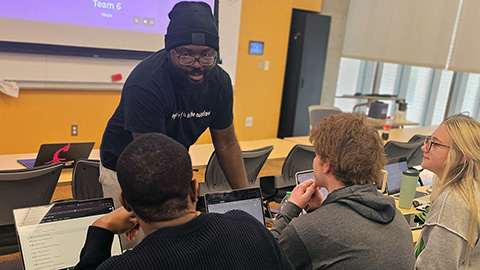
Learning can be fun: Gaming anatomy and physiology
Instructors explore how gamification and active learning transform student engagement and retention. They convey how emotion, interaction and design can make even rigorous subjects more effective and memorable.
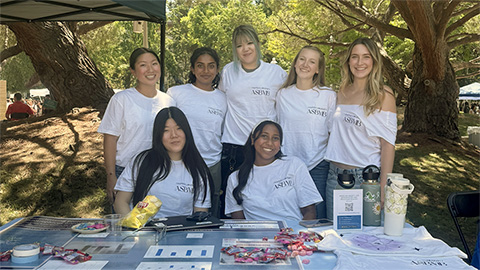
ASBMB recognizes Chapman as 2026 outstanding student chapter
The group, led by Cedric Owens, is being honored for its commitment to scientific engagement, mentorship and community building, creating meaningful opportunities for students in biochemistry and molecular biology.

Mentorship and uncertainty: Lessons from Telemachus
A biochemistry educator reflects on mentorship through the Greek story of Telemachus, showing how embracing uncertainty, failure and curiosity can transform teaching.
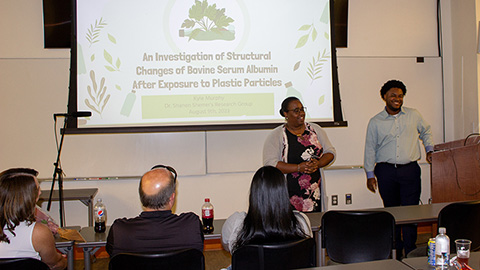
Embracing the twists and turns along the educator pathway
A biochemistry educator reflects on the challenges of early faculty life, describing how evidence-based teaching, cross-disciplinary collaboration and classroom challenges shaped her growth.
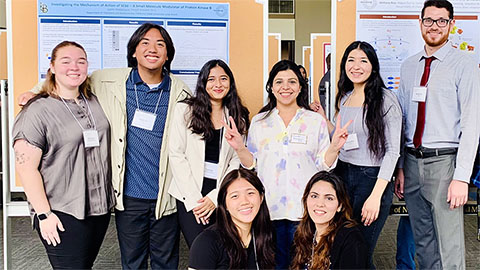
Teaching beyond information transfer
Educator reflects on moving beyond lectures to create a biochemistry classroom centered on engagement, transparency and student ownership, showing how small shifts like “student hours” and active learning can transform understanding.
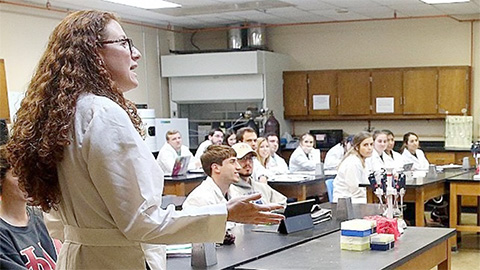
Mayday! Lessons from cellular dysfunction and group work dynamics
An upper-level biology course revealed that strong science doesn’t guarantee strong teamwork. One instructor shares how failed group dynamics reshaped their approach, leading to more structured, collaborative and effective student learning.