

Embracing the twists and turns along the educator pathway
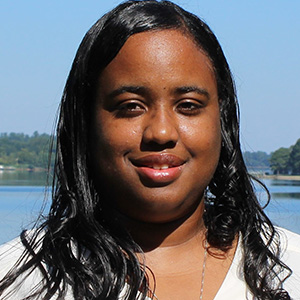
Reflecting on 8.5 years as a faculty member, I experienced many twists and turns on my path to becoming a biochemistry educator. Transitioning from being a teaching assistant for an introductory biochemistry lecture course with more than 400 students at a large research university to the instructor of record for a similar course of about 20 students at a small liberal arts college was a major turning point in my academic career.
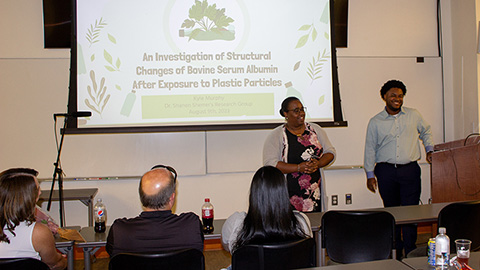
I faced a steep learning curve in developing my pedagogical expertise because I attended only a few teaching workshops before starting my tenure-track faculty position. Honestly, my early teaching experiences were mostly trial by fire.
As a faculty member, I sought opportunities to implement evidence-based teaching practices to improve course learning outcomes. Some of these practices included using more than one assessment tool for the concepts learned to allow for teaching interventions prior to final assignments and exams. I also began to embrace the twists and turns of my teaching and research while learning how to develop, adopt and adapt these instructional practices.
For example, when addressing the need to have accessible instructional software for specialized spectral data analysis on protein structures, I collaborated with computer science students and faculty to create such a tool in cross-disciplinary project-based learning capstone courses. My biochemistry lab students later used this tool alongside unplanned software troubleshooting tasks, enhancing their analytical skills while demonstrating professionalism, such as requesting corrections on data entries within the software tool in a timely manner.
This just-in-time teaching approach transformed my role modeling as a biochemist into measurable student resilience. Course assessments reflected this growth, including improved performance on timed assignments and exams featuring increasingly complex questions over the course of a single semester. Implementing evidence-based teaching practices was pivotal to my tenure and promotion and helped me grow into a teacher-scholar who integrates scholarly teaching in the classroom with disciplinary research beyond it.
These experiences ultimately reshaped my identity as an educator, showing me that effective teaching continuously evolves through experimentation, collaboration and reflection.
Enjoy reading ASBMB Today?
Become a member to receive the print edition four times a year and the digital edition monthly.
Learn moreGet the latest from ASBMB Today
Enter your email address, and we’ll send you a weekly email with recent articles, interviews and more.
Latest in Opinions
Opinions highlights or most popular articles
Learning can be fun: Gaming anatomy and physiology
Instructors explore how gamification and active learning transform student engagement and retention. They convey how emotion, interaction and design can make even rigorous subjects more effective and memorable.

Mentorship and uncertainty: Lessons from Telemachus
A biochemistry educator reflects on mentorship through the Greek story of Telemachus, showing how embracing uncertainty, failure and curiosity can transform teaching.
Redesigning with students in mind
Assistant professor reflects on how the shift to online teaching revealed gaps in points-based grading and led to a redesign centered on transparency and student growth.
Teaching beyond information transfer
Educator reflects on moving beyond lectures to create a biochemistry classroom centered on engagement, transparency and student ownership, showing how small shifts like “student hours” and active learning can transform understanding.
Mayday! Lessons from cellular dysfunction and group work dynamics
An upper-level biology course revealed that strong science doesn’t guarantee strong teamwork. One instructor shares how failed group dynamics reshaped their approach, leading to more structured, collaborative and effective student learning.
Showing students that it’s OK to ask questions
Assistant professor reflects on how admitting uncertainty and following student questions beyond the syllabus reshaped classroom culture, encouraging curiosity, vulnerability and deeper engagement in introductory biology.