

Mayday! Lessons from cellular dysfunction and group work dynamics
What happens when a well-designed group project meets the reality of student dynamics? In my second year of teaching, I learned that understanding cellular dysfunction was easier than managing group dysfunction.
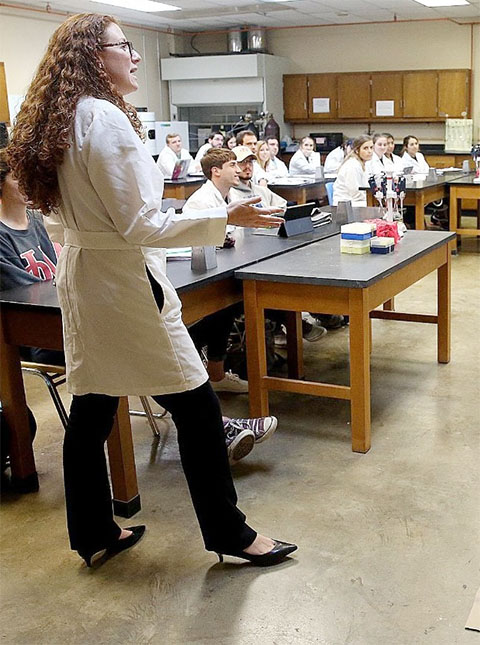
I was teaching an upper-level cellular and molecular biology lecture and lab and wanted a creative way to assess cumulative knowledge without a traditional exam. The course covered the biochemistry and molecular biology underlying cellular function, so I designed an assignment in which students applied their knowledge to real diseases.
Students worked in groups of three or four to explain a disease at the cellular level. They introduced peers to the condition, described symptoms and affected populations and explained the cellular process disrupted by the disease. If a therapy existed, they discussed how it corrected or compensated for the dysfunction. Examples included Huntington’s disease and proteasome dysfunction; Blackfan anemia and ribosome function; and cystic fibrosis and ion channel defects.
The scientific content was strong, but the group dynamics were weak. Students had never completed peer or group evaluations before, and many groups struggled with collaboration. Some divided tasks without true teamwork, while others fell apart entirely. This experience taught me that successful group work requires more than assigning roles it demands intentional structure and support.
Since then, I’ve transformed how I approach group projects. Here’s what I learned:
- Build community early. If group work is planned, create opportunities for students to connect. In my lab sections, rotating partners and using icebreakers helped foster trust.
- Set clear expectations. Students need guidance on collaboration, communication, and planning. Explicit instructions prevent confusion and promote shared responsibility.
- Form groups thoughtfully. Group size and composition matter. Consider whether instructor-assigned groups based on strengths work better than random selection.
- Start small. Low-stakes activities, like building pipe cleaner models together, help groups establish rapport before tackling major projects.
- Provide tools for accountability. I now use group contracts and share rubrics upfront. These documents outline roles, meeting plans, and expectations, reducing conflict later.
- Monitor progress. Regular check-ins and confidential evaluations allow me to support struggling teams and maintain trust.
The results have been remarkable. Students appreciate having time in class to plan and collaborate. Most groups stick to their contracts, resolve conflicts early, and produce higher-quality work. Students said this assignment helped them in group projects in other courses.
What started as an experiment in assessment became a lesson in adaptability: When we teach science, we’re also teaching the art of working together.
Enjoy reading ASBMB Today?
Become a member to receive the print edition four times a year and the digital edition monthly.
Learn moreGet the latest from ASBMB Today
Enter your email address, and we’ll send you a weekly email with recent articles, interviews and more.
Latest in Opinions
Opinions highlights or most popular articles
Learning can be fun: Gaming anatomy and physiology
Instructors explore how gamification and active learning transform student engagement and retention. They convey how emotion, interaction and design can make even rigorous subjects more effective and memorable.
Mentorship and uncertainty: Lessons from Telemachus
A biochemistry educator reflects on mentorship through the Greek story of Telemachus, showing how embracing uncertainty, failure and curiosity can transform teaching.
Embracing the twists and turns along the educator pathway
A biochemistry educator reflects on the challenges of early faculty life, describing how evidence-based teaching, cross-disciplinary collaboration and classroom challenges shaped her growth.
Redesigning with students in mind
Assistant professor reflects on how the shift to online teaching revealed gaps in points-based grading and led to a redesign centered on transparency and student growth.
Teaching beyond information transfer
Educator reflects on moving beyond lectures to create a biochemistry classroom centered on engagement, transparency and student ownership, showing how small shifts like “student hours” and active learning can transform understanding.
Showing students that it’s OK to ask questions
Assistant professor reflects on how admitting uncertainty and following student questions beyond the syllabus reshaped classroom culture, encouraging curiosity, vulnerability and deeper engagement in introductory biology.