

Mentorship and uncertainty: Lessons from Telemachus
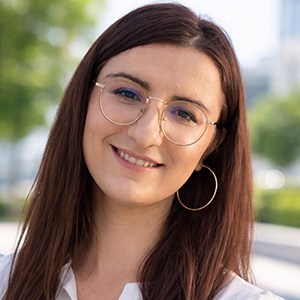
Come with me. Step into the sandals of Telemachus, son of Odysseus, standing at the edge of an immense, unknown sea. Your father has been gone for years, and every choice feels like a question without an answer. The goddess Athena, disguised as an old friend named Mentor, approaches him. She does not offer answers, but provides guidance, wisdom and the encouragement to take responsibility.
That ancient story gave us the word “mentor,” and it continues to shape how I think about teaching and learning in biochemistry and molecular biology. I was drawn to science because I wanted mechanisms, context and meaning. That hunger for understanding shapes how I teach. I invite students to ask questions freely, remain curious when answers are unclear and let uncertainty guide exploration rather than discourage it.
Like Athena, I aim not to provide answers, but to guide students through uncertainty.
One of my earliest teaching experiences was in a bilingual middle school in Albania, where I taught biology and general science in both Albanian and English. Working with them forced me to focus less on polished materials and more on clarity, intention and connection. Their progress reminded me that effective teaching begins with the belief that students’ questions matter and that they are capable of scientific reasoning.
Later, after moving abroad to pursue my training, I mentored students in cell and molecular biology as they performed PCR and gel electrophoresis experiments for the first time. I still remember how quickly confidence could shift in those early sessions; faint or absent bands were often met with quiet frustration and an immediate assumption that something had gone wrong. Because I wanted to protect them from that discouragement, I began preparing backup samples so their experiments would always appear to “work,” believing I was helping them build confidence and sustain their interest in the field.
Over time, I realized this well-intentioned approach was doing the opposite. By trying to hide failed results, I was withholding from students the opportunity to engage with uncertainty, troubleshoot problems and interpret ambiguity — the very core of scientific thinking.
That became clear when one student, after looking at a gel, said, “I thought I had failed, but now I see I just have more to figure out.”
In that moment, I understood that my role was not to remove uncertainty, but to help them work through it.
Teaching, I learned, is not about preventing failure; it is about helping students interpret unexpected results, reflect critically and try again with confidence and persistence.
Mentorship deepened when I worked with students who struggled or lacked confidence. Giving them time, trust and a voice at the bench transformed how they engaged with science and how they saw themselves.
These experiences showed me that strong scientists are not automatically effective teachers. Teaching requires empathy, intentional strategies and ongoing reflection. A degree is not just a technical credential. It reflects a commitment to scientific reasoning and a responsibility to guide others through uncertainty.
In biochemistry and molecular biology, teaching and mentorship are inseparable. When integrated intentionally, they do more than train scientists; they cultivate leaders who boldly embrace failure as part of growth and inspire others to do the same. Like Telemachus learning to navigate uncertain seas, students guided with empathy, trust and rigor become confident explorers of science.
Enjoy reading ASBMB Today?
Become a member to receive the print edition four times a year and the digital edition monthly.
Learn moreGet the latest from ASBMB Today
Enter your email address, and we’ll send you a weekly email with recent articles, interviews and more.
Latest in Opinions
Opinions highlights or most popular articles
Learning can be fun: Gaming anatomy and physiology
Instructors explore how gamification and active learning transform student engagement and retention. They convey how emotion, interaction and design can make even rigorous subjects more effective and memorable.
Embracing the twists and turns along the educator pathway
A biochemistry educator reflects on the challenges of early faculty life, describing how evidence-based teaching, cross-disciplinary collaboration and classroom challenges shaped her growth.
Redesigning with students in mind
Assistant professor reflects on how the shift to online teaching revealed gaps in points-based grading and led to a redesign centered on transparency and student growth.
Teaching beyond information transfer
Educator reflects on moving beyond lectures to create a biochemistry classroom centered on engagement, transparency and student ownership, showing how small shifts like “student hours” and active learning can transform understanding.
Mayday! Lessons from cellular dysfunction and group work dynamics
An upper-level biology course revealed that strong science doesn’t guarantee strong teamwork. One instructor shares how failed group dynamics reshaped their approach, leading to more structured, collaborative and effective student learning.
Showing students that it’s OK to ask questions
Assistant professor reflects on how admitting uncertainty and following student questions beyond the syllabus reshaped classroom culture, encouraging curiosity, vulnerability and deeper engagement in introductory biology.