

Getting students excited about introductory biology
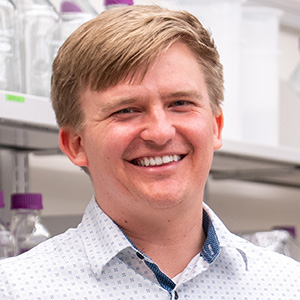
Introductory cell and molecular biology is one of my favorite courses to teach.
I love teaching early-career biologists and biochemists, but one challenge is the wide range of career interests they bring to the classroom. In an introductory biology classroom, future doctors sit next to future researchers, dentists, journalists, occupational therapists and more.
So, how do you capture the attention of such a diverse group of learners?
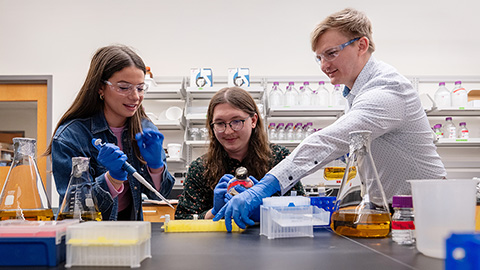
My strategy has been to lean into active learning and inclusive pedagogy, and I feel fortunate to have joined a teaching team in the biology department at the University of Richmond with a strong history of using evidence-based approaches.
Building on this history, I largely flipped my introductory biology course, asking students to complete readings and study guides outside of class and reserving class time for hands-on learning.
Early in my career, active learning meant think-pair-share discussions or collaborative practice questions. I still use these strategies, but recently, case studies have become my most effective active learning tool.
Science is done in a community, and case studies help students learn the same way. They are especially effective at pairing core biological concepts with real-world applications.
My most successful example explores the molecular mechanisms of opioids and naloxone. The learning objectives focus on protein structure and function, and cell signaling.
When I most recently taught this case study, I saw that students’ learning extended well beyond the textbook.
Working in groups of three or four, students analyzed molecular structures, discussed short passages and answered related questions.
The case study began with an overview of how endorphins are synthesized and trafficked through the endomembrane system. We then discussed G protein-coupled receptors and mu-opioid receptor structure and function.
Students explored agonists and antagonists by comparing endogenous and exogenous ligands and examining how synthetic opioids structurally resemble β-endorphin. Finally, we examined the molecular mechanism of naloxone and how it saves lives.
This case study inevitably raises challenging topics.
The opioid epidemic has affected millions, and at least one student in any given classroom likely has some personal experience related to opioids. But students want to be challenged, especially when the topic feels relevant to their lives.
The classroom was loud in the best way, and student participation was high.
As I circulated through the classroom, one student shared their experience volunteering at clinics where overdoses were common.
At the end of the case study, I intentionally left time for students to share takeaways. This space allowed students to connect course material to their own lives.
The University of Richmond has a robust undergraduate emergency medical technician, or EMT, organization, and one EMT in my class described how she was trained to recognize an overdose and administer naloxone.
Another student asked about inhaled versus injected naloxone, sparking a discussion of why different drug delivery methods may be preferred.
Hearing additional conversations around the room made it clear that many students had more to share, and next time I teach this case study, I plan to dedicate more time to reflection.
How do you get students invested in agonism, signaling cascades and other core concepts in introductory biology? I learned that interest grows when students are given time in class to wrestle with those ideas in contexts that feel real. For me, case studies created that space and changed how students engaged with the material.
Enjoy reading ASBMB Today?
Become a member to receive the print edition four times a year and the digital edition monthly.
Learn moreGet the latest from ASBMB Today
Enter your email address, and we’ll send you a weekly email with recent articles, interviews and more.
Latest in Opinions
Opinions highlights or most popular articles
Learning can be fun: Gaming anatomy and physiology
Instructors explore how gamification and active learning transform student engagement and retention. They convey how emotion, interaction and design can make even rigorous subjects more effective and memorable.
Mentorship and uncertainty: Lessons from Telemachus
A biochemistry educator reflects on mentorship through the Greek story of Telemachus, showing how embracing uncertainty, failure and curiosity can transform teaching.
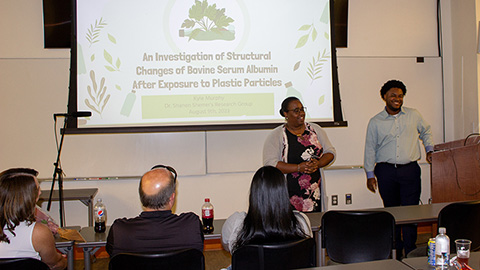
Embracing the twists and turns along the educator pathway
A biochemistry educator reflects on the challenges of early faculty life, describing how evidence-based teaching, cross-disciplinary collaboration and classroom challenges shaped her growth.
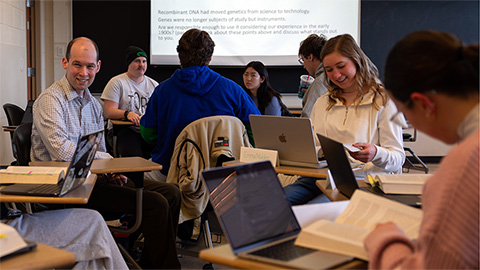
Redesigning with students in mind
Assistant professor reflects on how the shift to online teaching revealed gaps in points-based grading and led to a redesign centered on transparency and student growth.
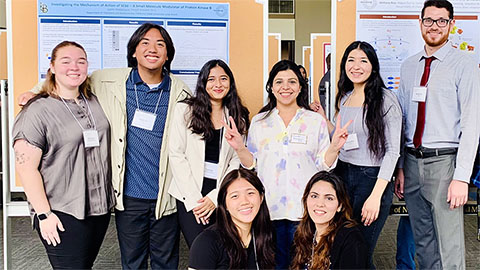
Teaching beyond information transfer
Educator reflects on moving beyond lectures to create a biochemistry classroom centered on engagement, transparency and student ownership, showing how small shifts like “student hours” and active learning can transform understanding.
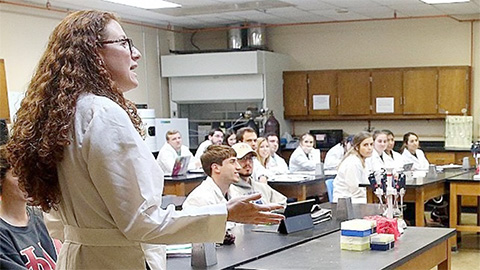
Mayday! Lessons from cellular dysfunction and group work dynamics
An upper-level biology course revealed that strong science doesn’t guarantee strong teamwork. One instructor shares how failed group dynamics reshaped their approach, leading to more structured, collaborative and effective student learning.