
An ancient animal helps scientists improve modern technology

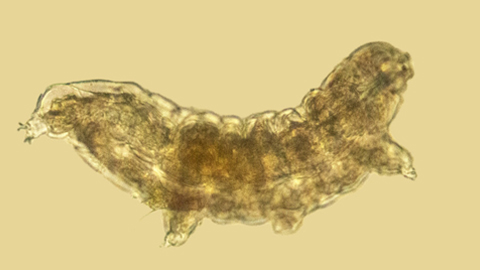
Water bears, an ancient group of microscopic animals known for their pudgy, ursine appearance and their uncanny ability to survive under extreme conditions, are helping researchers uncover the basic forms and functions of life’s molecular building blocks using modern technology.
Also known as tardigrades, these aquatic microorganisms can endure blistering heat and severe cold thanks to a set of specialized molecules they produce that protect them from damage. These molecules, called late embryogenesis abundant (LEA) proteins, keep the animals’ essential cellular structures and proteins intact, allowing water bears to dry up and go dormant when faced with an uninhabitable environment and then rehydrate and reanimate when it is safe to do so — sometimes decades later.
Now, in a recent study published in Nature Communications and led by University of Wisconsin–Madison researcher Ci Ji Lim, scientists have found that these same proteins can help solve a major technological challenge when it comes to getting high-quality microscope images of a diversity of other cellular structures and proteins using a technique called cryogenic electron microscopy or cryo-EM.
Lim has filed a provisional patent with the Wisconsin Alumni Research Foundation for the method described in the study.
Cryo-EM captures miniscule proteins and other biomolecules at a moment in time by freezing samples in a thin, water-based film before taking images of them using a powerful electron microscope. However, around the edges of a sample, where air meets the water, damage to biomolecules is more likely, making it difficult to clearly determine the structures of some proteins.
The technique is important to Lim’s research because he seeks to uncover the relationships between a protein’s form (what it looks like) and function (what it does). Cryo-EM also plays a role in helping identify potential targets for drug therapies. Both require capturing clear images.
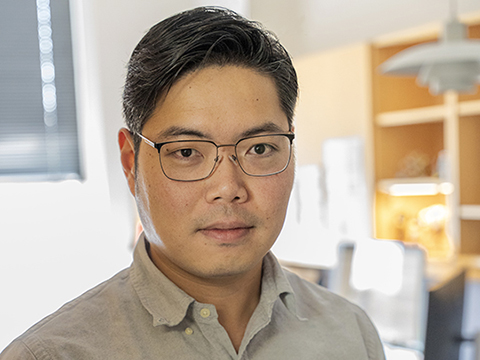
Lim, a professor in the Department of Biochemistry, wondered whether adding LEA proteins from tardigrades and other microorganisms like nematodes to their microscope samples prior to cryo-EM could prevent damage to the biomolecules and yield better images.
“A lot of times, the protein is attracted to the air-water interface. When proteins interact with this interface, they can clump together along the edges or begin to unfold and irreversibly change their form. There are many proteins that we just haven’t been able to fully explore the structures of because of this problem,” explains Lim. “So, I thought that maybe the LEA proteins, which help proteins in water bears remain robust under challenging conditions, could be harnessed to improve robustness in other contexts.”
Lim and his research team — led by graduate student Kaitlyn Abe — added LEA proteins to samples containing Polα-primase, a protein that is sensitive to the air-water interface. The team also used LEA proteins to image another protein, PRC2, whose structure has been difficult to capture.
The researchers demonstrated that adding LEA proteins is a cost-effective and efficient way to yield clearer cryo-EM images. Other methods to mitigate damage along the air-water interface can be expensive and laborious and can require scientists to use higher concentrations of the molecules they’re studying. LEA proteins allow scientists to use sample concentrations in line with those used with standard sample preparation methods. They could also be used in combination with other protection methods.
“Adding LEA proteins is a readily deployable and cost-effective solution to a bottleneck in cryo-EM research,” Lim says. “It is exciting that we got here using proteins that naturally evolved to do a similar job.”
Scientists are now trying to better understand how these proteins exert their protective properties.
“What is interesting,” says Tim Grant, a UW–Madison professor in the Department of Biochemistry who worked with Lim on the study, “is that even with the addition of the LEA proteins, we’re still seeing biomolecules along the air-water interface, but they’re not unfolding, denaturing and falling apart. In the presence of LEA proteins, it’s possible to solve structures for proteins that would have just fallen apart before.”
Grant, who is also an investigator at the Morgridge Institute for Research, expects the relationships between biological samples, LEA proteins and the air-water interface will become sharper as more researchers incorporate LEA proteins into sample processing.
“The air-water interface is a real problem, and water bears have offered a pretty cool solution to resolving that problem,” he says.
Lim looks forward to seeing once-tabled research projects reinvigorated. “Now, there’s new hope for exploring protein structures that we couldn’t before,” he explains. “We’re expanding the toolbox available to scientists for cryo-EM sample preparation, and there’s the potential for us to learn so much more about the structural biology of many proteins that had been challenging to visualize.”
This article is republished from the University of Wisconsin–Madison News. Read the original here.
Enjoy reading ASBMB Today?
Become a member to receive the print edition four times a year and the digital edition monthly.
Learn moreGet the latest from ASBMB Today
Enter your email address, and we’ll send you a weekly email with recent articles, interviews and more.
Latest in Science
Science highlights or most popular articles
Building a better model for drug delivery across the blood–brain barrier
Industry and academic scientists collaborated to develop a rat with humanized iron-transport receptors, enabling research into iron homeostasis and drugs that cross the brain’s barrier.
Fat synthesis enzyme crucial for milk fat and newborn growth
Researchers found that a deficiency of the fatty acid synthesis enzyme stearoyl-CoA desaturase-1 reduced mammary gland function during lactation and caused low birth weight in newborns that were fed milk from enzyme-deficient glands.
Flipping lipids and slime molds
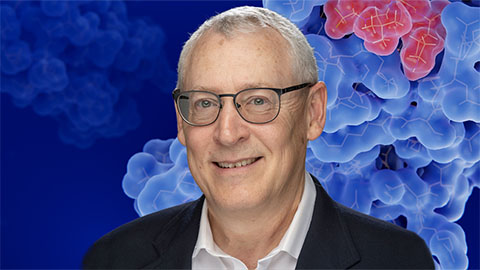
A dull first job nearly pushed JBC associate editor Todd Graham out of science. Then a slime mold project changed his path. Now, he studies membrane biology and reflects on discovery, persistence and mentoring through uncertainty.
How smelling death alters worm behavior
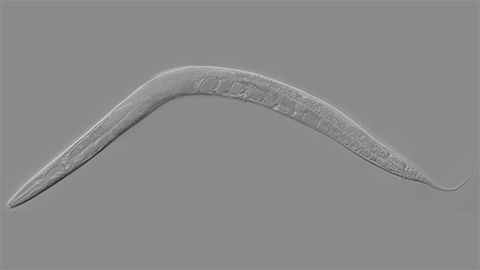
Researchers have found that the roundworm C. elegans can smell death, and it changes how the worms behave, reproduce and age.
A chance encounter with the lab
Payton Stevens never planned to become a pancreatic cancer researcher. A temporary job set him on a path from rural Kentucky to leading research on Wnt signaling and metastasis, where he now pairs discovery with mentorship and science advocacy.
Light-activated small molecule could transform eye infection treatment
Contact lenses raise the risk of infectious keratitis, a leading cause of blindness worldwide. A biotech company is commercializing a light-activated therapy using a ROS-generating molecule to rapidly kill microbes in the cornea to preserve vision.