
How Alixorexton could transform narcolepsy treatment
Adults sleep about one-third of their lives, or eight hours a day, to maintain physical and mental health. Yet, according to the National Institutes of Health, an estimated 50 to 70 million Americans live with sleep disorders that worsen conditions such as obesity, heart disease and depression.
Narcolepsy is a sleep disorder causing excessive daytime sleepiness affecting about 40 out of 100,000 Americans. People with narcolepsy fall asleep at random during the daytime, which makes driving dangerous and has negative effects on work, school and social relationships.
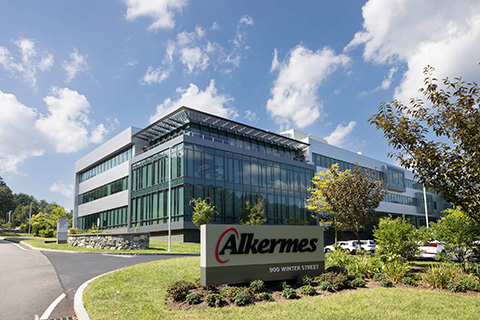
Alkermes, a biopharmaceutical company developing medicines for psychiatric and neurological disorders, recently announced positive phase 2 clinical trial results for its investigational drug alixorexton, a once-daily treatment for narcolepsy type 1, or NT1.
After six weeks of taking alixorexton, patients saw improvements in sleepiness measurements, as well as exploratory measurements of fatigue and cognition.
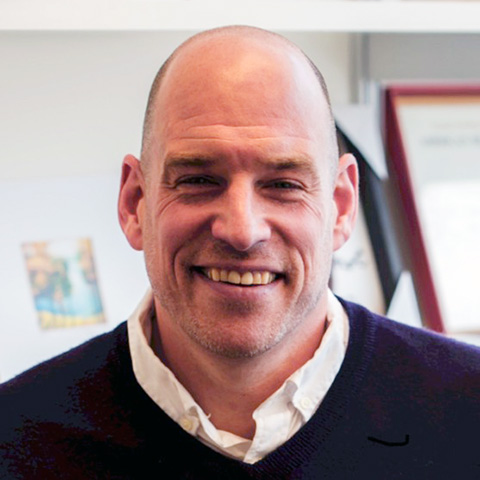
Brian Raymer, executive director of project leadership and strategy at Alkermes, led the team that developed alixorexton. He presented the drug at the American Chemical Society’s Spring 2025 First Time Disclosures session.
The key to wakefulness
Narcolepsy, an autoimmune disorder, is a lifetime condition after it develops. People with NT1 also experience cataplexy, sudden muscle weakness triggered by strong emotions such as laughter or anger.
To design an effective therapy, researchers examined the biochemical pathways that regulate wakefulness.
Raymer described the maintenance of wakefulness test, in which participants sit in a dark room and are instructed to stay awake.
“With a normal sleep-wake system, you can stay awake 15 or 20 minutes,” Raymer said. “(Patients with narcolepsy) are down to four or five minutes.”
At the center of wakefulness is a neuropeptide called orexin, produced by specialized neurons in the brain.
The discovery of orexin’s role in sleep regulation earned Emmanuel Mignot of Stanford University and Masashi Yanagisawa of the University of Tsukuba the 2023 Breakthrough Prize in Life Sciences.
Orexin helps maintain wakefulness and appetite by stimulating neurotransmitters such as histamine, norepinephrine and serotonin. In people with NT1, autoimmune damage impairs the neurons that produce orexin, disrupting the normal sleep–wake cycle.
Alixorexton acts as an agonist of the orexin 2 receptor, or OX2R, mimicking orexin’s activity to help patients stay awake.
Because this pathway activates a broad network of neurotransmitters, Raymer said orexin receptor agonists may also help people with narcolepsy type 2 or idiopathic hypersomnia.
From synthesis to clinical trials
Alixorexton, an OX2R agonist, was designed using molecular modeling based on the structure of OX2R bound to antagonist molecules. OX2R antagonists promote sleepiness in patients with insomnia, or the inability to fall or stay asleep.
After designing the molecule, organic chemists synthesized it, and biochemists and molecular biologists tested how it interacted with the receptor. As the molecule showed promise, production scaled up.
“It’s amazing how we start out trying to make a few milligrams as fast as possible,” Raymer said. “Now we make kilos and kilos of it to support the clinical supply.”
At the end of the trial, participants could opt into an open-label extension, continuing the medication before regulatory approval.
“In our case, 95% said yes,” Raymer said. “People … wanted to continue.”
Alkermes plans to begin a phase 3 clinical trial in the first half of 2026.
The making of a medicinal chemist
Raymer knew he liked chemistry from a young age. In middle school, he saw his first organic chemistry structure and got hooked.
“It was like those sharks in 'Finding Nemo' (first) smelling blood,” Raymer said.
After earning his Ph.D. in chemistry and chemical biology from Harvard University, he worked at Novartis and Pfizer on diabetes and cardiometabolic diseases before joining Alkermes as a drug discovery project leader.
Now he coordinates the full preclinical discovery process, including biochemistry and molecular biology protocols.
Raymer said he enjoys being a medicinal chemist because he considers it an “applied science.” Research is a part of it, but the outcomes of that research can help people, he said.
“You have a chance to move the needle on both the science and patient health,” Raymer said. “I think it makes for a rewarding career.”
Enjoy reading ASBMB Today?
Become a member to receive the print edition four times a year and the digital edition monthly.
Learn moreGet the latest from ASBMB Today
Enter your email address, and we’ll send you a weekly email with recent articles, interviews and more.
Latest in Science
Science highlights or most popular articles
Blood glycome possibly predicts lifespan
Researchers at the University of Santiago de Compostela show that total serum N-glycome can predict mortality independent of traditional risk factors.
Building a better model for drug delivery across the blood–brain barrier
Industry and academic scientists collaborated to develop a rat with humanized iron-transport receptors, enabling research into iron homeostasis and drugs that cross the brain’s barrier.
Fat synthesis enzyme crucial for milk fat and newborn growth
Researchers found that a deficiency of the fatty acid synthesis enzyme stearoyl-CoA desaturase-1 reduced mammary gland function during lactation and caused low birth weight in newborns that were fed milk from enzyme-deficient glands.
Flipping lipids and slime molds
A dull first job nearly pushed JBC associate editor Todd Graham out of science. Then a slime mold project changed his path. Now, he studies membrane biology and reflects on discovery, persistence and mentoring through uncertainty.

How smelling death alters worm behavior
Researchers have found that the roundworm C. elegans can smell death, and it changes how the worms behave, reproduce and age.
A chance encounter with the lab
Payton Stevens never planned to become a pancreatic cancer researcher. A temporary job set him on a path from rural Kentucky to leading research on Wnt signaling and metastasis, where he now pairs discovery with mentorship and science advocacy.