
Exploring the link between lipids and longevity
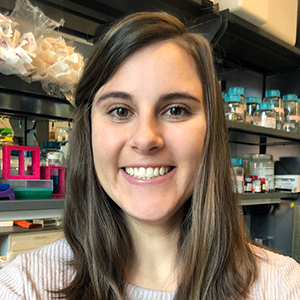
On both sides of the family, Meng Wang’s grandmothers lived long, healthy lives, well into old age — one to 100 years old, the other to 95.
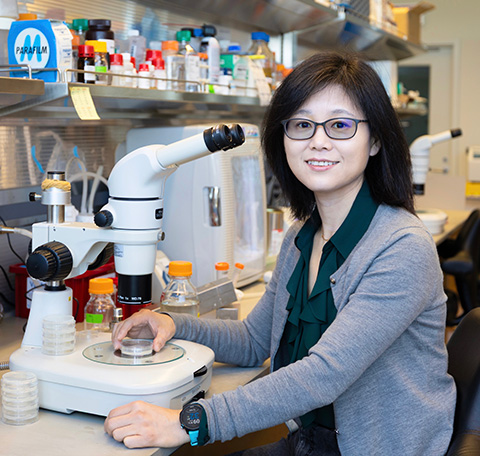
“Seeing them always made me wonder, why can’t everyone age like them?” she said.
That question guided her postdoctoral research at Harvard Medical School and Massachusetts General Hospital where she explored how metabolism influences lifespan using the nematode worm Caenorhabditis elegans. Wang investigated the link between metabolism and aging, focusing on how lipolysis — the breakdown of fats — affects lifespan.
Using multidisciplinary approaches over the course of a few years, her group at Baylor College of Medicine revealed that the enzyme LIPL-4 breaks down specific lipid molecules stored in the cell’s recycling centers, the lysosomes. This process generates lipid messengers that travel to the nucleus, where they activate genes that enhance metabolism and extend lifespan. Her findings uncovered a novel molecular pathway linking fat metabolism to longevity.
“This was the beginning of my journey into aging research from a metabolic perspective,” Wang said.
Now a senior group leader, Wang continues to dissect the molecular mechanisms of aging at the Howard Hughes Medical Institute Janelia Research Campus, focusing on how metabolic products, or metabolites, serve as signaling molecules to influence gene expression, interorgan dialogue and microbiota-host interactions to promote longevity.
Wang’s work on expanding the basic understanding of longevity and metabolic signals will also identify new avenues for interventions. By modifying metabolism or influencing its signaling pathways, aging could also be altered.
For Wang, aging research is about more than extending lifespan — it’s about tackling age-related chronic diseases, including diabetes, heart disease, neurodegeneration and cancer. With demographics shifting towards an older population, these conditions are expected to place growing pressure on society and healthcare systems. Wang believes that uncovering the biology of aging could provide critical insights for preventing or treating them.
“Aging is the single greatest risk factor for many chronic diseases,” Wang said. “The idea is that if we could target aging itself, we might be able to combat multiple age-related diseases at once.”
The fat–neuron connection
Building on the discovery of LIPL-4, Wang used an RNA interference screen to find genes involved in the lifespan extension seen in C. elegans engineered to overexpress this enzyme in intestinal fat cells. Her team identified nlp-11, a neuropeptide gene predominantly expressed in neurons, as a critical downstream effector mediating the whole-body longevity effect.
“The discovery of the link between lipl-4 and nlp-11 was a surprise to me,” Wang said. “Previously, it was not known that lysosomes in one tissue could signal to another, but even more so, that lipid messengers derived from lysosomes could mediate such cross-tissue communication.”
Lipids as molecular connectors
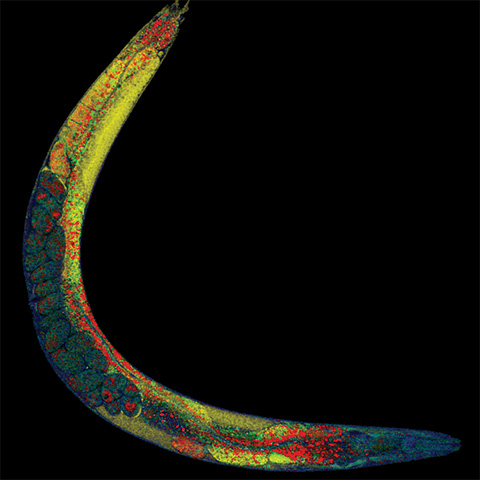
With LIPL-4 in fat cell lysosomes and NLP-11 in the neuronal nucleus serving as the bookends, Wang looked to identify the signaling intermediates in this pathway. Lipidomics showed that lipl-4 overexpression increased production of lipids called polyunsaturated fatty acids, or PUFAs. Blocking PUFA synthesis eliminated the lifespan extension, identifying PUFAs as key messengers in the pathway.
Wang hypothesized that PUFAs are transported from fat cells to neurons by a lipid-binding protein, or LBP. By searching the C. elegans genome, her team identified LBP-3 as the key carrier. Knocking down lbp-3 suppressed lifespan extension, while its overexpression increased longevity. She further showed that the receptor NHR-49 in neurons mediates PUFA signaling by activating nlp-11.
Her work established a fat-to-neuron signaling axis, where lysosomal lipolysis releases PUFAs that, carried by LBP-3, activate neuronal NHR-49 and neuropeptide signaling to promote lifespan extension.
“We find that specific metabolic products can actually serve as communication signals between different parts of the body,” Wang said. “This communication helps to maintain physiological harmony.”
Wang will present her work on aging and metabolism at the ASBMB 2026 Annual Meeting.
Enjoy reading ASBMB Today?
Become a member to receive the print edition four times a year and the digital edition monthly.
Learn moreFeatured jobs
from the ASBMB career center
Get the latest from ASBMB Today
Enter your email address, and we’ll send you a weekly email with recent articles, interviews and more.
Latest in People
People highlights or most popular articles
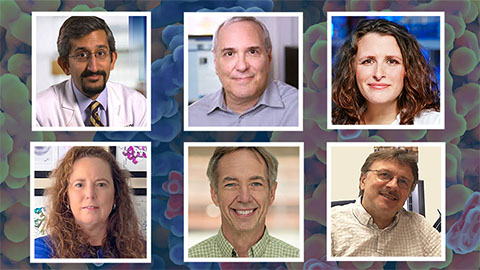
ASBMB members receive ASPET awards
The American Society for Pharmacology and Experimental Therapeutics awards Simone Brixius–Anderko, Paul Insel, Sudarshan Rajagopal, Emily Scott, Alan Smrcka and Jürgen Wess for their excellent research and mentoring work in pharmacology.
Kozul honored by Washington University
She received the 2025 Elliot L. Elson Education and Training Award.
de la Fuente honored for AI research
The award will support the development of an AI system called ApexMol, a 3D structure–informed, agentic large language model designed to create new biomolecules.
In memoriam: Peter Roepstorff
He was a leading researcher in biological mass spectrometry, mapped protein function in living organisms and was an ASBMB member for 19 years.
Flipping lipids and slime molds
A dull first job nearly pushed JBC associate editor Todd Graham out of science. Then a slime mold project changed his path. Now, he studies membrane biology and reflects on discovery, persistence and mentoring through uncertainty.
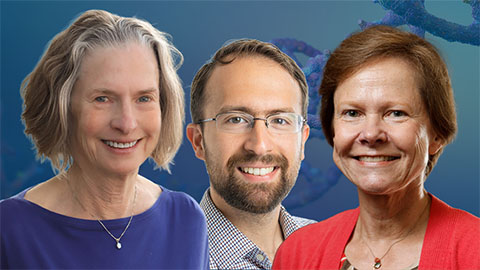
ASBMB members receive RNA Society awards
The RNA Society awards Brenda Bass, Can Cenik and Karin Musier–Forsyth for their achievements in RNA research and innovation. Winners will be recognized at the closing awards ceremony of the RNA 2026 annual meeting.