
Heat shock proteins as a promising breast cancer therapeutic

Heat shock protein 90, or Hsp90, is a ubiquitously expressed molecular chaperone. It serves as a promising target for the development of anticancer therapeutics due to its role in regulating multiple oncoproteins. An expansive variety of small-molecule Hsp90 pan-inhibitors have previously gone to trial, but many have failed due to cardiotoxicity and ocular toxicity attributed to Hsp90α, one of two cytosolic isoforms of the protein. This has ultimately led to the development of isoform-specific therapeutic strategies using Hsp90.
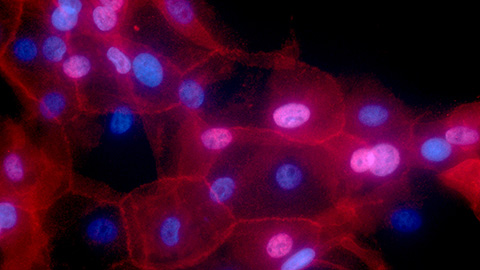
Tyelor Reynolds and colleagues at the University of Notre Dame recently sought to identify the anticancer effects of Hsp90β-selective inhibitors and how this may affect the proteome. The study was published in Molecular & Cellular Proteomics. They used a bottom-up liquid chromatography–mass spectrometry/mass spectrometry, or LC–MS/MS, proteomics approach to perform the first proteomic analysis of Hsp90β-selective inhibitors NDNB1 and NDNB1182 against triple-negative breast cancer, or TNBC. The study determined that both NDNB1 and NDNB1182 display moderate selectivity for TNBC cells, and inhibition of Hsp90β using these inhibitors led to alterations in proteins associated with cell cycle functions, cell signaling pathways and DNA repair mechanisms.
The researchers also identified additional potential Hsp90β substrates, including RAD9 checkpoint component A, or RAD9A, a cell cycle checkpoint protein involved in DNA repair; cyclin-dependent kinase 1, or CDK1, a key regulator of the cell cycle; and ribosomal protein S9, or RPS9, which contributes to ribosomal subunit formation. These discoveries provide insights into Hsp90 isoforms and their potential as anticancer therapeutics.
Enjoy reading ASBMB Today?
Become a member to receive the print edition four times a year and the digital edition monthly.
Learn moreGet the latest from ASBMB Today
Enter your email address, and we’ll send you a weekly email with recent articles, interviews and more.
Latest in Science
Science highlights or most popular articles
Blood glycome possibly predicts lifespan
Researchers at the University of Santiago de Compostela show that total serum N-glycome can predict mortality independent of traditional risk factors.
Building a better model for drug delivery across the blood–brain barrier
Industry and academic scientists collaborated to develop a rat with humanized iron-transport receptors, enabling research into iron homeostasis and drugs that cross the brain’s barrier.
Fat synthesis enzyme crucial for milk fat and newborn growth
Researchers found that a deficiency of the fatty acid synthesis enzyme stearoyl-CoA desaturase-1 reduced mammary gland function during lactation and caused low birth weight in newborns that were fed milk from enzyme-deficient glands.
Flipping lipids and slime molds
A dull first job nearly pushed JBC associate editor Todd Graham out of science. Then a slime mold project changed his path. Now, he studies membrane biology and reflects on discovery, persistence and mentoring through uncertainty.
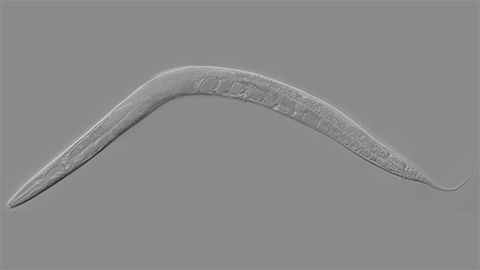
How smelling death alters worm behavior
Researchers have found that the roundworm C. elegans can smell death, and it changes how the worms behave, reproduce and age.
A chance encounter with the lab
Payton Stevens never planned to become a pancreatic cancer researcher. A temporary job set him on a path from rural Kentucky to leading research on Wnt signaling and metastasis, where he now pairs discovery with mentorship and science advocacy.