
Debugging my code and teaching with ChatGPT

As both a scientist and teacher, artificial intelligence, or AI, has reshaped how I work. Large language models, or LLMs, such as ChatGPT have streamlined time-consuming tasks and, more importantly, made me a more effective researcher and educator. By spending less time debugging code or drafting practice problems by hand, I have more bandwidth to pursue new research questions and design active learning exercises for my students.
As a computational biologist, I use ChatGPT to write and debug bioinformatics pipelines and translate scripts between programming languages and operating systems.
Tasks that once consumed hours, like tracking down an error caused by a stray character, can now be solved in seconds with a prompt: “What is causing the following error in this script?”
Once, after nearly an hour of fruitless searching, ChatGPT spotted the culprit immediately: an invisible character. Even better, it explained the fix, all within seconds.
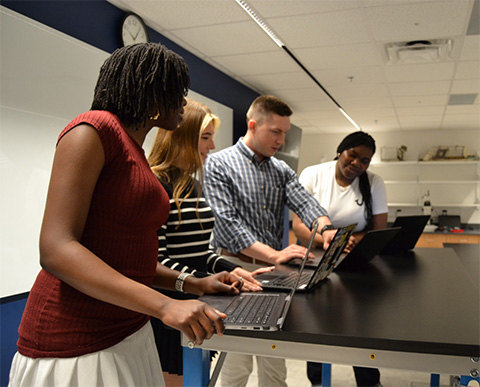
As an instructor, I use ChatGPT to plan course schedules around holidays, generate problem sets and create practice exams. Just as important, I teach students how to use it for self-directed learning.
For example, I show them how to ask: “Can you give me 10 practice problems about transcription and translation?” or “Why is answer choice A incorrect in this question?”
In a bioinformatics course I taught, more than half of the students said ChatGPT had been one of the most helpful tools for their learning.
Still, I remind my students — and myself — that it is a tool, not a replacement, for learning.
Instead of asking ChatGPT to write code, I encourage them to use it to learn to code. Instead of demanding an answer, they can ask it to explain the reasoning behind correct and incorrect choices.
When I was in graduate school, tools like ChatGPT didn’t exist. I taught myself to code through long hours of trial and error. I spent many late nights alone in my thesis lab, staring at endless lines of an incomprehensible code and wondering if I would ever graduate. That struggle, though slow and frustrating, gave me the foundation I still rely on today.
Because I learned coding from the ground up, I can now spot errors in AI-generated code and write precise prompts to improve it.
But the rapid rise of AI, and its near-universal adoption, has also created risks. Studies link LLMs to declines in memory, attention, academic performance and even changes in brain connectivity.
As educators and learners, we must use these tools wisely: not as shortcuts, but as scaffolds that support true understanding. Without that guidance, I fear students will be tempted by shortcuts that rob them of the personal growth that only comes from the hard process of learning.
I call on all educators to guide students into this new era of learning by showing both the remarkable capabilities and the clear limitations of this technology.
Enjoy reading ASBMB Today?
Become a member to receive the print edition four times a year and the digital edition monthly.
Learn moreGet the latest from ASBMB Today
Enter your email address, and we’ll send you a weekly email with recent articles, interviews and more.
Latest in Opinions
Opinions highlights or most popular articles
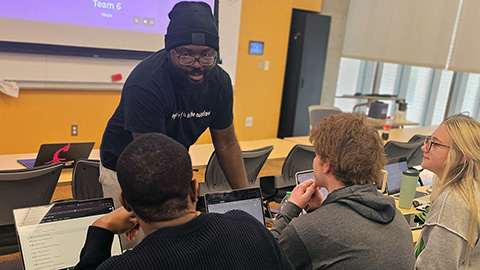
Learning can be fun: Gaming anatomy and physiology
Instructors explore how gamification and active learning transform student engagement and retention. They convey how emotion, interaction and design can make even rigorous subjects more effective and memorable.
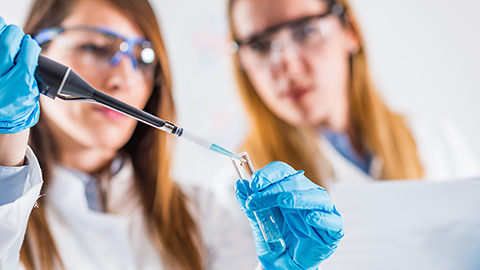
Mentorship and uncertainty: Lessons from Telemachus
A biochemistry educator reflects on mentorship through the Greek story of Telemachus, showing how embracing uncertainty, failure and curiosity can transform teaching.
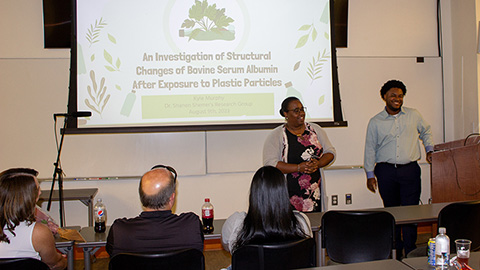
Embracing the twists and turns along the educator pathway
A biochemistry educator reflects on the challenges of early faculty life, describing how evidence-based teaching, cross-disciplinary collaboration and classroom challenges shaped her growth.
Redesigning with students in mind
Assistant professor reflects on how the shift to online teaching revealed gaps in points-based grading and led to a redesign centered on transparency and student growth.
Teaching beyond information transfer
Educator reflects on moving beyond lectures to create a biochemistry classroom centered on engagement, transparency and student ownership, showing how small shifts like “student hours” and active learning can transform understanding.
Mayday! Lessons from cellular dysfunction and group work dynamics
An upper-level biology course revealed that strong science doesn’t guarantee strong teamwork. One instructor shares how failed group dynamics reshaped their approach, leading to more structured, collaborative and effective student learning.