

Evolving the undergraduate biochemistry lab
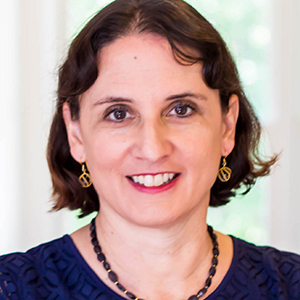
Over 25 years ago, I began teaching an introductory biochemistry lab at a primarily undergraduate institution, focusing on foundational techniques, protein purification, quantification and enzyme kinetics, to supplement lecture material. Several books on individual biochemistry experiments from that era still sit on my office bookshelf, and early in my career, I routinely pulled from them.
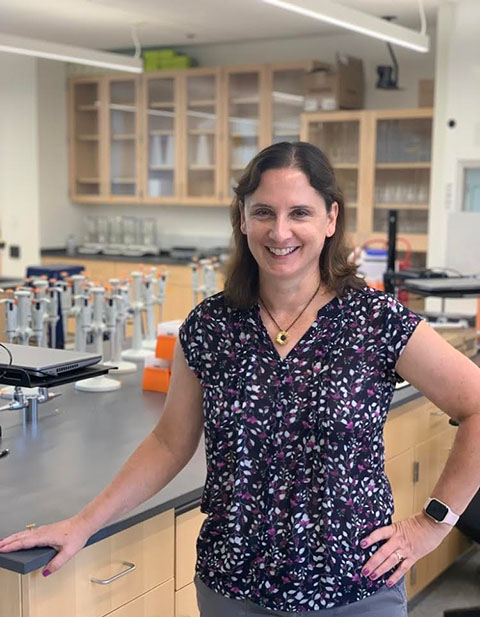
On my campus, nucleic acid experiments were taught in biology courses or a second-semester biochemistry lab, which later became an elective that many majors skipped.
After my first year as a tenure-track instructor, I attended a 2001 Project Kaleidoscope BMB Summer Institute. A session on lab experiments was invaluable, and I met many BMB faculty members I still connect with through the American Society for Biochemistry and Molecular Biology.
Most shared experiments focused on techniques or skills, though early pioneers were beginning to incorporate longer, research-based projects into labs and these gatherings sparked key conversations about the scope of BMB lab curricula. While technique-focused labs teach students important skills, they are limited in teaching students about the scientific process, specifically hypothesis development and testing.
Over time, guided inquiry and project-based labs became more popular in undergraduate biochemistry labs and often focused on one enzyme to teach many techniques over multiple weeks. I ran a “chicken lab” where students purified lactate dehydrogenase from grocery-store chicken.
We followed purification with SDS-PAGE gel and kinetic analysis, a multiweek experience with an active enzyme, though not one I miss for its smell.
Years later, colleagues and I developed a research-based medicinal chemistry lab where students synthesized a putative tyrosinase inhibitor and tested its biological activity. Most students reported gains in confidence in tackling research questions without a known outcome, as measured by a Likert-scale question, a numerical agreement rating scale.
As a member of the Malate dehydrogenase, or MDH, CUREs Community, or MCC, I currently teach a protein-focused CURE, or a course-based undergraduate research experience, in Biochemistry I, where students use PyMOL to model MDH structures and develop hypotheses. DNA is also part of the course, as students transform E. coli with plasmids to express His-tagged proteins.
Student feedback indicates that integrating the lab curriculum with an active biochemistry research project provides a meaningful introduction to enzyme-focused research.
Many other faculty have incorporated CUREs with the help of National Science Foundation–funded communities, such as the Biochemistry Authentic Scientific Inquiry Lab, or BASIL, and MCC, and national collaborations with educators and students have transformed what was once an isolated teaching experience.
My lab course continues to evolve. This past fall, I piloted specifications grading, focusing on skill proficiency rather than points, with tokens allowing assignment revisions or submission of late work. I don’t think I can go back to assigning points to items like lab notebooks, as I think this approach, with expected proficiency outcomes, centers student learning more than traditional grading.
Looking ahead, I hope to incorporate more computational techniques, such as ligand docking and molecular dynamics simulations. Teaching biochemistry lab courses has been a rewarding experience, and I’ve appreciated learning alongside my students as experiments and instrumentation have evolved over time.
Enjoy reading ASBMB Today?
Become a member to receive the print edition four times a year and the digital edition monthly.
Learn moreGet the latest from ASBMB Today
Enter your email address, and we’ll send you a weekly email with recent articles, interviews and more.
Latest in Opinions
Opinions highlights or most popular articles
Learning can be fun: Gaming anatomy and physiology
Instructors explore how gamification and active learning transform student engagement and retention. They convey how emotion, interaction and design can make even rigorous subjects more effective and memorable.
Mentorship and uncertainty: Lessons from Telemachus
A biochemistry educator reflects on mentorship through the Greek story of Telemachus, showing how embracing uncertainty, failure and curiosity can transform teaching.
Embracing the twists and turns along the educator pathway
A biochemistry educator reflects on the challenges of early faculty life, describing how evidence-based teaching, cross-disciplinary collaboration and classroom challenges shaped her growth.
Redesigning with students in mind
Assistant professor reflects on how the shift to online teaching revealed gaps in points-based grading and led to a redesign centered on transparency and student growth.
Teaching beyond information transfer
Educator reflects on moving beyond lectures to create a biochemistry classroom centered on engagement, transparency and student ownership, showing how small shifts like “student hours” and active learning can transform understanding.
Mayday! Lessons from cellular dysfunction and group work dynamics
An upper-level biology course revealed that strong science doesn’t guarantee strong teamwork. One instructor shares how failed group dynamics reshaped their approach, leading to more structured, collaborative and effective student learning.