

Listening first: The moment that reshaped my teaching
It’s always the tiniest choices, the ones we barely register, that ripple the widest.
One such moment led me to become a math tutor at a center for students with disabilities at Queensborough Community College. There, one of my undergraduate mentees struggled with an algebra question, and I reflexively said, “It’s easy.”
She paused and replied, “Mrs. Kay, it is easier for you. For me, it makes me question my ability.”
That moment humbled me and showed how quickly my confidence could undermine my purpose and become a burden for my students. I immediately made a simple rule for myself: first, learn about your students so you can communicate science effectively.
This reshaped how I tutored biochemistry and taught undergraduate organic chemistry during my Ph.D. When my PowerPoint lectures began to resemble unedited podcast and students' lab reports had details irrelevant to in-person experiments, the perfect English gave it away that most students were at least using AI to write lab reports.
I surveyed students to understand their learning preferences and classroom experiences.
Their responses astonished me: yes, AI helps with homework, but students do not want to waste time in lectures that are not helping them learn. They do not want to be passive recipients of information but active participants committed to a growth mindset.
That insight sparked a broader shift in my approach to teaching. I stopped simply delivering answers and started asking questions.
When my mentee Suthar encountered obstacles in his peptide purification project, instead of immediately suggesting solutions, I asked, “What have you read about similar challenges? What variables could we test?”
His energy shifted as he began proposing creative approaches drawn from the literature, troubleshooting with curiosity rather than fear. I also redesigned my organic chemistry lectures and drills into collaborative problem-solving sessions that integrated short videos, auditory explanations and written practice.
With AI now part of daily life, this question-centered approach became critical.
Some students arrived convinced that AI tools would do the “real thinking” for them. Rather than banning AI or ignoring it, I invited students to treat it like any other lab instrument, powerful but only as meaningful as the questions we ask and how we interpret its output.
With students’ own sketches on the whiteboard, and asked, “Where is the mechanism vague? What would you change?” These conversations shifted AI from a shortcut to a springboard for critique and deeper understanding.
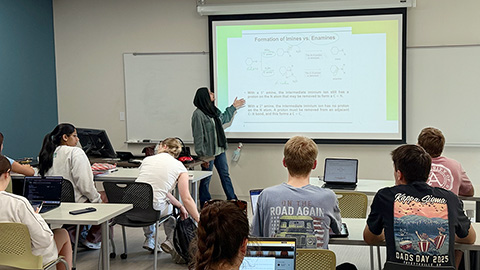
In large organic chemistry courses, I traded static slides for quick surveys, whiteboard team problems, fill-in-the-blank games and “draw the missing structure” challenges that pushed students to explain concepts to each other.
I watched anxious silence turn into energetic collaboration. In an era where technology and AI are ubiquitous and attention spans are shaped by short, rapidly changing content, relying solely on slides can feel dry. I continue to learn, teach and evolve because my students have shown me that shared problem-solving builds curiosity and confidence in their ability to do science.
Enjoy reading ASBMB Today?
Become a member to receive the print edition four times a year and the digital edition monthly.
Learn moreGet the latest from ASBMB Today
Enter your email address, and we’ll send you a weekly email with recent articles, interviews and more.
Latest in Opinions
Opinions highlights or most popular articles
Learning can be fun: Gaming anatomy and physiology
Instructors explore how gamification and active learning transform student engagement and retention. They convey how emotion, interaction and design can make even rigorous subjects more effective and memorable.
Mentorship and uncertainty: Lessons from Telemachus
A biochemistry educator reflects on mentorship through the Greek story of Telemachus, showing how embracing uncertainty, failure and curiosity can transform teaching.
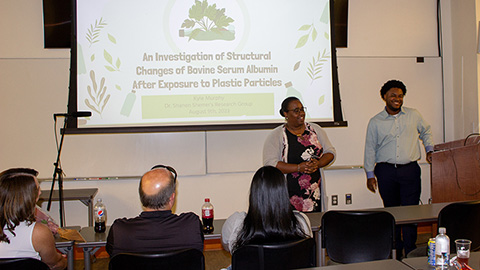
Embracing the twists and turns along the educator pathway
A biochemistry educator reflects on the challenges of early faculty life, describing how evidence-based teaching, cross-disciplinary collaboration and classroom challenges shaped her growth.
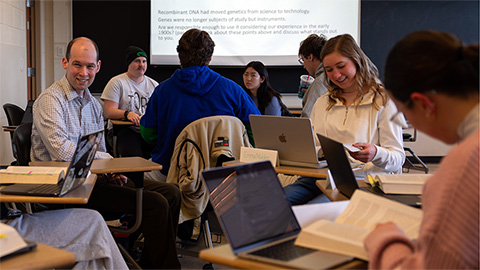
Redesigning with students in mind
Assistant professor reflects on how the shift to online teaching revealed gaps in points-based grading and led to a redesign centered on transparency and student growth.
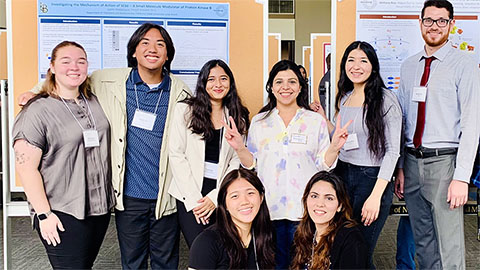
Teaching beyond information transfer
Educator reflects on moving beyond lectures to create a biochemistry classroom centered on engagement, transparency and student ownership, showing how small shifts like “student hours” and active learning can transform understanding.
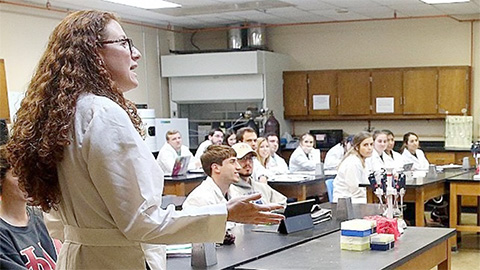
Mayday! Lessons from cellular dysfunction and group work dynamics
An upper-level biology course revealed that strong science doesn’t guarantee strong teamwork. One instructor shares how failed group dynamics reshaped their approach, leading to more structured, collaborative and effective student learning.