
Cooking up science engagement, a fermentation experiment
Cutting boards, jars of vegetables and the smell of fermentation are not typical tools of scientific research. But, for a collaboration between the North Carolina Museum of Natural Sciences and North Carolina State University, or NCSU, the kitchen became a laboratory, where chefs and scientists invited the public to explore the microbial ecology of fermented foods through hands-on cooking classes.
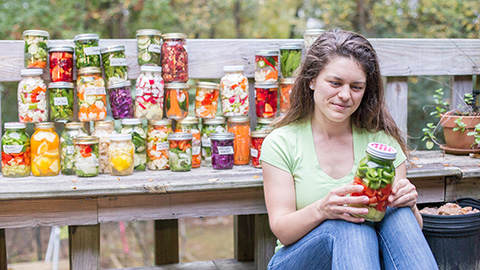
In a recent study, scientists and chefs teamed up to host cooking classes where participants learned to make fermented foods and explored the microbial ecology behind fermentation as part of a participatory activity.
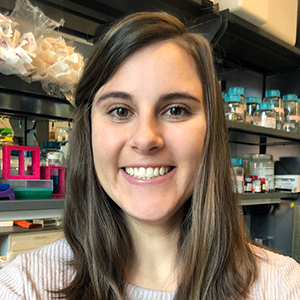
The team, including postdoctoral researcher Hanna Berman and research associate Christina Roche, chose microbes as their model system in part because the science and culinary elements could be easily blended.
“Public perception often defaults to microbes as ‘germs,’ however, demonstrating how beneficial microbes create healthy food instantly grabs their attention,” said Roche. “(Fermentation) bridges the gap, sparking a desire for both scientific knowledge from researchers and culinary applications from chefs.”
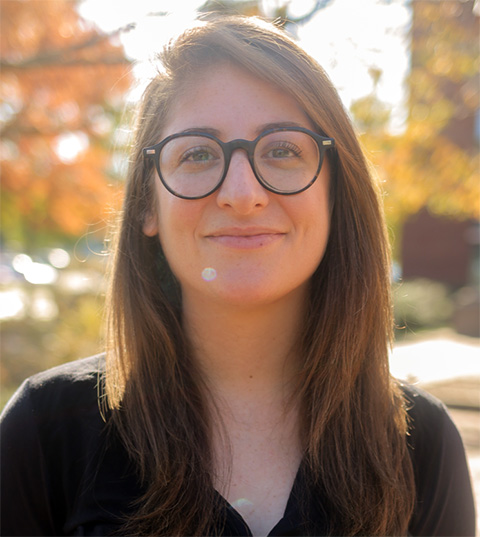
Erin McKenney, assistant professor of applied ecology at NCSU, has observed that both museums and chefs often involve participants in hands-on learning. During discussions with collaborator Rob Dunn, a professor in the department of applied ecology at NCSU, they developed the idea of partnering with cooks to facilitate participatory science. This approach offered a model for how everyday experiences like cooking can generate data to answer questions about microbial ecology while fostering deeper connections between the public and scientists.
“We hadn’t seen cooks included as equal experts to scientists in research efforts,” McKenney said. “This was a unique opportunity to engage everyone as equally important contributors to increased understanding of microbial ecology.”
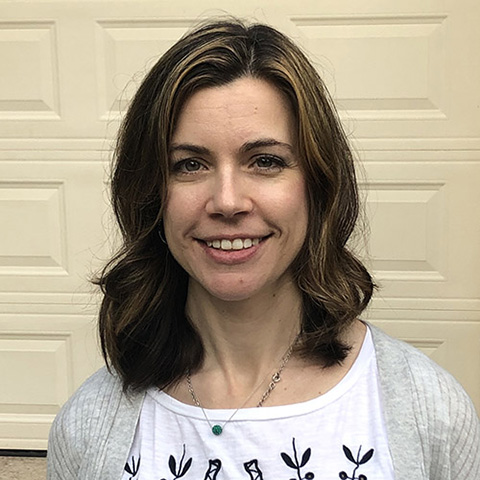
The NCSU team collaborated with the museum team, including Julie Horvath of the museum’s genomics and microbiology laboratory, to design the study. The investigation aimed to describe the experimental method, teach participants a fermentation recipe, conduct the experiment and analyze experimental results. The team held three workshops at the museum, each focusing on fermented foods with slightly different ingredients and origins: kimchi, chow chow or kombucha.
“Fermented foods offered relatively inexpensive microcosms to test these ideas and engage the public, as these food systems are much more familiar to participants than, for example, a tropical forest, and can fit easily on a lab bench or kitchen counter,” Berman said.
The team worked with expert chefs to create an experience that combines hands-on culinary instruction with scientific education. Each session opened with chefs introducing the food’s history, cultural significance and flavors, followed by scientists explaining the microbes, metabolic processes and ecological concepts underlying fermentation.
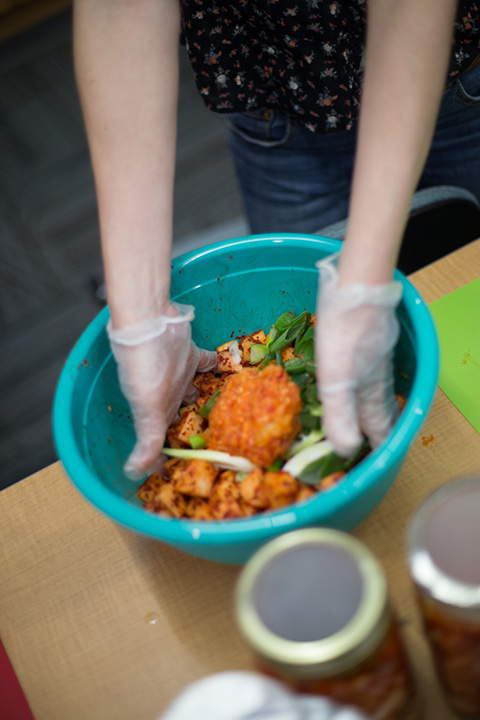
Participants then prepared the foods under the chef's guidance, chopping up cabbage for kimchi, dicing green tomatoes and onions for chow chow and mixing sugar and tea for kombucha. Participants packed and poured their ingredients into two glass jars: one for their own use and one experimental jar that was analyzed in follow-up “science of fermentation” sessions.
Over a 10-day period, the research team took samples from the experimental jars to track microbial diversity using sequencing and monitor pH changes. The team then analyzed the results to understand how the microbial communities varied over time and across ferment types. Overall microbial diversity did not increase when participants added more vegetables to a ferment. However, different vegetable substrates supported distinct microbial communities, and pH dropped as lactic and acetic acid–producing bacteria grew.
“The findings themselves were not exactly surprising,” Berman said. “The informative part of our study was that we were able to replicate (previously known) findings on a much shorter time scale while also engaging and educating the public.”
Although the authors did identify some hurdles, such as balancing a cooking class with a controlled experiment and managing sequencing-based delays, the overall outcome was a success. Each recipe doubled as an experimental protocol, allowing scientists to connect with participants throughout the process and enabling discussion about the scientific and culinary aspects of food-making and microbiology.
“Our findings establish fermented foods as a cost-effective and fairly robust system for studying microbial ecology across short time scales that are adaptable and accessible to students and the public at all ages and levels of experience,” McKenney said. “Also, because the end product is edible, it not only makes the science personally relevant but potentially addresses socioeconomic gaps as well as gaps in science literacy.”
Enjoy reading ASBMB Today?
Become a member to receive the print edition four times a year and the digital edition monthly.
Learn moreFeatured jobs
from the ASBMB career center
Get the latest from ASBMB Today
Enter your email address, and we’ll send you a weekly email with recent articles, interviews and more.
Latest in Education
Education highlights or most popular articles
Learning can be fun: Gaming anatomy and physiology
Instructors explore how gamification and active learning transform student engagement and retention. They convey how emotion, interaction and design can make even rigorous subjects more effective and memorable.
ASBMB recognizes Chapman as 2026 outstanding student chapter
The group, led by Cedric Owens, is being honored for its commitment to scientific engagement, mentorship and community building, creating meaningful opportunities for students in biochemistry and molecular biology.
Mentorship and uncertainty: Lessons from Telemachus
A biochemistry educator reflects on mentorship through the Greek story of Telemachus, showing how embracing uncertainty, failure and curiosity can transform teaching.
Embracing the twists and turns along the educator pathway
A biochemistry educator reflects on the challenges of early faculty life, describing how evidence-based teaching, cross-disciplinary collaboration and classroom challenges shaped her growth.
Redesigning with students in mind
Assistant professor reflects on how the shift to online teaching revealed gaps in points-based grading and led to a redesign centered on transparency and student growth.
Teaching beyond information transfer
Educator reflects on moving beyond lectures to create a biochemistry classroom centered on engagement, transparency and student ownership, showing how small shifts like “student hours” and active learning can transform understanding.