
Introducing STEM before self-doubt

The overheard conversation caught Shyretha Brown off guard. As middle school students talked about hair and marrying white men for what they called “good hair,” Brown realized science could be a way to change the narrative.
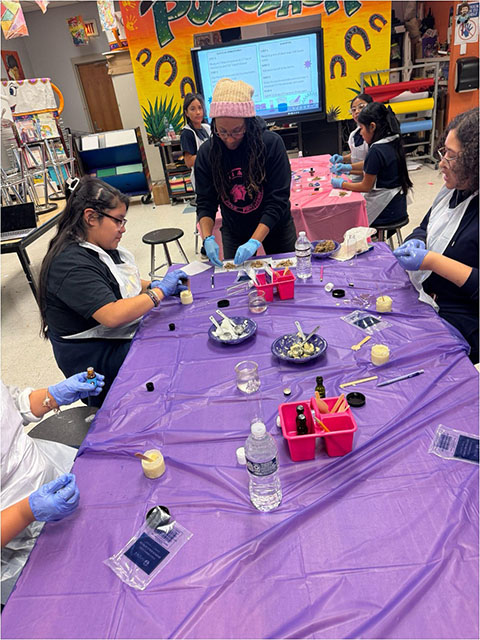
She organized a lab visit on hair biology. The students made hair products, learned the science behind hair structure and talked openly about self-acceptance. The experience became the first Building Bridges, Inc. program
“I didn’t go seek out the nonprofit,” Brown said. “The nonprofit found me.”
Brown is now the founder and executive director of Building Bridges Inc., a nonprofit that empowers young girls through STEM education and confidence-building initiatives. The organization provides hands-on science programming in classrooms and after-school settings across Chicago and its suburbs.
About 3,038 youths participated in the program last year. Above 10,000 youths have enrolled since 2018. The organization partners with schools and community groups, working with teachers to supplement existing curricula through experiments and activities that connect classroom concepts to real-world applications.
Growing impact and growing pains
As the program has expanded, so have its challenges. Funding remains a major hurdle, Brown said.
Those constraints shape not only how Building Bridges, Inc. operates now, but how quickly Brown is willing to grow it. Brown said she has received inquiries about expanding to other states, including Texas, New York and Florida.
“Expansion will come, but my priority is making sure the Illinois program develops at its own pace before moving into new areas,” she said. "More resources would support expansion and allow us to hire staff for those cities."
Staffing capacity is another challenge. Building Bridges relies heavily on college interns, many from the University of Chicago, which can create continuity issues as students cycle in and out with academic schedules.
Despite these constraints, Brown is deliberate about measuring impact. The organization does not track students long term, a choice she says is intentional. Instead, outcomes are assessed through pre- and postprogram surveys that gauge student engagement and confidence.
Open-ended responses often provide the clearest signal. Students have written comments such as, “Now I feel like I can be a scientist,” and “I would like to work for Building Bridges one day.”
“That’s how I know it’s working,” Brown said.
A nonlinear scientific path
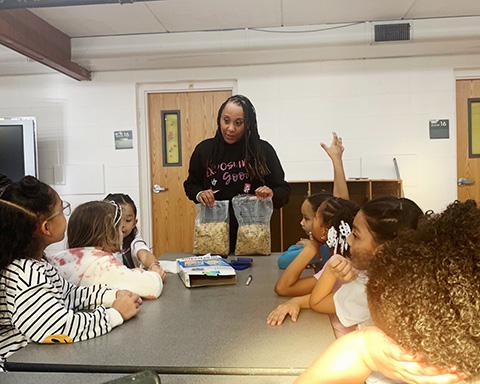
Brown earned a bachelor’s degree in biology from Jackson State University and completed her master’s and Ph.D. at Tennessee State University. Her scientific training eventually led her to industry, where she worked as a postdoctoral scientist and later senior scientist at PepsiCo’s Gatorade Sports Science Institute, contributing to research in exercise science and sports nutrition and to products such as Gatorlyte.
However, her path to that role was not straightforward. Brown began at a community college studying nursing before shifting to pre-med at Jackson State. After a summer internship at Meharry Medical College, she decided against medical school and pursued research instead, gaining experience through internships at Purdue University, Rutgers University and the University of Illinois.
She later held a postbaccalaureate position at Pacific Northwest National Laboratory and briefly entered graduate school at the University of Washington before completing her graduate training at TSU.
“I know what I like, but I kept getting introduced to what I didn’t like,” Brown said. “That’s what Building Bridges does early. It exposes students to different STEM fields so they can start figuring that out sooner.”
Mentorship as the mission
Brown encourages students and early-career scientists to explore widely, build relationships and seek honest mentorship.
“Find a mentor who will be candid about your path,” she said. “You don’t have to navigate it alone.”
That philosophy guides her work with Building Bridges and beyond.
“If I can be a steppingstone to help one student get where they desire to go quicker than I did,” Brown said, “then I have served my purpose as a mentor.”
Enjoy reading ASBMB Today?
Become a member to receive the print edition four times a year and the digital edition monthly.
Learn moreGet the latest from ASBMB Today
Enter your email address, and we’ll send you a weekly email with recent articles, interviews and more.
Latest in People
People highlights or most popular articles
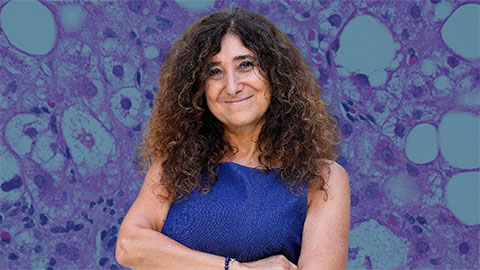
Uncovering the molecular roots of fatty liver disease
Physician–scientist Silvia Sookoian discusses her path from hepatitis C care to MASLD research, her use of multi-omics to study steatotic liver disease, and how lipid metabolism and genetics are reshaping understanding of MASH and liver health.
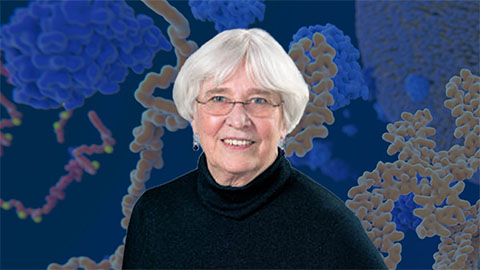
Kimble honored for lifetime achievement in genetics
She received the 2026 Thomas Hunt Morgan Medal and will be honored with a dedicated online profile and seminar.
Janetka named distinguished professor
Washington University awarded him the inaugural Carl Frieden Distinguished Professorship.
ASBMB members receive ASPET awards
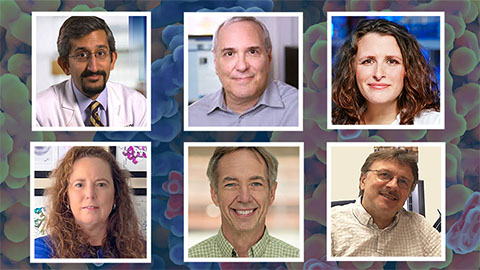
The American Society for Pharmacology and Experimental Therapeutics awards Simone Brixius–Anderko, Paul Insel, Sudarshan Rajagopal, Emily Scott, Alan Smrcka and Jürgen Wess for their excellent research and mentoring work in pharmacology.
Kozul honored by Washington University
She received the 2025 Elliot L. Elson Education and Training Award.
de la Fuente honored for AI research
The award will support the development of an AI system called ApexMol, a 3D structure–informed, agentic large language model designed to create new biomolecules.