
JLR: Sphingolipids and retinal degeneration

Two uses for the same drug. It’s been done before with success. Take aspirin, which alleviates pain and is a blood thinner. Or Wellbutrin, which helps smokers quit and is an antidepressant. In a recently published paper in the Journal of Lipid Research, researchers took a multiple sclerosis drug called Gilenya from Novartis and gave it a new use: treatment of retinal degeneration.
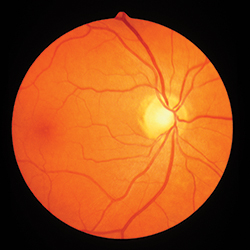 Gilenya, a multiple sclerosis drug, may have a new use as a treatment for retinal degeneration.
Why Gilenya? Gilenya, which also goes by the name FTY720, initially was used in multiple sclerosis, a central nervous system disorder involving the destruction of certain nerve cells. Gilenya is an altered version of a natural product and has immunosuppressive effects, particularly through the blockade of sphingolipid synthesis. This last point is key, as retinal degeneration also is known to involve sphingolipid biosynthesis.
Retinal degeneration is a catchall term for a group of diseases whose hallmark is photoreceptor cell death. This cell death has many contributing factors, one of which is ceramide, a sphingolipid whose role in retinal degeneration has been investigated by the group of Nawajes Mandal at the University of Oklahoma Health Sciences Center. In fact, in previously published work, the Mandal group identified ceramide as a critical player in retinal degeneration by using Gilenya in a rat model of light-induced retinal degeneration.
In the current JLR study, Mandal and colleagues turned their focus to a laboratory rat model, one which more frequently is used in the retinal degeneration field. This rat model closely matches how retinal degeneration happens in humans. Using this popular model gives a better idea of the effects of the drug. These transgenic animals start losing their sight at post-natal day 22 and have 50 percent photoreceptor death at postnatal day 45. This occurs because they have a mutated rhodopsin gene.
The investigators administered Gilenya to these rats at both the early and late stages of the disease and examined eye health, gene expression and sphingolipid levels. With early dosing of Gilenya came improved rod and cone function as well as lowered ceramide biosynthesis gene expression, two positive signs of improvement. In addition, the investigators noticed that the sphingolipid profile, a feature that was altered in the disease model, was reset, and they observed normal levels of associated enzymes were observed with Gilenya administration.
While Gilenya may appear to be a winner for retinal degeneration treatment, many questions remain. First, the exact pathway between ceramide biosynthesis and photoreceptor cell death needs to be established. Second, the precise mechanism of action of Gilenya also needs to be established. And, of course, many more studies with this drug in animal models have to be completed.
Still, this study makes a significant contribution to the search for retinal- degeneration drugs. Treatments for this disease are few and far between, and beginning with a Food and Drug Administration-approved drug is a good start to alleviating this disorder.
Enjoy reading ASBMB Today?
Become a member to receive the print edition four times a year and the digital edition monthly.
Learn moreGet the latest from ASBMB Today
Enter your email address, and we’ll send you a weekly email with recent articles, interviews and more.
Latest in Science
Science highlights or most popular articles

Fat synthesis enzyme crucial for milk fat and newborn growth
Researchers found that a deficiency of the fatty acid synthesis enzyme stearoyl-CoA desaturase-1 reduced mammary gland function during lactation and caused low birth weight in newborns that were fed milk from enzyme-deficient glands.

Flipping lipids and slime molds
A dull first job nearly pushed JBC associate editor Todd Graham out of science. Then a slime mold project changed his path. Now, he studies membrane biology and reflects on discovery, persistence and mentoring through uncertainty.

How smelling death alters worm behavior
Researchers have found that the roundworm C. elegans can smell death, and it changes how the worms behave, reproduce and age.
A chance encounter with the lab
Payton Stevens never planned to become a pancreatic cancer researcher. A temporary job set him on a path from rural Kentucky to leading research on Wnt signaling and metastasis, where he now pairs discovery with mentorship and science advocacy.

Light-activated small molecule could transform eye infection treatment
Contact lenses raise the risk of infectious keratitis, a leading cause of blindness worldwide. A biotech company is commercializing a light-activated therapy using a ROS-generating molecule to rapidly kill microbes in the cornea to preserve vision.
The molecular orchestra of memory
Calcium, calmodulin and calcium/calmodulin-dependent kinase II form a molecular axis that turns fleeting neural activity into lasting memories. New research shows how memories are stabilized, and possibly even protected or repaired.