
Gut microbes hijack cancer pathway in high-fat diets


Colorectal cancer, or CRC, ranks as the third leading cause of cancer-related deaths in men and the fourth in women in the U.S. as of 2024. Rates of CRC are also rising among young adults, increasing by about 2.4% each year from 2012 to 2021. Obesity is among the risk factors driving this trend.
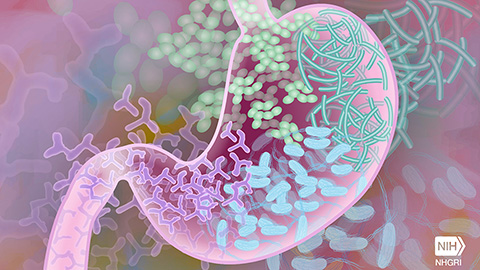
In a recent study, a group of researchers in the U.S. found that in mice, a high-fat diet boosts ammonia-producing bacteria in the gut microbiome, which in turn promotes CRC. The researchers discovered that this effect is mediated by the transforming growth factor beta, or TGF-β, signaling pathway. The study, led by Lopa Mishra and Krishanu Bhowmick at the Feinstein Institutes for Medical Research, appeared in the Journal of Biological Chemistry.
“We started with a very profound clinical question,” Mishra, co-director of the Institute of Bioelectric Medicine at the Feinstein Institutes and co-corresponding author of the study, said. “Colon cancer is on the rise in younger people, and we think the microbiome and diet play a big role in this trend.”
In cancer, TGF-β signaling typically suppresses tumor growth in early stages but can promote it later on. For example, Mishra’s team previously showed that disrupting TGF-β signaling caused mice to develop CRC and other gastrointestinal cancers. Other studies found that TGF-β deficiency did not trigger tumors in mice lacking a microbiome, and that microbiome-induced increases in ammonia levels can promote CRC. Ammonia produced by the gut microbiome likely helps tumors outcompete healthy tissue, Mishra explained, because normal cells cannot tolerate high ammonia levels.
“We showed for the first time that such a major signaling pathway as TGF-β is targeted by a microbial metabolite,” she said.
Bhowmick, a postdoctoral fellow and co-corresponding author of the study, added: “Before this, whether any particular signaling pathway was involved in mediating ammonia toxicity in CRC was not clearly known.”
The team found that ammonia interacts with the N-terminus of βII-spectrin, or SPTBN1, a downstream component of the TGF-β pathway. Normally, SPTBN1 interacts with SMAD3, another downstream effector, in the nucleus to promote genes linked to tumor suppression. Ammonia disrupts this interaction, trapping SMAD3 at the cell membrane and in the cytoplasm. When researchers depleted SPTBN1 with small interfering RNAs, SMAD3 activation, nuclear localization and tumor suppression functions were restored.
“This discovery was a surprise to us,” Mishra said. “It’s incredible to see that such a powerful pathway can be tamed. Gastrointestinal cancers are very difficult to treat, and these results showed us that spectrin inhibition can be very instrumental in the treatment of cancer, particularly colon cancers that are microbiome-driven.”
Mice fed a high-fat diet — comparable to a fast-food-heavy human diet — and lacking proper TGF-β signaling showed significant microbiome changes. These mice had increased levels of two ammonia-producing bacteria: Bacteroides ovatus and B. vulgatus.
The team’s findings reveal how microbial metabolites disrupt TGF-β signaling to promote CRC. They also suggest that inhibiting βII-spectrin could restore normal signaling and slow disease progression, making it a promising molecular target for CRC therapy.
Enjoy reading ASBMB Today?
Become a member to receive the print edition four times a year and the digital edition monthly.
Learn moreGet the latest from ASBMB Today
Enter your email address, and we’ll send you a weekly email with recent articles, interviews and more.
Latest in Science
Science highlights or most popular articles
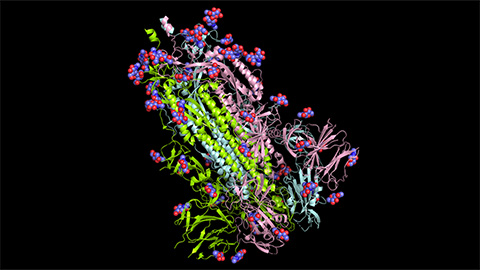
Blood glycome possibly predicts lifespan
Researchers at the University of Santiago de Compostela show that total serum N-glycome can predict mortality independent of traditional risk factors.
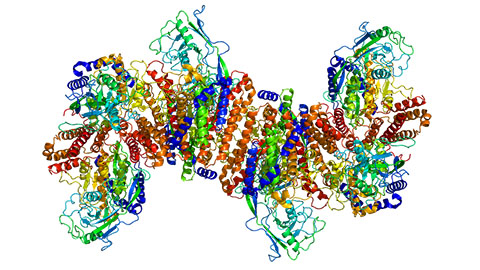
Building a better model for drug delivery across the blood–brain barrier
Industry and academic scientists collaborated to develop a rat with humanized iron-transport receptors, enabling research into iron homeostasis and drugs that cross the brain’s barrier.
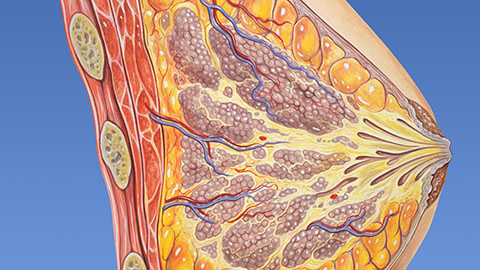
Fat synthesis enzyme crucial for milk fat and newborn growth
Researchers found that a deficiency of the fatty acid synthesis enzyme stearoyl-CoA desaturase-1 reduced mammary gland function during lactation and caused low birth weight in newborns that were fed milk from enzyme-deficient glands.
Flipping lipids and slime molds
A dull first job nearly pushed JBC associate editor Todd Graham out of science. Then a slime mold project changed his path. Now, he studies membrane biology and reflects on discovery, persistence and mentoring through uncertainty.
How smelling death alters worm behavior
Researchers have found that the roundworm C. elegans can smell death, and it changes how the worms behave, reproduce and age.
A chance encounter with the lab
Payton Stevens never planned to become a pancreatic cancer researcher. A temporary job set him on a path from rural Kentucky to leading research on Wnt signaling and metastasis, where he now pairs discovery with mentorship and science advocacy.