
Defining JNKs: Targets for drug discovery
“If you are going to be successful as a scientist, you want to have fun while you do it,” Roger Davis said, reflecting on the curiosity and enthusiasm that have fueled his four decades in research.
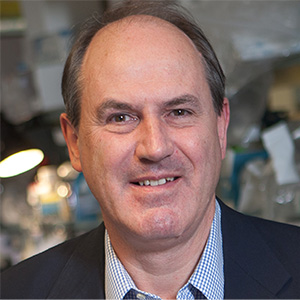
After earning his Ph.D. at the University of Cambridge, Davis moved to the United States and has spent the past 40 years as a professor at the University of Massachusetts Chan Medical School.
A pioneer in defining Jun N-terminal kinase, or JNK, Davis is being honored with the American Society for Biochemistry and Molecular Biology's Bert and Natalie Vallee Award in Biomedical Science, recognizing his discovery of this signaling protein and the decades of insight that followed.
In his letter of support, Michael P. Czech, also a professor at UMass Chan, wrote, “The discovery of JNK by Davis has had enormous impact, leading to him being the most highly cited scientist in all fields subsequent to the discovery … Honoring the discovery of JNKs is deserving … and will be well received by basic biomedical scientists across the globe.”
Davis’s lab is best known for studying stress signaling. “We came into this from basic biochemistry and protein phosphorylation, identifying sites of phosphorylation and mutating them to understand function,” he said. A strange proline-directed phosphorylation site with two prolines caught their attention, leading to further work exploring MAP kinases and eventually the initial cloning of the Jun kinases, followed by work on p38 MAP kinases.
Initially, scientists thought JNK was oncogenic, but Davis’s work revealed that it can also act as a tumor suppressor, depending on the tumor microenvironment.
“It is exciting that there may be a way to use the role of JNK in the tumor microenvironment to develop therapies against cancer,” Davis said.
In other diseases, JNK signaling affects communication among organs such as the brain, liver, and fat tissue, influencing satiety, metabolism and inflammation in type 2 diabetes.
“There’s this intricate crosstalk,” Davis said. “And we’re just beginning to figure out how JNK fits into it.”
Davis and his team showed that JNK is not a single protein but a family encoded by three genes, diversified through a process called alternative splicing. In some tissues, this can produce up to 10 isoforms.
At the 2026 ASBMB Annual Meeting, Davis will present his work showing that swapping exon 7a or 7b changes the shape of JNK’s docking site, determining which proteins it interacts with and ultimately altering the signaling output.
“We have really good mouse models to study where we can control the splicing genetically and force the kinase in specific cell types to include only exon 7a or 7b,” Davis said. “If you can more precisely target the spliced isoform that’s mediating the biology you’re studying, I think we may have more selective and better drugs.”
Despite his many awards and honors, Davis is quick to credit his trainees. “Very little of the work was done by me,” he said. “It’s the students and postdocs. They did science, and many have gone on to lead labs of their own.”
Enjoy reading ASBMB Today?
Become a member to receive the print edition four times a year and the digital edition monthly.
Learn moreFeatured jobs
from the ASBMB career center
Get the latest from ASBMB Today
Enter your email address, and we’ll send you a weekly email with recent articles, interviews and more.
Latest in Careers
Careers highlights or most popular articles
Upcoming opportunities
🗨️ Shape the conversation at ASBMB 2027 in Boston! ASBMB is seeking proposals for sessions and events that will foster collaboration, highlight exciting science and support career development across the molecular life sciences.
Upcoming opportunities
Registration is now open for this summer's Art of Science Communication course! Build your science communication skills in this 8-week online program. ➡️ Registration deadline: May 6.

Upcoming opportunities
The American Society for Biochemistry and Molecular Biology is accepting applications for the Marion B. Sewer Distinguished Scholarship for Undergraduates. Apply by April 30, 2026.
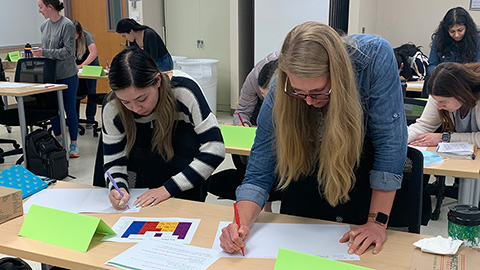
Designing scientific careers, not just experiments
Universities are rethinking how they prepare scientists for careers beyond the bench. From myIDP to Vanderbilt’s Career Architect, programs help trainees clarify values, explore options and build intentional paths forward.
Upcoming opportunities
Dive into the world of lipids! Join the ASBMB Lipid Research Division Seminar Series on April 9, 12–1 p.m. ET to hear early-career researchers explore lipid metabolism and mitochondrial biology.
Upcoming opportunities
For the summer 2026 ASBMB Today essay series, we invite scientists working in industry to share first-person reflections on their work. Submit your essay or pitch by April 15, 2026.