
Meet Lan Huang
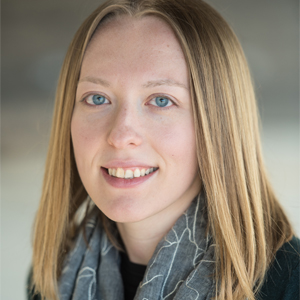
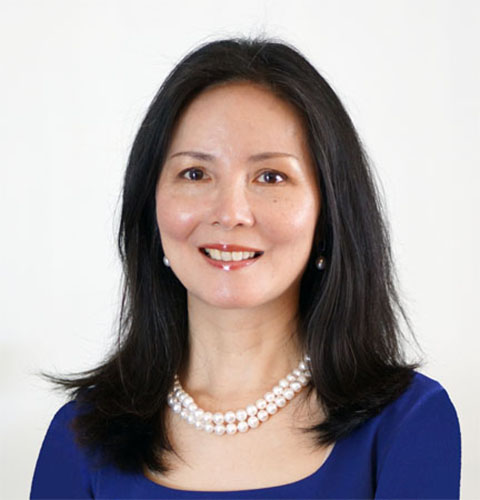
Lan Huang is a professor of physiology and biophysics at the University of California, Irvine, School of Medicine. She also serves as an associate editor of the ASBMB’s journal Molecular & Cellular Proteomics. Trained as a chemist, Huang has built her scientific career at the intersection of chemistry and biology. Her journey exemplifies how embracing risks, stepping beyond one’s comfort zone and taking on projects others may overlook can lead to a successful and fulfilling career.
This interview has been edited for length, clarity and style.
How did you decide to become a scientist using chemistry to answer biological questions?
Huang: Both of my parents graduated with physics degrees and were high school teachers; they helped guide me. But mostly I think it's related to being raised in China. By the time I was ready to go to college, there was an emphasis on majoring in pure science, so I majored in analytic chemistry.
Afterwards, I decided to pursue a Ph.D. at the University of Florida with Robert Kennedy, who is now at the University of Michigan. It was in his lab that I got involved with the interface between biology and chemistry.
I then went to the University of California, San Francisco, to work with Al Burlingame for my postdoctoral training. Here I fell in love with mass spectrometry, or MS, an analytical technique used to identify atoms or molecules within a sample. We were surrounded by biologists, so I began to combine my interest in MS with answering biological questions. Burlingame gave me a postdoctoral project focused on studying protein complexes using MS. Later, he told me nobody else had wanted to do this project, but it was perfect for me.
How did you find your scientific focus?
Huang: When I became an independent researcher, I ended up in the department of physiology and biophysics at the school of medicine at UC Irvine. During my postdoc, I had many collaborators, but when I came here, I was told I could not build my independent career on collaborations alone. This pushed me to think harder about what I needed and wanted to do to build a career.
Since I was not trained as a biochemist, I had to start from the very beginning learning protein purification and other biochemical techniques to get the lab going. Looking back, this was important for my career growth.
What is the main focus of your lab?
Huang: Kennedy, my Ph.D. advisor, was at the interface of biology and analytical chemistry. That mindset of developing technology to address biological problems has stayed with me. This technology development positions us as the front runner for doing crosslinking MS (a technique where proteins that interact with each other are stuck together so these interactions can be identified via MS). Crosslinking MS is not new but has had a lot of challenges and difficulties, including sample preparation, data acquisition and analysis. Through the development of new reagents, bioinformatics tools and instrumentation, the field is becoming a major player in understanding changes in protein–protein interactions in disease. We are now focused on improving crosslinking MS to study protein complexes, especially those in the ubiquitin proteasome system.
These efforts have helped my lab develop a series of new MS-cleavable crosslinkers to facilitate the detection and identification of cross-linked peptides. These technique reagents allow proteins to be linked together and then cleaved for easier identification during MS. We also focus on things like targeting the ubiquitin–proteasome system for cancer treatment.
What do you wish the public knew about your work or science in general?
Huang: We always hope that with basic research, a discovery could be translated into practical uses for diagnostics for early disease detection and/or improved therapeutics. We want to improve the health of the society because many people are impacted by disease.
For example, we are trying to understand the protein–protein interactions occurring in the brains of Alzheimer’s disease mouse models. We hope that the identified molecular signatures could lead to new drug targets, then to testing human samples and to eventually new discoveries that could improve human health — but the process takes time.
What did you learn from your mentors that has impacted your mentoring style?
Huang: When I transitioned from my Ph.D. to my postdoctoral position I had no MS training. Despite this, Burlingame took me in as a trainee. He had an open mind to accept somebody without any experience in the research he carried out in his lab.
I have adopted this mindset. The most important thing is the potential of the trainee and their willingness to work hard to be successful. I do not need them to necessarily have experience. Now, most students come to me with biology experience, not chemistry. I'm very open-minded about these students to allow them to have the opportunity to learn and grow as a researcher.
How did you get involved with MCP?
Huang: Two of my professional mentors have been instrumental in connecting me with the journal — Ralph Bradshaw and Burlingame. Bradshaw was the first editor-in-chief for MCP, and then Burlingame took over. Due to their influence, I became involved with the journal.
Additionally, some of my important papers have been published in MCP. For example, one paper is related to the first MS-cleavable crosslinker we developed, and it is one of the most cited papers from my lab. MCP has always been the leading proteomics journal, so being a young investigator published in this journal has made a significant impact on establishing my research career.
How has your experience been as an associate editor for MCP?
Huang: I feel very fortunate to have become an associate editor so that I can contribute from a different angle to the field. MCP is very rigorous on production, validation and data deposition to ensure the work can be reproduced. This requires a very strong editorial board and reviewers who give fair and constructive input that enable the authors to improve their work. It has been an honor to become an associate editor and participate in this process.
Enjoy reading ASBMB Today?
Become a member to receive the print edition four times a year and the digital edition monthly.
Learn moreGet the latest from ASBMB Today
Enter your email address, and we’ll send you a weekly email with recent articles, interviews and more.
Latest in People
People highlights or most popular articles
de la Fuente honored for AI research
The award will support the development of an AI system called ApexMol, a 3D structure–informed, agentic large language model designed to create new biomolecules.
In memoriam: Peter Roepstorff
He was a leading researcher in biological mass spectrometry, mapped protein function in living organisms and was an ASBMB member for 19 years.
Flipping lipids and slime molds
A dull first job nearly pushed JBC associate editor Todd Graham out of science. Then a slime mold project changed his path. Now, he studies membrane biology and reflects on discovery, persistence and mentoring through uncertainty.
ASBMB members receive RNA Society awards
The RNA Society awards Brenda Bass, Can Cenik and Karin Musier–Forsyth for their achievements in RNA research and innovation. Winners will be recognized at the closing awards ceremony of the RNA 2026 annual meeting.
In memoriam: Richard L. Cross
He studied the enzymatic mechanisms of ATP synthase and served on the editorial board of the Journal of Biological Chemistry for 24 years.
A chance encounter with the lab
Payton Stevens never planned to become a pancreatic cancer researcher. A temporary job set him on a path from rural Kentucky to leading research on Wnt signaling and metastasis, where he now pairs discovery with mentorship and science advocacy.